dailynewsnblog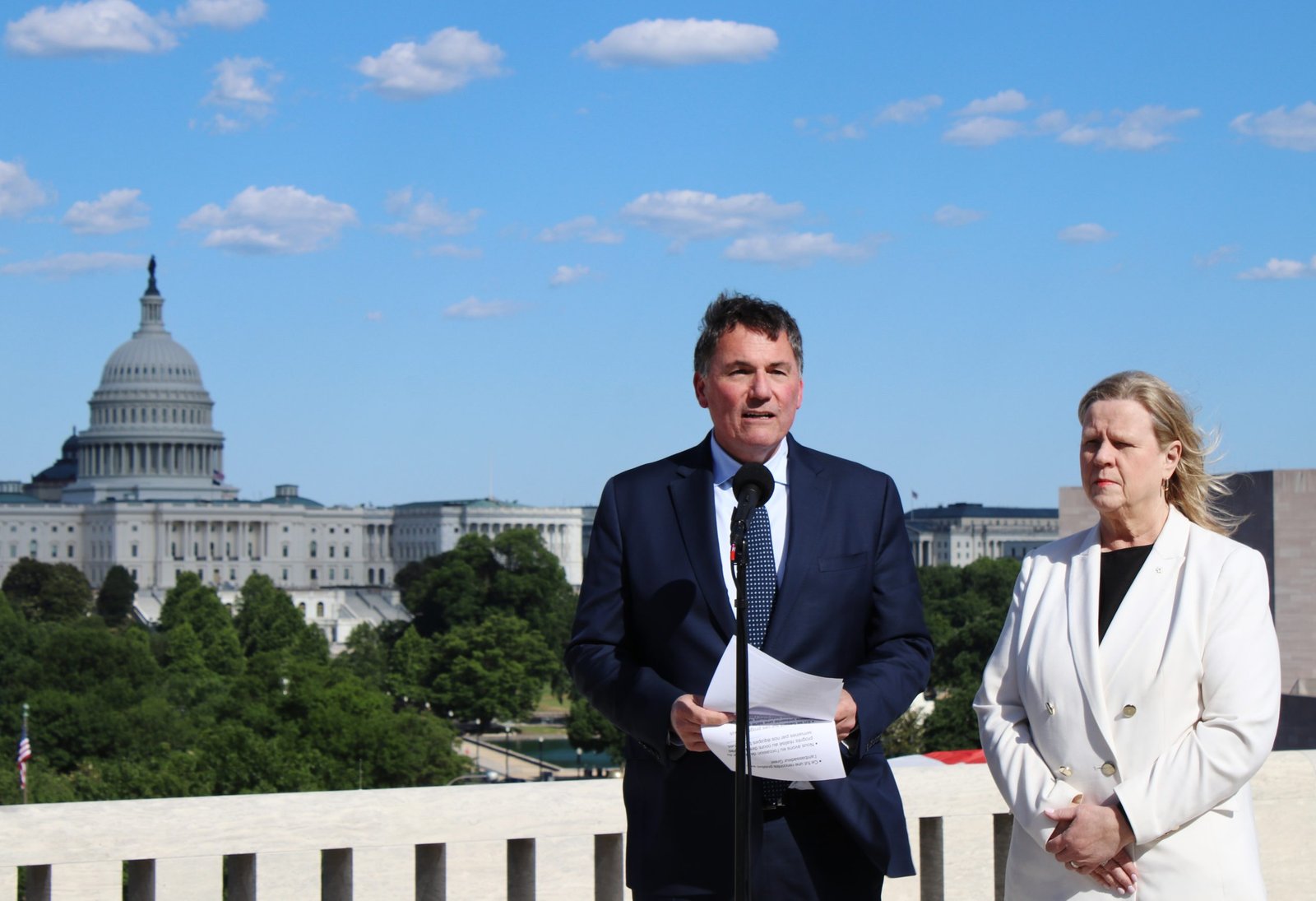
A new Deloitte economic outlook says low business confidence is keeping firms on the sidelines, making investment one of the biggest drags on economic growth. The Canadian Federation of Independent Business says many firms continue to delay growth plans amid the ongoing tariff concerns.
Canadian businesses say they were “not surprised” after the United States declined to join Canada-Mexico in extending the CUSMA agreement, but they warn the decision prolongs uncertainty that is already weighing on investment and growth.
The Trump administration opted not to renew the continental trade pact during its six-year review. The agreement remains in force until 2036 and can still be extended at any point for another 16-year term.
A new Deloitte economic outlook says low business confidence is keeping firms on the sidelines, making investment one of the biggest drags on economic growth. The Canadian Federation of Independent Business says many firms continue to delay growth plans amid the ongoing tariff concerns.
“Nothing’s different today than it was on Tuesday,” Corinne Pohlmann, Executive Vice-President in Advocacy for Canadian Federation of Independent Business said in an interview with iPolitics.
A lot of businesses, Pohlmann said, are still trying to figure out, while some are also delaying decisions such as investments or growth of their business.
“It definitely has repercussions,” she said.
On Wednesday, Canada-U.S. Trade Minister Dominic Leblanc, reaffirmed that discussions are ongoing.
“We agreed on the importance of continuing our discussions and identifying ways to ensure trade and investment frameworks between Canada, the United States and Mexico continue to support North American prosperity and competitiveness,” Leblanc said in a statement on Wednesday.
Carlo Dade, director of international policy and the New North America Initiative at the University of Calgary’s School of Public Policy, said it’s important that Canadian businesses start accepting that the “past isn’t coming back.”
“Uncertainty is going to be a continued future,” Dade said in an interview with iPolitics.
While business groups continue to push for a renewed agreement that provides greater certainty, Dade questioned whether any trade deal can fully deliver that certainty as long as the U.S. president retains broad authority to impose tariffs.
He argued that many of the core provisions of CUSMA continue to function as intended, including rules governing agriculture, technical standards and rules of origin. The largest source of uncertainty is Washington’s willingness to use tariffs outside the agreement.
Deloitte’s latest outlook forecasts Canada’s economy will grow just 0.7 per cent in 2026 and identifies trade uncertainty as one of the biggest factors holding back private-sector investment. The report says firms remain in a “holding pattern” as tariff concerns and the ongoing CUSMA review weigh on business confidence.
“Trade uncertainty and tariffs are extending the wait-and-see stance among firms,” the report states.
One of them being the Trump Administration’s plan to impose new tariffs on at least 60 countries, including Canada, for importing goods made by forced labour into the U.S. supply chain.
READ MORE: Forced labour bill faces first scrutiny in committee before summer break
Which is set to come around on July 24 after the expiration of the temporary 10 per cent global tariff.
That uncertainty is already shaping business decisions. According to CFIB, roughly half of small and medium-sized businesses that trade with the U.S. have begun diversifying trade, particularly within Canada, Europe and Asia.
CFIB’s latest survey found 64 per cent of small businesses support taking additional time to negotiate the best possible terms under a renewed CUSMA, while just 16 per cent favour a quicker agreement that may be less favorable.
The survey also found only 40 per cent of small businesses view the U.S. as a reliable trading partner, while nearly half of firms trading with the U.S. have already begun shifting customers or suppliers elsewhere.
Pohlmann said most businesses are not abandoning the American market altogether, but are instead looking to build alternative options should trade tensions worse.
“The ideal situation now is if we’re going to get there, at the very least to have a renegotiated trade agreement that is good for Canada, and provides a certainty that businesses need is the ultimate outcome.”