B.C., Carney ink deal to retain northern tanker ban ahead of Alberta pipeline update


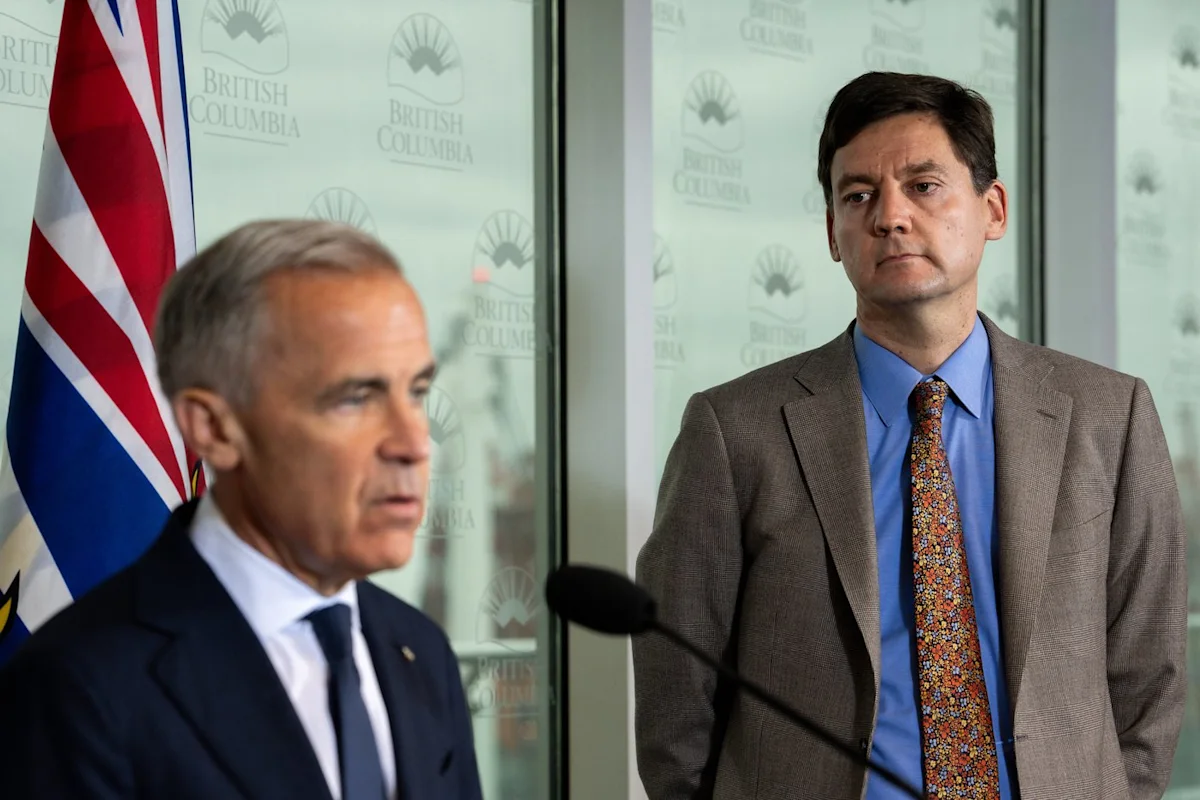
B.C. Premier David Eby watches as Prime Minister Mark Carney speaks during an announcement in Vancouver, on Thursday, July 2, 2026. THE CANADIAN PRESS/Ethan Cairns – The Canadian Press

The plan for a new Alberta bitumen pipeline to the British Columbia coast came into focus Thursday as Prime Minster Mark Carney toggled between the two provinces to meet leaders and make announcements.

At a news conference in Vancouver, Carney and B.C. Premier David Eby unveiled a memorandum of understanding that Carney says will help unlock more than $200 billion in new investment, with British Columbia as the “linchpin.”

The deal also maintains the tanker ban off B.C.’s northern coast while also promising the province will be compensated for environmental risks should Ottawa OK a pipeline to the coast.

B.C. will also get compensated for any new line in a framework that is to be negotiated later. There’s also a promise for an emergency response fund to be held in trust by the province and First Nations.

The moves effectively open the way for a bitumen pipeline to B.C.’s southern region. Carney was to travel to Calgary later Thursday to make a joint announcement with Alberta Premier Danielle Smith.

Smith’s government has been pushing for a new pipeline, but Carney declined to answer specific questions ahead of the news conference with Smith. “You can draw your own conclusions, but you can also wait until this afternoon,” he said.

Carney’s deal with B.C. extends far beyond the pipeline.

It sees the two governments commit to supporting new and expanding liquefied natural gas projects and exporting infrastructure, studying potential investments in the province’s existing ports and a major federal funding promise for the North Coast Transmission Line to deliver electricity to communities and projects in the region.

“This agreement is comprehensive. It’s ambitious. And it will help transform the entire Canadian economy,” Carney said.

Eby said it puts the province on a “generational path to prosperity” and conceded that while B.C. doesn’t have to support any potential pipeline proposal, his government won’t fight it in court.

“This is an area of federal responsibility under the law. We learned this the hard way on the last pipeline,” Eby said.

“That’s why this agreement matters. It ensures that the northern tanker ban stays in place, and it ensures that if the pipeline goes ahead, British Columbians are fairly compensated for the environmental risks we would take.”

Eby’s deal with Carney also says B.C. recognizes Canada’s interests in “optimizing” the existing southern Trans Mountain Pipeline, increasing throughput to 1.2 million barrels a day, up from 890,000.

Eby had been critical of a possible Alberta pipeline to the West Coast, particularly if it meant abandoning the tanker ban.

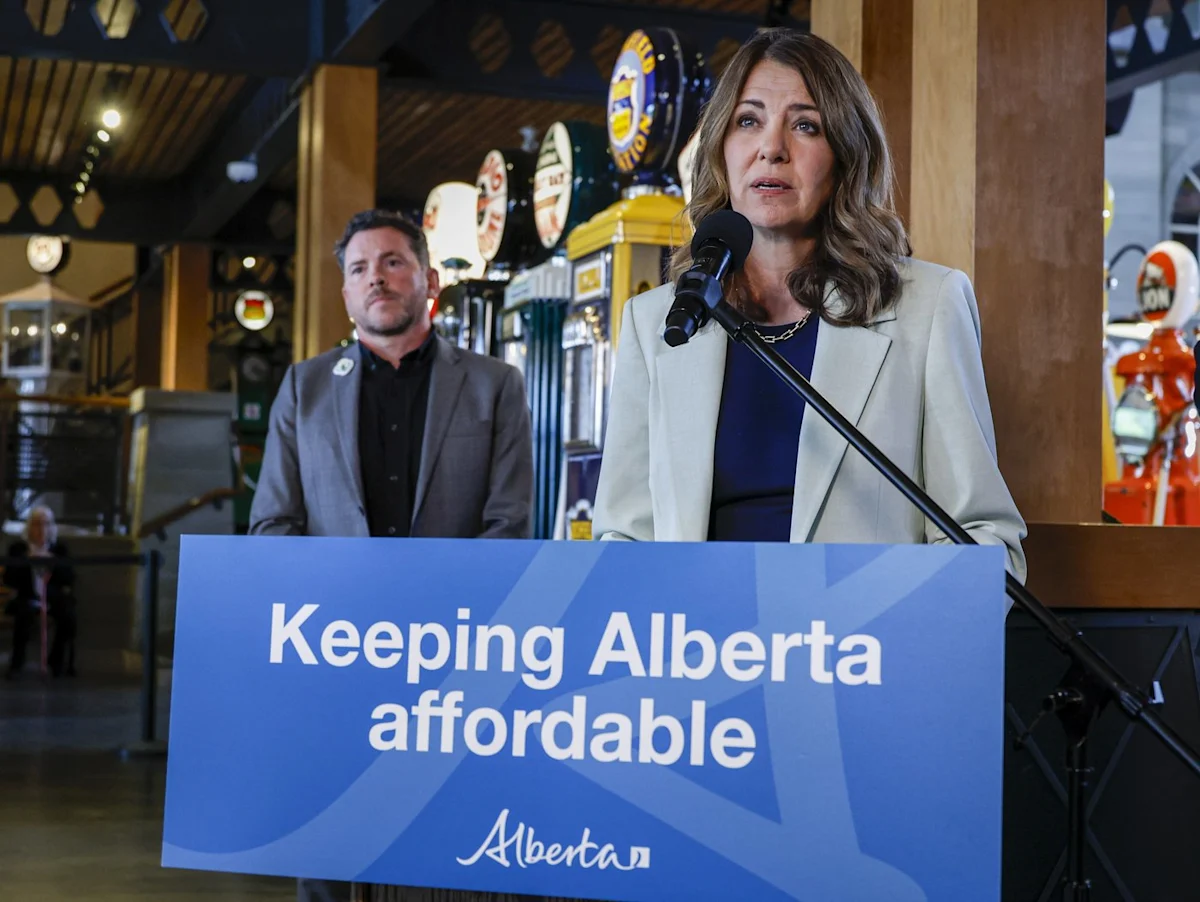
Alberta’s pipeline pitch stems from an energy deal signed between Smith and Carney last fall.

The Alberta accord saw Carney walk back a number of environmental laws and Smith’s government take on the initial planning work for a pipeline.

Carney has said the go-ahead for any such project depends on it be being paid for and run privately while Alberta must also advance a major carbon capture and storage project being pitched by an alliance of oil producers.

A private backer for any new Alberta pipeline has yet to come forward or be announced.

The pipeline is not only an economic issue but a point of political tension that has led to Smith announcing a fall referendum on whether Alberta should stay in Canada or take steps to hold another vote to leave Confederation.

Smith has said she wants Alberta to stay, but she’s also said federal policies and rules in recent years have stymied Alberta’s wellspring oil industry, leading some to say it’s time the province go it alone.

To that end, the pipeline has become a political mirror, with each side seeing it either as another form of Alberta alienation or co-operation.

Both Smith and Carney say the deal shows Canada can work. But leaders of Alberta’s separatist movement say if their province remains beholden to deals with Ottawa to get its own resources to market, then Confederation remains broken.

This report by The Canadian Press was first published July 2, 2026.

— With files by David Baxter in Ottawa

Chuck Chiang and Jack Farrell, The Canadian Press


Source link

  • Related Posts

    The impact of global sanctions on cross-border mergers and acquisitions

    Economic sanctions have become a popular policy tool used to pressure other countries into changing their policies. According to Morgan et al. (2023), the use of sanctions has steadily increased…

    More than 106K Albertans sign up for $100 affordability rebates as applications open

    Alberta Premier Danielle Smith, right, announces a new affordability measure in Calgary, on Wednesday, June 17, 2026. THE CANADIAN PRESS/Jeff McIntosh – The Canadian Press EDMONTON — The Alberta government…

    Leave a Reply

    Your email address will not be published. Required fields are marked *

    You Missed

    Women’s T20 World Cup – semi finals – England vs South Africa Highlights

    Women’s T20 World Cup – semi finals – England vs South Africa Highlights

    The impact of global sanctions on cross-border mergers and acquisitions

    Neuroscape Preview: There’s Room for More Than 1 Cyberpunk TCG in Our Hearts

    Neuroscape Preview: There’s Room for More Than 1 Cyberpunk TCG in Our Hearts

    Trump posts AI video of him as doctor treating critics’ ‘derangement syndrome’ | Donald Trump

    Trump posts AI video of him as doctor treating critics’ ‘derangement syndrome’ | Donald Trump

    ‘I will kill everyone around you’: Threat to ex by father in double-murder suicide emerges

    ‘I will kill everyone around you’: Threat to ex by father in double-murder suicide emerges

    Netflix Plans Reboot of 2004’s ’13 Going on 30’

    Netflix Plans Reboot of 2004’s ’13 Going on 30’