dailynewsnblog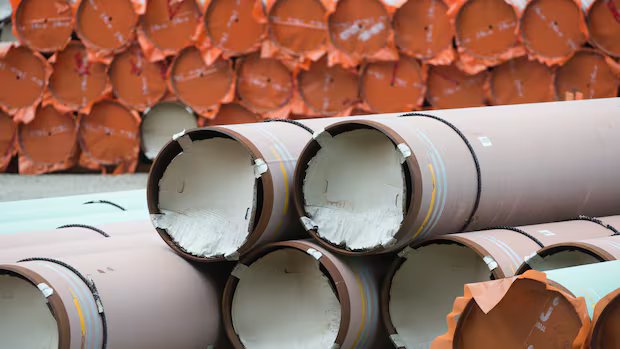

Listen to this article
Estimated 4 minutes
The audio version of this article is generated by AI-based technology. Mispronunciations can occur. We are working with our partners to continually review and improve the results.
The Alberta government is expected to announce details on Thursday regarding its proposal to build a new oil pipeline stretching to the West Coast.
In a memorandum of understanding signed by Ottawa and Alberta in the fall, the province was initially given a July 1 deadline to submit its proposal to the federal government’s Major Projects Office.
But earlier this week, Sam Blackett, Premier Danielle Smith’s press secretary, said the announcement would be pushed back by a day because of the Canada Day holiday, when Prime Minister Mark Carney was scheduled to give a speech in Edmonton. His travel plans were later cancelled because of thunderstorms in the Ottawa area.
Ryan McKinnell, political science professor at Edmonton’s MacEwan University, said he believes this announcement could be viewed as a concerted effort by both the province and Ottawa to mend their relationship.
“It looks like, at least from the outside, that the two [levels of] governments are working together,” he said in an interview on Wednesday. “And certainly the prime minister was more or less framing it as a national unity issue.
“Really the pipeline has just become almost symbolic, or almost like a totemic sort of element of Alberta’s place in Confederation.”
The Alberta government says it wants the pipeline to be built to increase Canada’s energy independence and to increase its global competitiveness.

Prime Minister Mark Carney says while it’s up to Alberta to submit a proposal for an oil pipeline to the B.C. coast ‘on or around July 1,’ the federal process to decide whether or not to refer a plan to the Major Projects Office would take until October.
The expected announcement comes as the provincial government is planning its fall referendum, asking Albertans to answer a list of questions on the Constitution, immigration and separation.
McKinnell said while both governments can align on the matter of pipelines, it’s unlikely this kind of collaboration will quell increasing frustration being voiced by Alberta’s separatists.
“Maybe you can blunt some of the momentum from the separatist movement with something like this. But I don’t think it’s going to go away,” he said.
Carney previously stated that Ottawa’s support for the pipeline is linked to building the Pathways carbon capture and storage project, an attempt to offset emissions from increased oil production.
The agreement between Ottawa and Alberta calls for the pipeline to be privately constructed and funded, but no private proponent has been identified so far.
The pipeline proposal has been met with backlash from B.C. Premier David Eby, who has previously said he believes his province was getting the raw end of the deal at the national table.
Eby has said he has concerns about his province being left out of pipeline conversations as well as any project that would force the federal government to lift its oil tanker ban on B.C.’s north coast. He has also said he wants Ottawa to show more interest in major projects for his province.
Jesse Cardinal is a member of the Kikino Metis Settlement in northeastern Alberta and serves as the executive director of Keepers of the Water, a non-profit group that advocates for the environment.
She said she believes the Alberta government doesn’t present the full picture when it comes to what the proposed project would entail.
“They’re not putting into account all of the fresh water use, the cost … to clean the toxic tailings, the health costs,” Cardinal said in an interview.
“We are dealing with governments that are addicted to oil and they’re robbing us. They’re robbing the future generations.”
She pointed to millions of litres of tailings that ended up in the Athabasca River. Members of the Athabasca Chipewyan First Nation have raised concerns about the impact tailings have on environmental and health issues within the community.
Cardinal said she believes the province has failed to properly consult with First Nations groups for its West Coast pipeline proposal, mirroring what she says she believes is a repeated failure from the provincial government to carry out Indigenous consultation.
On its website, the Alberta government says that “from the earliest stages of engagement, Indigenous communities have guided the work as decision-makers, stewards and true partners.”
“We are committed to early, respectful, transparent and meaningful engagement that honours Indigenous sovereignty, knowledge systems and governance structures.”
The Alberta government is hoping for the project to be designated as being in the national interest by the federal government by October.