dailynewsnblog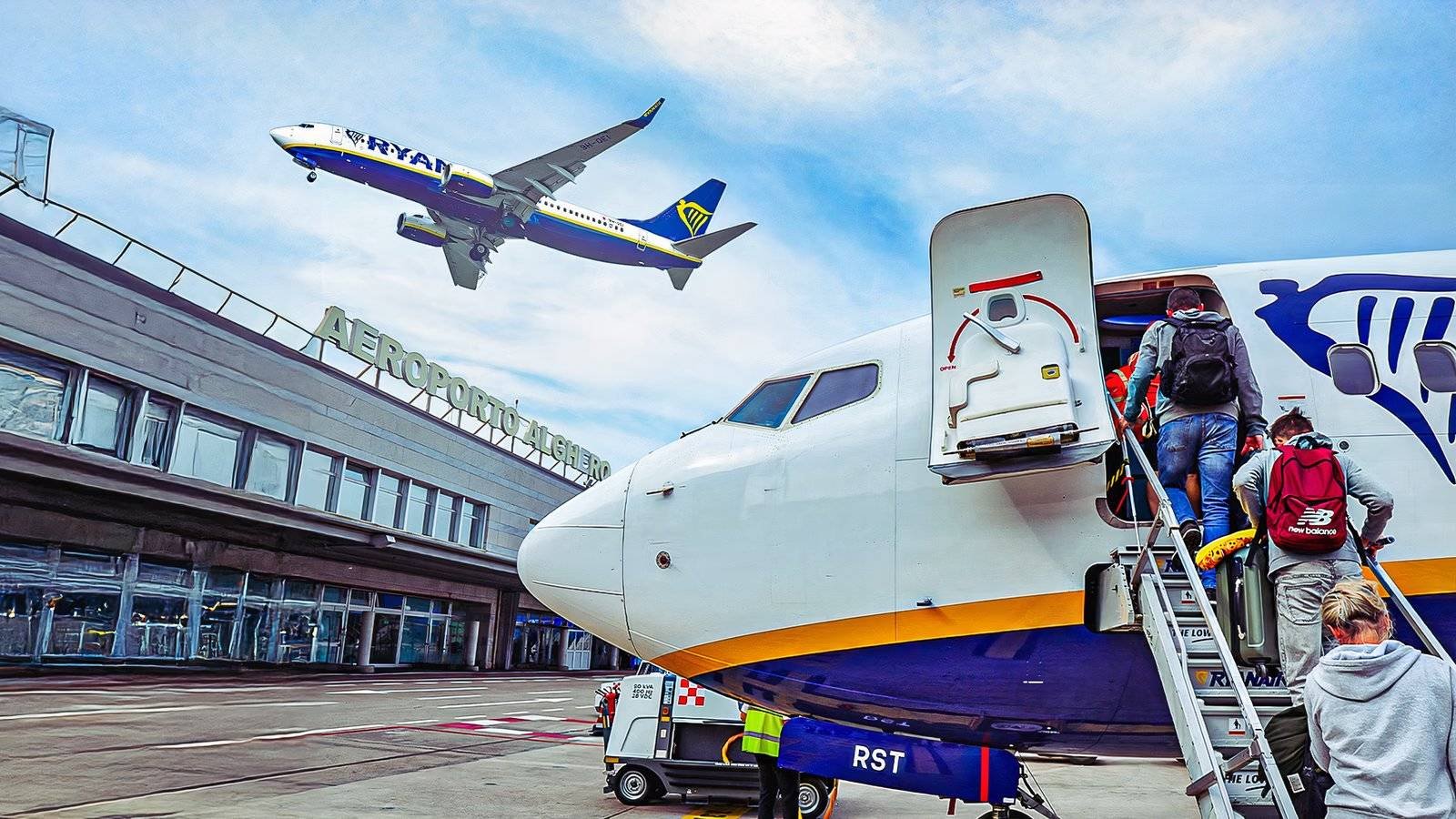
Ryanair has just come off the back of a record year. Not only did profit surge to smash past the airline’s previous all-time high, but it also added millions of passengers after becoming the first in Europe to carry over 200 million passengers a year earlier. What is more, the amount of revenue Ryanair pulled in per passenger also increased at a faster rate than operating costs for each.
In essence, Ryanair attracted more passengers than ever before and managed to keep more money from each of these. So, despite its label as a low-cost carrier, it’s interesting to know whether Ryanair made and is currently making more from each passenger boarding its economy-only flights than some rivals might get per business class ticket sold.
Low-cost Model Versus lucrative Business Class Tickets

Realistically, business class tickets are among the most profitable for airlines to sell. The reasons for this are two-fold. One, carriers are able to attract corporate and high-net-worth leisure travelers who are willing to pay a huge premium for a lie-flat bed, as well as other bells and whistles like airport lounge access in some cases. Two, the space, and even premium service in some cases, required for a business class seat is far outdone by the first class suites of today.
All this means that revenue per square foot can be highest for airlines within their business class cabins. But there is a caveat to that. While business class should usually offer the highest potential profit per passenger, the completely unbundled tickets that airlines such as Ryanair offer leave a massive scope to make more from customers over and above the income from a seat alone.
As those who have personally booked a Ryanair ticket beforehand will know, the process is far more convoluted than just opting for a specific flight and simply paying. Having selected the “basic fare,” customers booking through Ryanair are then offered: Ticket tiers for the likes of premium boarding; insurance covering medical expenses and personal belongings; the chance to pay for a specific seat; the option to pay extra for a larger cabin bag; a choice of check-in luggage; car hire; further travel insurance; airport parking or tickets for connections; and then finally, on the actual payment page, repeated options around priority boarding and insurance. Passengers could also potentially find themselves paying additional fees once at the airport itself.
Ancillary Revenue & Ultra-low Operating Costs

All of these extras, that passengers may choose to pay for over and above the base fare for their seat, generate what is known as ancillary revenue for Ryanair. Making such sales has become increasingly central to the business models of low-cost carriers in recent years. Ancillary revenue of €4.99 billion ($5.69 billion) last year accounted for 32.1% of Ryanair’s total €15.54 billion ($17.70 billion) turnover, for example. Though this was down against the 33.8% seen a year earlier, it was well up against the 24% recorded in 2016, mirroring similar trends seen at rivals easyJet and Wizz Air. For reference, Ryanair’s ancillary revenue per passenger averaged €24 ($27.33) over its last financial year, so it may not seem much on paper, but the figure clearly added up.
Against legacy carriers, low-cost airlines rely much more heavily on ancillary revenue as a means to keep the price of their base fares low on the surface. The additional income available from these sales can really help to boost profitability, however, bringing the figure closer to those that operate multi-class layouts.
Simple Flying Quiz
Think you really know Ryanair?
Answer 10 questions and put your knowledge to the test
Think you really know Ryanair?
Answer 10 questions and put your knowledge to the test
Easy (15s)Medium (10s)Hard (5s)
That said, such income is just one side of the story, and it is through exceptionally low operating costs that budget carriers compete. For Ryanair, a primary reliance on the Boeing 737 keeps costs around pilot training, maintenance, and parts down. Coupled with high-density seating and the practice of fast turnarounds to maximize its number of flights each day, the whole operation is optimized to squeeze every ounce of profit out of each aircraft and seat as possible.
How Much Does Ryanair Make Per Passenger?

Whether Ryanair makes more from each of its passengers than some peers get from business-class travelers is down to how you define the question. If it is “make” in terms of revenue or profit per passenger, Ryanair would appear well off, generating anything near the amount a business-class seat sale can make another airline.
Ryanair reported a profit of €2.26 billion ($2.57 billion) for the year to March, before provisions for a potential fine in Italy. This was on a total revenue of €15.54 billion ($17.70 billion), including ancillary revenue discussed above. Given it carried 208.4 million passengers over the year, one could infer pretty simply that revenue and operating profit sat at approximately €74.60 ($84.97) and €10.84 ($12.35) for each, respectively. This, of course, encompassed operating costs, which sat at €13.09 billion ($14.91 billion) for the year, and so €62.82 ($71.55) per passenger.
Ryanair’s latest full-year results:
Year-ended | March 2025 | March 2026 | +/- |
Passengers | 200.2 million | 208.4 million | +4% |
Load factor | 94% | 94% | – |
Revenue (€) | 13.95 billion | 15.54 billion | +11% |
Operating costs (€)* | 12.39 billion | 13.09 billion | +6% |
Profit after tax (€)* | 1.61 billion | 2.26 billion | +40% |
*Pre-exceptional €85 million Italian fine provision in FY26.
All told, this meant Ryanair’s profit margin came in at 14.5% over the year, essentially meaning it pocketed that percentage from each passenger it carried. This is arguably the most vital figure to consider, since Ryanair deals in far lower amounts of money per customer than legacy carriers do for each of their business-class passengers.
Does All Nippon Airways Make More?

Japan’s All Nippon Airways (ANA) might offer a useful comparison as the airline with the smallest price difference between economy and business class globally, according to booking comparison website Holidu. Based on its latest results covering the year to March 2025, the carrier netted operating revenue of ¥2.54 trillion ($16.38 billion), aiding an operating income – or profit – of ¥217.44 billion ($1.34 billion).
This ultimately left an operating income margin ratio, or profit margin, of 8.6%. So overall, Ryanair enjoyed a fatter margin than ANA in the respective years covered by each of their latest figures. That said, ANA’s figure incorporated cargo as well as passenger operations, while its seating was divided into different classes. As such, the margin here reflected more than just the profit made per seat sold, and the figure would likely have been much higher for business class sales.
As is common across the industry, ANA does not break down the likes of revenue, profit, and margins into seating classes, making a definitive comparison against Ryanair somewhat complicated. However, its results show passengers amounted to 54.67 million over the year, with these contributing ¥1.617 trillion ($9.99 billion) to revenue. Per passenger, ANA turned over ¥29,577.46 ($182.93) as a result, equating to €160.61 in Euros, and so clearly a step above Ryanair.
“Lower Fares Than Competitors”: Ryanair Is Now Debt-Free With 620 Owned 737s
As Ryanair celebrates becoming debt-free, the airline’s CFO, Neil Sorahan, emphasizes the financial strength this carrier now holds.
Profit Margins Can Really Vary

So, in many ways, whether Ryanair makes more than ANA per passenger depends on which metrics one uses. Indeed, Ryanair’s overall profit margin has been higher in recent years thanks to its more streamlined model and ability to keep costs lower, but the revenue it made per passenger was far lower.
ANA may well have enjoyed a higher profit margin on business class seats, alongside this, but in the absence of specific figures from the airline itself, an educated guess would have to be made on what this figure might have been. If business class contributed 40%, or ¥650 billion, of passenger revenue, and up to 75% of passenger operating profit worth in the region of ¥100 ($618.22 million) to ¥120 billion ($741.86 million), say, then an operating margin in the region of low to mid-double digits may be a fair assumption.
In this sense, Ryanair would typically have made broadly the same as ANA got from business-class passengers in terms of relative profit margin, but that is without taking into consideration a string of variables around each particular customer. As touched on above, ancillary revenue can and usually is a real money-maker for low-cost carriers like Ryanair. While its overall profit margin was 14.5% last year, the figure for a passenger splashing out on lots of extras would have been far higher, given that additional ancillary revenue generated for Ryanair. At the same time, separating extras from the lone ticket price can be a risky game, and leave passengers paying far less overall if the likes of baggage, priority boarding, insurance, and so on are not needed, which would eat into that profit margin in turn.
Ryanair Could Make More

What this means is that it is really a case of whether Ryanair could, rather than does, make more per passenger than an airline might from a business class customer. In short: Yes, it could, but only relatively. At least, that is in terms of the amount of profit pocketed as a proportion of the overall revenue generated from each.
Of course, business class seats come at a premium, and at several thousands of dollars typically, shadow anything Ryanair usually charges for a flight. Business class operators naturally deal with larger sums on a passenger-by-passenger basis than their Irish low-cost counterparts as a result. But there too, Ryanair’s own no-frills model has proven to be incredibly lucrative and is only growing from strength to strength as time passes. Where its revenue per passenger increased by 7% last year, operating costs per passenger edged up by just 1%. So profitability per passenger is moving in the right direction for the airline, and with it, the amount it takes home per ticket sold.
Catch what other trackers miss
Emergency squawks, holds, NOTAMs — live signals, no signup.
Open tracker
Catch what other trackers miss
Emergency squawks, holds, NOTAMs — live signals, no signup.
Open tracker