dailynewsnblog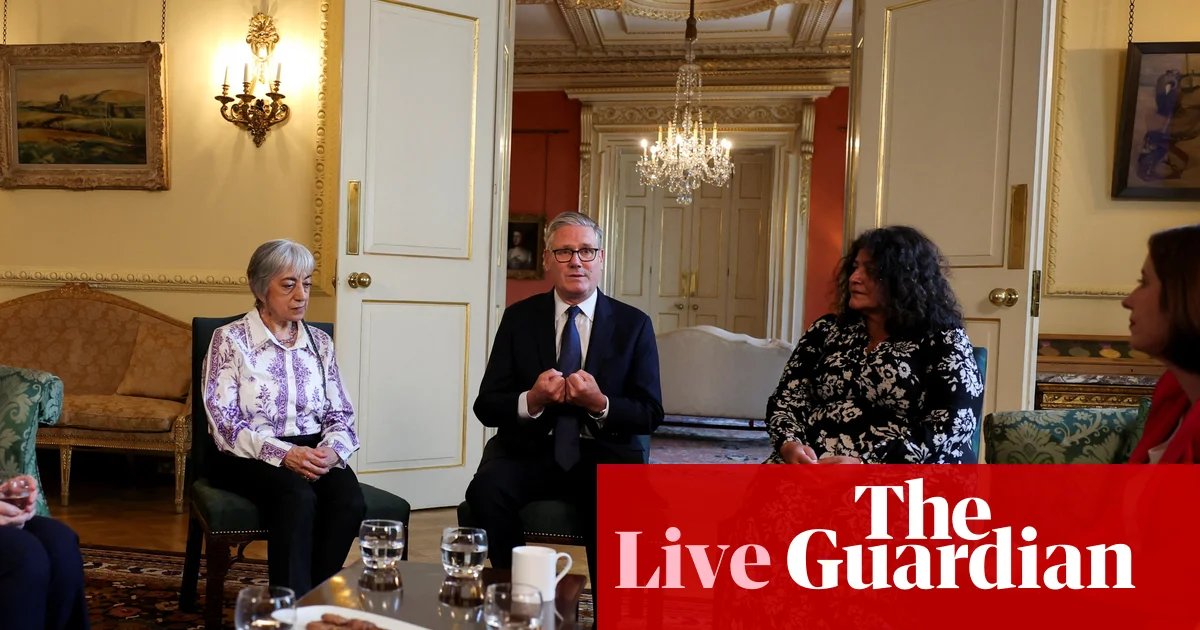
Starmer says forced adoption is ‘a stain on our history’
Starmer said what happened to the mothers, and their children, should never have happened. He said:
What happened to them, and to tens of thousands of mothers, children, and families, should never have happened. It is a stain on our history.
Mothers, many young, vulnerable, and without support were coerced, bullied, or misled into feeling that they had no choice but to have their children taken away from them. What a thing to do.
These were not isolated or accidental acts, they were practices embedded within systems across local authorities, across voluntary and faith-based institutions, and in health and social care services, including parts of what is now the NHS.
All institutions that operated with power over people’s lives, yet they did so without compassion, without consent, and without dignity or proper safeguards. These practices were particularly prevalent between 1949 and 1976 but also extended beyond those years.
Key events
The Adult Adoptee Movement, which represents adults who were brought up to think that their mothers had chosen voluntarily to give them away, has welcomed the PM’s apology. But it also says it will be judged by what happens next.
In a statement, it said:
This apology is for the adoptees who were taken at their most vulnerable and sent to strangers.
For those who lost their wider family, medical history, culture, language or nationality. For those who suffered abuse, neglect or racism in their adoptive homes; who grew up hearing they were from ‘bad blood’, should be ‘grateful’, or had been ‘saved’.
For those subjected to the brutal, systemic racism of the adoption system who were judged ‘less than’ because of race.
For those who, due to disability or medical conditions, were judged less worthy of love and care. For those who were deceived about their origins.
For those who live with the long-term physical and mental health consequences of adoption. For those who have died.
It marks a fundamental correction of the narrative on historic adoption practices. What happened to you was wrong.
The measure of this apology will not be the words spoken today, but the actions taken tomorrow.
Bridget Phillipson, the education secretary, has issued her own statement about forced adoption. She said:
The pain carried by mothers, adopted children and their families who suffered this appalling injustice is unimaginable.
They were cruelly denied irreplaceable moments, shared experiences and relationships which should have been theirs, and were made to feel ashamed.
Today, on behalf of the British state, we say with one voice: this was wrong, and we are sorry. An apology cannot undo what happened, but it can be the start of real change, alongside providing the practical action, care and support that people need.
The Movement for an Adoption Apology has described the PM’s apology as a “positive step”.
In a statement, it said:
We recognise and appreciate the invaluable spirit of co-operation that has developed with the Adult Adoptee Movement (AAM), who work tirelessly for the many thousands of adoptees affected.
Though this apology has come too late for a significant number of people, it is a positive step for the hundreds of thousands of mothers still living with loss, whose suffering has at last been acknowledged, and for the children who were taken – now adult adoptees – whose lifelong trauma has now been recognised.
Starmer does not commit to ‘redress’ for forced adoption victims, but says government looking to support them
Alex Burghart, the shadow Cabinet Office minister, responded to the PM on behalf of the Conservative party. He said forced adoption was “mercifully alien to us” today.
He said:
185,000 children grew up in Britain without their mothers because of bad decisions and fundamentally flawed beliefs that treated unmarried mothers with a shame and stigma that today is mercifully alien to us.
But those decisions and those beliefs have left a permanent mark on each and every one of those lives, on children separated from their mothers and on the mothers whose children were taken away.
As the prime minister said, this is a stain on our history.
Burghart asked Starmer if the government was considering setting up a redress scheme, as the education committee recommended in its report earlier this year.
In response, Starmer thanked Burghart for the tone of his speech, and said it was important those affected knew that the apology issued today was supported by the whole of the Commons.
On the point about redress, he said the government was looking at schemes and being guided by those affected as to what they thought was most appropriate.
In its report, the education committee said:
The government should formally and publicly recognise that the state played a central role in enabling and sustaining historical forced adoption practices. Acknowledging this responsibility is essential in order to correct the public record, address previous misrepresentations, reduce the burden of blame and shame felt by many mothers and adoptees and the feelings of abandonment and rejection felt by many adoptees, and lay the groundwork for a credible apology and meaningful redress for those affected.
Starmer says peer-led support groups for mothers and adopted adults affected by forced adoption to be set up
Starmer said the government would set up peer-led support groups for mothers and adopted adults affected by forced adoption, and introduce measures to make it easier for them to access their records.
He said:
We will fund the development of a national online resource, creating a single access point to locate records wherever they may be held across the country.
We will consult on requiring existing records to be retained for 100 years, so they will remain available a
And the education secretary is today writing to local authorities, regional adoption agencies, and voluntary adoption agencies, setting out the expectation that requests for records should be responded to swiftly and with compassion and consistency.
And we will expand access to funded intermediary services, with particular focus on pre-1976 cases, where access to support is currently most limited.
We will establish national virtual peer-led support groups for mothers and adopted adults to improve access to ongoing trauma-informed support across the country, and we will work with NHS England to ensure those affected are taken seriously when they seek help.
This includes new support for clinicians to better understand the impact of forced adoption and respond appropriately in their care. NHS England will also explore how those who wish to do so can have their experience of forced adoption appropriately recorded in their health record.
And finally, to further recognise those affected and ensure we learn the lessons of the past, we will commission a testimonials project to capture the stories of those with experience of historic forced adoption practices.
Starmer said children forced into adoption “suffered a further injustice” becauase they had to “fight for the basic human right to know their own story”.
He said they were treated as if “the information about their own lives did not belong to them.
He went on:
Debbie was told her birth mother’s life would be in danger if she tried to search for her.
Barriers were put in place at every twist and turn.
Records have, in some cases, been lost, altered, or not made fully accessible to those seeking answers, and the whole process is painfully slow, traumatic, and dehumanising all over again.
We do say sorry and we mean it, but sorry is not enough.
This must also be the start of real change, working with those affected and their families to improve access to records and to provide the care and support that people need.
Starmer says forced adoption was ‘systemic failure’, and state did not protect people from harm
Starmer said that the victims of forced adoption were let down by the state.
Governments funded, enabled and relied on systems that were not consistently or effectively overseen.
The state did not prevent harm from continuing.
The state bears responsibility for the systems it funded and legitimised, which enabled these practices to occur.
The state did not do enough to protect mothers, children, and families from harm, and for this systemic failure, I am truly sorry.
‘We are deeply and profoundly sorry’ – Starmer delivers apology over forced adoptions
Starmer told MPs about the experience of one victim, the former Labour MP Ann Keen (see 10.18am) who recalls being “stitched without anaesthetic” and being told: “You will remember the pain because you’ve been a bad girl.”
Starmer said the apology he was giving would not be able to completely lift the shame women were made to feel at the time.
But he hoped it would help a little, he said.
He went on:
There are many, many thousands of [people], including some who still have not been able to speak about what happened to them to this day, and I hope that this statement, this apology, perhaps gives some of them the confidence to speak about what happened to them, because it will help in a small way.
But I say this: the shame is not yours. The shame was never yours. The shame is ours. And I say that on behalf of the whole country; I say it to every single person impacted.
We are deeply and profoundly sorry to the mothers who were told they were unfit, who were prevented from caring for the children they desperately wanted to help and to keep, and who have carried this loss for decades.
To those who were not given the information they needed to provide informed consent, who face pressure or coercion, and who experience practices that were unethical.
To the sons and daughters, the children who are now adults, who, through pressure and coercion within these systems, were taken from their families, denied their identity, their history, and sometimes their safety.
To those who grew up believing that they were unwanted.
Starmer says forced adoption is ‘a stain on our history’
Starmer said what happened to the mothers, and their children, should never have happened. He said:
What happened to them, and to tens of thousands of mothers, children, and families, should never have happened. It is a stain on our history.
Mothers, many young, vulnerable, and without support were coerced, bullied, or misled into feeling that they had no choice but to have their children taken away from them. What a thing to do.
These were not isolated or accidental acts, they were practices embedded within systems across local authorities, across voluntary and faith-based institutions, and in health and social care services, including parts of what is now the NHS.
All institutions that operated with power over people’s lives, yet they did so without compassion, without consent, and without dignity or proper safeguards. These practices were particularly prevalent between 1949 and 1976 but also extended beyond those years.
Starmer makes statement to MPs on forced adoptions
Keir Starmer is making his statement to MPs now.
He starts by saying he met mothers and adult adoptees affected by the forced adoption policies in Downing Street this morning. They are in the gallery watching, he says.
I have to confess, as I said to them this morning, I found it hard to read the testimonies and to hear their stories.
I find it particularly hard, as a dad. How much harder it must have been for them to go through that, to set out their testimonies and tell their stories over and over again.
PM’s apology over forced adoption should include commitment to ‘ongoing support’, education committee chair says
Helen Hayes, the Labour chair of the Commons education committee, has said today’s apology from the prime minister to victims of historic forced adoption policies should include a commitment to “meaningful and ongoing support”.
In a statement, she said:
I welcome today’s long-overdue apology for the state’s role in the historical forced adoption practices that coerced and traumatised mothers and children for decades. While an apology should have been made years ago, I am pleased that the day some campaigners feared would never come has finally arrived …
When the committee published our report earlier this year, we were clear that an apology must be unequivocal, must be co-produced with and reflect the experiences of survivors, and must commit to offer them meaningful and ongoing support … Today’s apology is an important milestone, but it is only a first step.
Tories propose relaxing some rules affecting school-age workers to help more young people get summer jobs
The Conservatives have announced plans intended to make it easier for young people to get part-time work. They are describing it as a campaign “to save the summer job”.
The Tories claim that Labour measures such as the employer national insurance increase, the Employment Rights Act and business rates increases have led to a reduction in work opportunities for young people.
But this campaign is focused on three measures that affect people employing school-age workers. In a briefing note, the party explains:
The current regulations governing part-time work for young people are also cumbersome. For example, at present, school-age workers may work no more than two hours on a Sunday, whether during term time or school holidays. This makes Sunday near impossible for employers and pointless for employees. Those below school leaving age are also prohibited from working after 7 pm. This rules out many of the evening and weekend shifts that are most compatible with school times.
In many areas local authorities also require employers to obtain a child employment permit before employing anyone below school leaving age. Taken together these measures make it near impossible for young people to take on summer jobs.
The Tories say they would: repeal the current restrictions on working on Sundays; relax the window for evening work to 9pm; and remove the necessity for a child employment permit.
Other employment laws applying to school-age workers would continue to apply, the party says.
Andrew Griffith, the shadow business secretary, said:
A generation risks being locked out of the workplace, missing out on the skills, confidence and experience that come from a summer job.
The plans we are announcing today will help change that by allowing employers to once again give young people the chance they need.
Tories call for Immigration Act to be amended so Rochdale grooming gang leader can be deported
Chris Philp, the shadow home secretary, has called for the law to be changed to allow the Rochdale grooming gang leader, Shabir Ahmed, to be deported. (See 9.39am.)
Philp told the Today programme:
He’s a vile rapist who didn’t just organise the rape of young girls as young as 12 years old. He actually ran a gang, doing it on a huge scale. He should be kicked out of the country, deported back to Pakistan, and the law needs to be changed.
Philp said he will be laying an amendment in the coming months to change the Immigration Act 1971, which stops people arriving in the UK from Commonwealth countries prior to 1973 being deported.
He said the Labour MPs Paul Waugh and Jim McMahon, who represent Rochdale and Oldham, have agreed that the law needs to change.
“I hope the government will support my amendment,” Philp added.
Bankers and unions set for clash over possible Burnham tax raid on UK banks
Battle lines are being drawn between City bosses and trade unions over a possible tax raid on UK banks to help fund Andy Burnham’s package for struggling households this winter, Kalyeena Makortoff and Richard Partington report.
Former Labour MP forced to give up baby for adoption says mothers will be ‘released from shame’ by PM’s apology
Ann Keen, a former Labour health minister who was forced to give up a baby for adoption when she was a teenager, has said she is looking forward to “being released from my shame” when she and other campaigners get a state apology.
Keen was sent to a Swansea mother and baby home in 1966, when she was 17. She told the Today programme:
We all need this apology because we have always been accused of giving up our babies and we didn’t give them up.
In particular, so many were taken without our knowledge and in my own instance, I went to see my baby on the eighth day because I was told I could have him for 10 [days], and they said: ‘Oh no, he’s gone now. You were getting far too close.’
Keen said mothers like her were told that their children would be better looked after if they were adopted. “Sadly, that hasn’t always been the case,” she said.
She said they were told they would not be entitled to any welfare to help them bring up their children which was “totally untrue”.
And some were given medication to dry up their milk which turned out to be carcinogenic, she said.
Keen, whose son found her and renewed contact after he learned at the age of 27 that he had been adopted, said Starmer was right to apologise.
I understand why the prime minister’s team wanted to get this right, because we’ve now got the opportunity to really put this wrong right, we’ve been waiting a long time, and so I’m just looking forward to today and being released from my shame.
There’s so much trauma attached to all of our families in so many different ways … Even when I was being sworn in as, as an MP, I couldn’t do it because I didn’t feel I was worthy.
Keen, who was the MP for Brentford and Isleworth from 1997 to 2010, will be one of the victims meeting the PM before he makes his statement to the Commons at around 11.30am.
Minister says ‘work needs to happen’ to persuade Pakistan to be willing to take back Rochdale grooming gang leader
Officials are “looking at every route” to deport the Rochdale grooming ringleader set to be released from prison today, a minister has said.
As Josh Halliday, Hannah Al-Othman and Rajeev Syal report, Andy Burnham, who is set to become PM later this month, is among those who have said the government should consider all options to enable Shabir Ahmed to be deported.
In an interview on LBC this morning, Jacqui Smith, the skills minister, said Ahmed was one of a “small number” of people who came to the UK from Commonwealth countries 50 years ago whom the law prevents from being deported. But she also said the government was “doing everything we can, looking at every route, to get this guy out of the country.”
She also suggested Pakistan had refused to take Ahmed.
She said:
There are two problems here.
Number one, there are a very small number of people who came to this country over 50 years ago from Commonwealth countries where the law doesn’t allow them to be deported.
And, secondly, of course, in order to deport somebody, the country to which you are going to deport them needs to be willing to take them.
We’ve removed this man’s British citizenship. He’s a Pakistani citizen.
But there is also work that needs to happen in order to persuade Pakistan to take him back.
How Church of England apologised for its role in forced adoptions
Two weeks ago, the Church of England apologised for its role in forced adoptions, telling survivors the “shame is ours”. Here is Chris Osuh’s story.
Starmer to issue formal apology to mothers and children harmed by historic forced adoption policies
Good morning. Keir Starmer is clearing the decks in his last three weeks in office, and today he is going to settle one unresolved issue when he delivers a formal apology on behalf of the state to victims of forced adoption policies that were in place in the middle of the last century.
Between 1949 and 1976, an estimated 185,000 babies were taken from unmarried mothers and placed for adoption in England and Wales as a result of a culture of shame surrounding pregnancy outside marriage. The mother and baby homes involved were mostly run by religious organisations, but councils were involved in placing children for adoption.
In March the Commons education committee said the government should issue a formal apology. Its report is here, and here is Jessica Murray’s story at the time.
And here is the preview story from the Press Association ahead of Starmer’s statement today.
Survivors of historical forced adoption are to get the state apology they have spent decades campaigning for when Keir Starmer says sorry in parliament.
The prime minister is expected to stand in the Commons and acknowledge the harm caused when an estimated 185,000 babies of unmarried mothers were adopted in England and Wales between 1949 and 1976.
Starmer’s formal apology will come after he meets with campaigners in Downing Street this morning.
The joint committee on human rights (JCHR) called for a state apology in 2022, saying “the government bears ultimate responsibility for the pain and suffering caused by public institutions and state employees that railroaded mothers into unwanted adoptions”.
Mothers forced to give up their babies have previously described the harrowing experiences of having them taken away and the lingering feelings of shame, while adults who were removed as children from their mothers have spoken of a “harmful narrative” which long persisted that adoption had saved them.
It was confirmed last month by education secretary Bridget Phillipson that a long-campaigned-for apology was coming in relation to what she called a “shameful period in our history”.
The Westminster apology comes three years after administrations in Cardiff and Holyrood said sorry to people impacted across Wales and Scotland.
In Northern Ireland, an apology is also expected but not until after a public inquiry has been carried out, following a recommendation from a 2021 report on mother and baby institutions, Magdalene laundries and workhouses.
Despite the JCHR report recommending ministers apologise, the then-Conservative government in 2023 said while it was sorry “on behalf of society” for the way the women had been treated, it did not think a formal apology appropriate “since the state did not actively support these practices”.
Here is the agenda for the day.
9am: Ed Davey, the Lib Dem leader, is on a visit related to his party’s policies on water companies.
9.30am: Peter Kyle, the business secretary, takes questions in the Commons.
Around 11.30am: Keir Starmer makes a statement to MPs including an apology to victims of the government’s forced adoption policy in the mid-20th century.
Afternoon: Kemi Badenoch is on a visit in Hertfordshire.
And, at some point today, Shabana Mahmood, the home secretary, will publish a written statement on her response to part one of the inquiry into the Southport killings.
I’m afraid we are not able to open the comments today because the moderators do not have enough capacity.
If you want to contact me, it is best to use social media. You can reach me on Bluesky at @andrewsparrowgdn.bsky.social. The Guardian has given up posting from its official accounts on X, but individual Guardian journalists are there, I still have my account, and if you message me there at @AndrewSparrow, I will see it and respond if necessary.
I find it very helpful when readers point out mistakes, even minor typos. No error is too small to correct. And I find your questions very interesting too. I can’t promise to reply to them all, but I will try to reply to as many as I can, either BTL or sometimes in the blog.