dailynewsnblog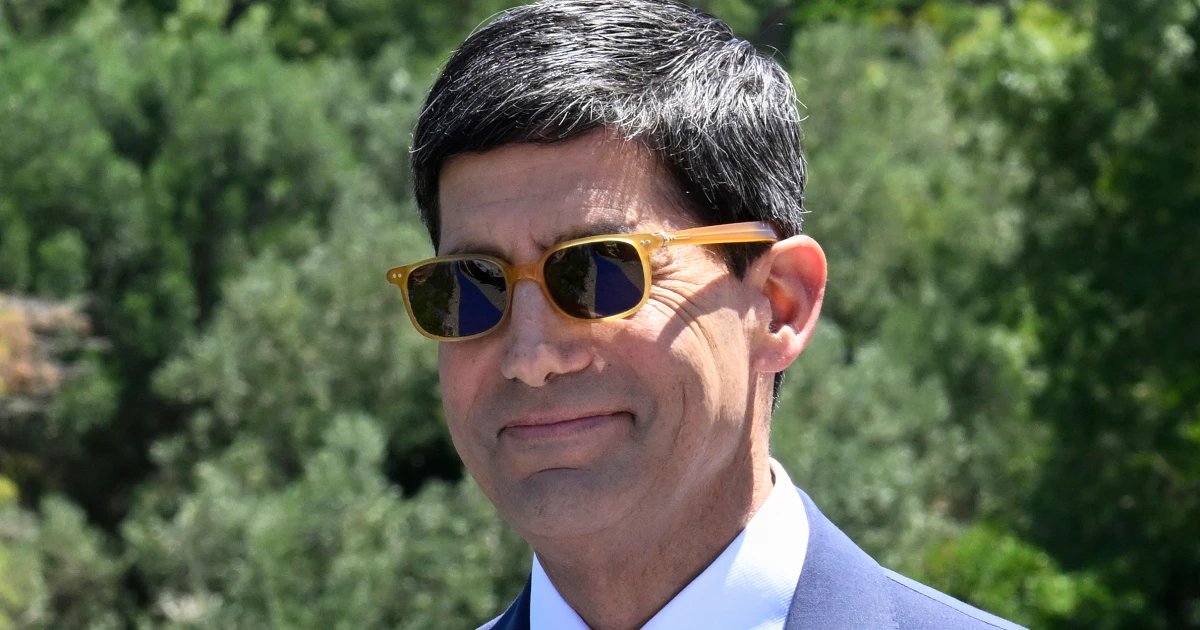
Federal Reserve Chairman Kevin Warsh said Wednesday that inflation risks have declined in recent weeks but that the central bank still had more work to do to rein in rising prices.
Limited time: Save 25% on NBC News subscription
Get exclusive reporting, live Q&As and ad-free reading.

“Inflation risks have come down,” Warsh said, noting that “energy prices have come down quite substantially” since the United States and Iran signed a memorandum of understanding to end the ongoing war last month.
“They’re still a bit above where they were pre-conflict, but they’ve come down,” he said.
Inflation is a sore spot for Americans, who are growing more dissatisfied with the economy, according to polls and consumer surveys. In May, inflation as measured by the Consumer Price Index jumped to 4.2%, its highest level since 2023. The Fed’s preferred inflation gauge also showed price growth was hot, driven by the surge in energy prices.
Warsh also weighed in on artificial intelligence’s growing impact on the economy and inflation, sounding an optimistic note on longer-term prospects for the technology.

“We’re all being hit by a series of shocks in the U.S.,” Warsh said. “The AI shock is leading to a boom in capital expenditures. We see that first and foremost in demand, but I’m confident we’re going to see it in supply at some point. So we’re spending most of our time trying to monitor those developments.”
Still, the central bank chief declined to give any hint as to if policymakers will raise interest rates: “I’m not going to give you any prediction as to what we will do.” Warsh has said that he plans to break with recent Fed leaders in limiting the amount of communications about the Fed’s future plans.
Asked if the Fed will make that decision regardless of what President Donald Trump wants, Warsh said, “We’ve been an independent central bank for a very long time. We’re going to be an independent central bank at this moment, and you’re going to see no changes on that.” Trump has repeatedly pushed for the Fed to cut its key rate, often attacking Warsh’s predecessor, Jerome Powell, over the matter. (Powell, like Warsh, was appointed to the role by Trump.)
Warsh was in Sintra, Portugal, speaking alongside European Central Bank President Christine Lagarde, Bank of England Governor Andrew Bailey and Bank of Canada Governor Tiff Macklem at one of the highest-profile gatherings of central bankers each year.
Lagarde largely agreed with Warsh’s view on inflation, saying that upside risks to inflation and downside risks to economic growth prospects “are probably more broadly balanced” now than “a few weeks ago as a result of what we’re seeing” with energy prices.
The European Central Bank is one of only two major central banks to have raised rates since the war with Iran started, while the Federal Reserve has kept rates unchanged in its most recent meetings as it monitors the passthrough of inflation from energy to other parts of the economy.
One key area Warsh said the Fed is monitoring: the AI industry.
As major cloud computing companies such as Microsoft, Meta, Alphabet and Amazon rush to build data centers around the globe to power new AI models and systems, the price of computer equipment and memory specifically has been skyrocketing.
Consumer electronics companies such as PlayStation and Xbox have raised prices as a result. But the most notable price hike came Thursday, when Apple hiked prices on many of its laptop and desktop computers along with iPads, the Apple TV device and HomePod speaker.
Apple didn’t raise the prices of the iPhone, the Apple Watch and AirPods, but many analysts project those could be next.
Asked about the AI boom and whether it may be inflationary over the longer term, Warsh said it is “one of the central questions that all of us have for our day jobs.”
But Warsh predicted that the United States was “likely to be a big winner over the medium term in this.”
“Who knew when the internet was born that the internet was going to create a million and a half jobs as Uber drivers? We are in the first or second inning of this revolution,” he said.
“This is a big paradigm shift, both for the conduct of our policy and for our economies,” Warsh continued. “I think the jobs will be greater, prosperity will be stronger.”
Several economists, corporate leaders and analysts warn that AI could significantly reduce jobs. A study from financial operations firm Ramp found that companies that are spending more on AI are also growing their workforces.
Repeating what the Fed said after its most recent interest rate meeting, Warsh said that labor markets are steady and the demand side of the economy is solid: “Again, this is before we see the fruits of AI.”
“But we’ve all looked around and we’ve seen that prices are too high, and I don’t think I’m the only one on this stage that’s recommitted to deliver price stability,” Warsh said, referring to one of the central bank’s two legal mandates.
In Warsh’s first meeting as chairman last month, the Fed held interest rates steady as other policymakers projected a likelihood of hiking interest rates before the end of the year — projections the chairman would downplay in a press conference.
The Fed’s rate-setting committee is scheduled to meet July 28 and 29.