Space Lasers Show How Venezuela’s Earthquakes Reshaped the Earth’s Crust


The European Space Agency released a satellite image that shows the upheaval left behind by the pair of earthquakes that rocked Venezuela last week.

The image was created using observations from the Sentinel-1 satellites, which are part of the European Copernicus program. These satellites do not take conventional photographs; instead, they use their radars to “illuminate” the Earth’s surface and record the time it takes for the signal to return to the sensor. By comparing two measurements of the same location taken on different dates, scientists can determine whether the ground has shifted, even when that shift is too small to be seen with the naked eye.

To create the map, scientists compared an observation taken on June 18—one week before the earthquakes—with another taken on June 25, the day after the pair of earthquakes that were mangitude 7.2 and 7.5 respectively. This comparison allowed them to construct what’s known as an interferogram revealing how much the ground deformed following the event.

Image may contain Accessories Gemstone Jewelry and Ornament

This satellite image shows the area around Caracas, Venezuela, which was struck by a double earthquake on Wednesday, June 24.

Illustration courtesy of Copernicus Sentinel/ESA

The ESA explains that what stands out in the map are the repeating colored bands that form horizontal rows in the north. Each complete repetition of the sequence—blue, green, yellow, red, and blue again—represents a fixed increase in the change in distance between the satellite and the ground. The more complete cycles that appear between one area and another, the greater the cumulative ground displacement.

The pattern of bands observed in the northern part of the map corresponds to the region at the epicenter of the earthquakes, which is also where the main deformation occurred. The bands roughly follow the path of the San Sebastián fault system, one of the main tectonic structures in northern Venezuela. The ESA estimates that the displacement in the region was on the order of 30 centimeters (12 inches).

terremoto venezuela

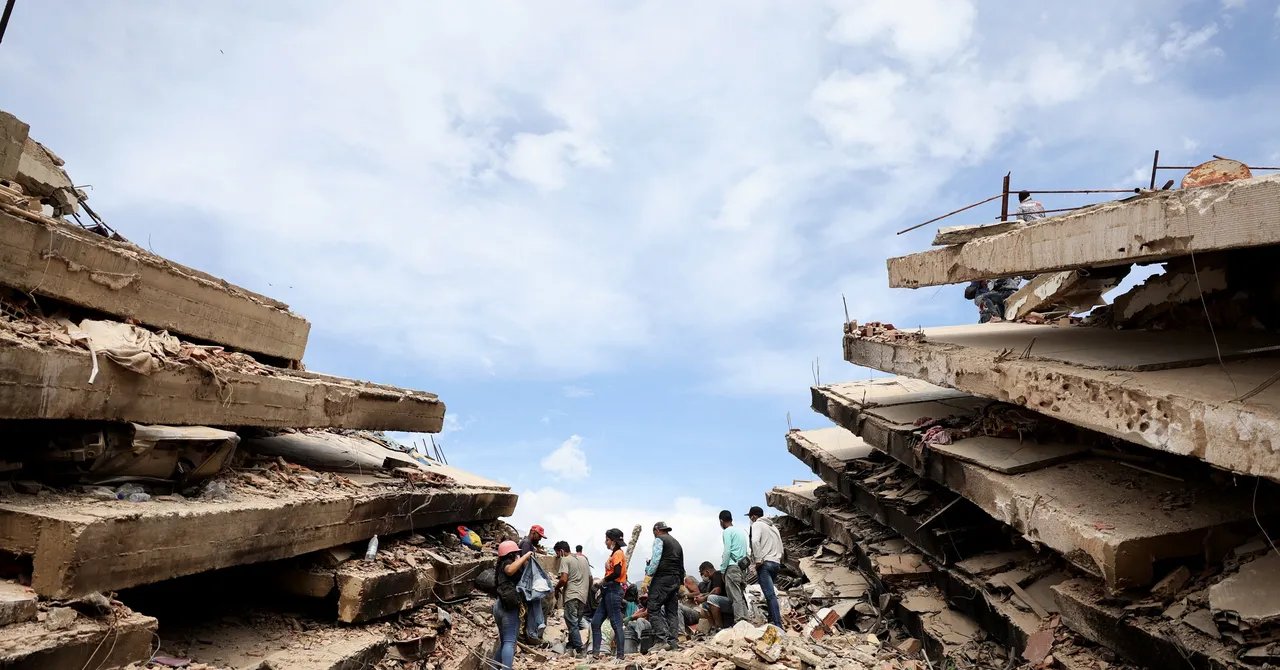
Rescue teams continue to search for victims and work through collapsed buildings in the aftermath of the earthquake that struck Venezuela and other regions of the Caribbean. June 28, 2026. Caraballeda, La Guaira.

Photograph: Jesus Vargas/Getty Images


Source link

  • Related Posts

    More Than 1 in 5 Users Make Health Decisions Based on Social Media, Despite Widespread Distrust

    One second, you’re watching a cute animal video, and the next, you’re being given unsolicited health advice from a wellness influencer who swears a trendy diet cured their illness.  We…

    Fujifilm launches two new QuickSnap cameras because Gen Z can’t get enough

    Fujifilm is expanding its QuickSnap lineup with a new disposable camera focused on taking monochrome photos and another built to survive harsh outdoor environments. The $22.90 QuickSnap Black and White…

    Leave a Reply

    Your email address will not be published. Required fields are marked *

    You Missed

    Map shows hot weather warnings across Canada

    Xbox Reportedly Speeding Up Development on New Fallout Games, Leaving Fans to Wonder What’s Next

    Xbox Reportedly Speeding Up Development on New Fallout Games, Leaving Fans to Wonder What’s Next

    Ocean surface temperatures hit record high

    Ocean surface temperatures hit record high

    More Than 1 in 5 Users Make Health Decisions Based on Social Media, Despite Widespread Distrust

    More Than 1 in 5 Users Make Health Decisions Based on Social Media, Despite Widespread Distrust

    England vs New Zealand: Ben Stokes’ career ends with series defeat

    England vs New Zealand: Ben Stokes’ career ends with series defeat

    Hotel101 Global Announces Definitive Binding Agreements Signed for the Development of Hotel101 in Bangkok, Thailand