dailynewsnblog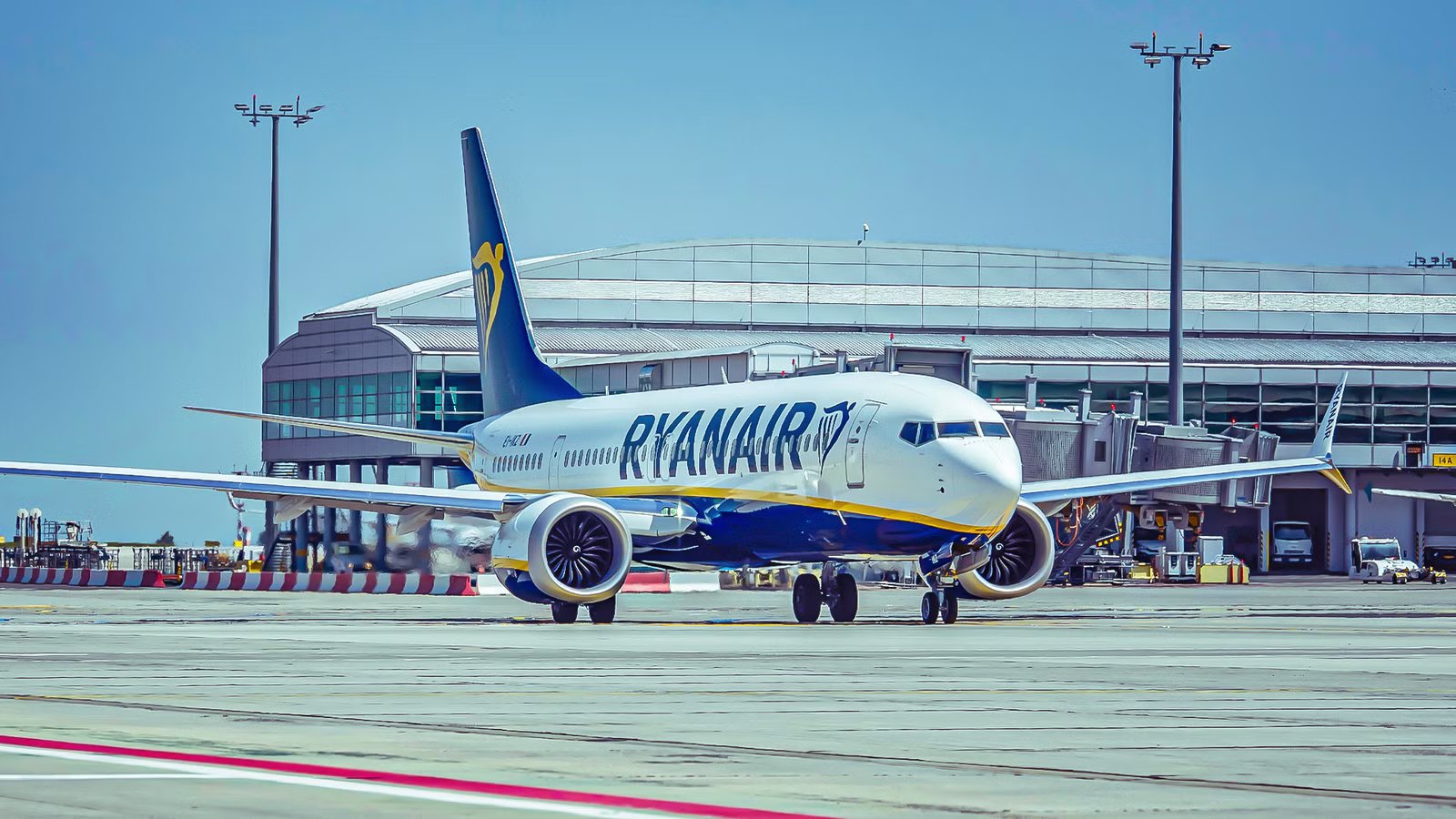
Ryanair has built its brand to be synonymous with ultra-low-cost flying throughout Europe. At the heart of Ryanair’s operations in 2026 is the Boeing 737 MAX, powering both its dense short-haul network and its slightly longer leisure routes across Europe. The MAX enables Ryanair to operate efficiently with higher seating capacity, lower fuel consumption, and reduced emissions compared to older 737 models, making it a critical tool in the airline’s ultra-low-cost strategy.
By standardizing on the 737 MAX, Ryanair can maintain high-frequency schedules, optimize aircraft utilization, and keep operational costs low, allowing the airline to offer competitive fares while maintaining profitability. Even though Ryanair primarily serves short to medium-haul sectors, the airline’s longest nonstop routes illustrate how the 737 MAX supports its seasonal operations.
Flights to destinations such as the Canary Islands, Cyprus, and selected Mediterranean hubs are managed efficiently with the MAX, balancing seat density and fuel economy for longer sectors without compromising turnaround times. In 2026, these longer sectors are not only a small but strategic part of Ryanair’s network. Rather, they highlight the versatility and central role of the 737 MAX in enabling the airline’s consistent growth and low-cost leadership.
The Boeing 737 MAX In A Nutshell

The Boeing 737 MAX family represents the latest generation of the world’s best-selling 737 series, offering significant improvements in fuel efficiency, range, and passenger comfort compared to earlier 737 Next Generation models. Introduced in the mid-2010s, the MAX incorporates advanced LEAP-1B engines, redesigned winglets, and aerodynamic refinements that reduce fuel burn by up to 14% per seat. The family includes multiple variants: the MAX 7, MAX 8, MAX 9, and MAX 10.
The 737 MAX 8-200 is a high-density version of the MAX 8 developed specifically for low-cost carriers. It allows operators to carry up to 200 passengers while maintaining the same fuel-efficient performance as the standard, and very popular, MAX 8.
Aircraft across the MAX family can serve short domestic hops, high-frequency leisure markets, and longer single-aisle sectors of up to roughly 3,500 nautical miles. Modern cabins, quieter engines, and updated flight decks further enhance passenger experience and airline operations. For Ryanair, the 737 MAX is central to fleet standardization, cost control, and long-term network growth.
Ryanair’s Longest 737 MAX Routes

In 2026, Ryanair continues to operate a dense network of short and medium-haul flights across Europe, but certain sectors stand out as its longest nonstop routes using the Boeing 737 MAX. These flights typically connect Western European bases with more distant leisure or secondary business destinations, offering slightly longer stage lengths while remaining well within the MAX 8-200’s efficient operating range.
The airline’s top nonstop sectors include flights connecting European hubs in Kraków (KRK), Budapest (BUD), and Berlin (BER) to the Canary Islands’ Tenerife South Airport (TFS). These longest routes reflect Ryanair’s focus on connecting secondary and leisure markets efficiently. For example, flights to the Canary Islands allow the airline to tap into high-volume holiday traffic from mainland Europe. This is a common strategy for the airline.
Longest 737 MAX Routes on Ryanair in 2026 | |||
|---|---|---|---|
Origin | Destination | Total Flights | Average Distance (miles) |
KRK | TFS | 22 | 2,437 |
TFS | KRK | 22 | 2,437 |
BUD | TFS | 22 | 2,343 |
TFS | BUD | 22 | 2,343 |
BER | TFS | 215 | 2,281 |
TFS | BER | 215 | 2,281 |
DUB | PFO | 85 | 2,278 |
PFO | DUB | 85 | 2,278 |
LPA | BER | 67 | 2,247 |
BER | LPA | 67 | 2,247 |
TFS | VIE | 74 | 2,247 |
VIE | TFS | 74 | 2,247 |
BER | FUE | 33 | 2,166 |
FUE | BER | 33 | 2,166 |
NCL | PFO | 73 | 2,150 |
PFO | NCL | 73 | 2,150 |
LPL | PFO | 30 | 2,145 |
PFO | LPL | 30 | 2,145 |
ACE | BER | 25 | 2,129 |
BER | ACE | 25 | 2,129 |
Source: Cirium, an aviation analytics company | |||
Although none of these routes are long by traditional standards, these sectors are significant within Ryanair’s single-aisle, high-frequency network, demonstrating how the 737 MAX supports both operational flexibility and schedule density. The table below highlights Ryanair’s ten longest nonstop city pairs on the 737 MAX in 2026 by distance. Almost all of these routes operate seasonally instead of daily and connect major European cities to popular vacation destinations.
Why Boeing Developed The 737 MAX 8-200
Some haven’t even heard of this unique variant.
The Ryanair Experience

Flying on Ryanair is all about simplicity and efficiency, even on the airline’s longer routes to holiday destinations. The cabin is configured for high-density seating, accommodating up to 197 passengers in a single economy class layout. Unlike full-service airlines, there is essentially only one standard experience for everyone: all passengers share the same basic seats and cabin environment, with minimal variations.
Overhead storage is optimized for carry-on luggage, the cabin is basic, and the design emphasizes quick boarding and fast turnarounds, reflecting Ryanair’s focus on keeping costs, and ticket prices, low. On longer leisure sectors to destinations like the Canary Islands, Kraków, Budapest, Berlin, or Dublin, travelers can choose small optional add-ons, such as Extra Legroom seats or Priority Boarding, to slightly improve comfort or boarding convenience. Food and drinks can be bought on board.
Ryanair’s Boeing 737 MAX 8-200 Seat Dimensions | |
|---|---|
Dimension | Value |
Space between rows | 29 inches |
Minimum width between armrests | 15.5 inches |
Even though the model is no-frills, Ryanair prioritizes predictability, punctuality, and practicality. Longer flights are scheduled efficiently, and the cabin meets basic comfort and safety standards. For budget-conscious travelers heading to vacation destinations, the Ryanair experience is a solid choice. The Ryanair experience highlights the broader company mission to make travel accessible, efficient, and affordable.
Ryanair’s Fleet Overview & Strategy

Ryanair operates one of the most standardized fleets in Europe, centered heavily on the Boeing 737 family to support its ultra‑low‑cost model. In 2026, the airline has a mix of Boeing 737 MAX 8-200 aircraft and legacy 737-800 jets in service. There are also a few wet-leased Airbus A320 aircraft operated by one of its subsidiaries, Lauda Europe.
The 737 MAX 8-200 is becoming the backbone of Ryanair’s strategy, combining higher seating density with notable improvements in fuel efficiency and lower noise emissions compared with older-generation jets. Ryanair is investing $22 billion in these aircraft, aiming to boost capacity while reducing fuel burn by about 16 % and noise by roughly 40 % per flight. These numbers are important in keeping unit costs down and fares competitive.
Ryanair Fleet In June 2026 (Per ch-aviation) | ||
|---|---|---|
Aircraft | Total | Seat Count |
737 MAX 8-200 | 209 | 197 |
737-800 | 396 | 189 |
A320 (Lauda Europe) | 26 | 180 |
At the same time, the airline is preparing for long-term growth with an order for 300 examples of the 737 MAX 10, which will offer even greater passenger capacity and fuel efficiency once they begin arriving later this decade. Ryanair’s fleet strategy emphasizes youth, efficiency, and simplicity to support high utilization and low operating costs.
By standardizing around a single family of aircraft, the airline reduces training, maintenance, and spare parts complexity, enabling it to operate thousands of flights daily across Europe and neighboring leisure markets. The continued expansion of the MAX fleet allows Ryanair to replace older jets, grow its route network, and respond nimbly to seasonal demand while keeping unit costs among the lowest in the industry.
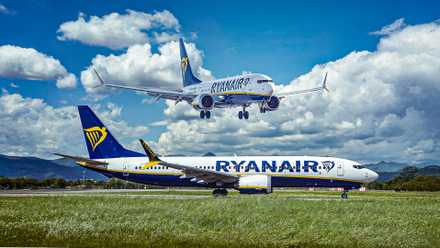
An Airplane A Day: Ryanair Receives 10 737s In 10 Days, Anticipates Another Production Hike By April
A look at Ryanair’s newest aircraft and what the future of the Ryanair fleet looks like.
Global 737 MAX Operations

The Boeing 737 MAX family has become a dominant force in global commercial aviation, operated by some of the world’s largest carriers including  Southwest Airlines,
  American Airlines,
  United Airlines, Ryanair, and
  Turkish Airlines. Known for its fuel efficiency, extended range, and modern engines, the MAX allows airlines to operate high-frequency short-haul networks as well as longer single-aisle routes efficiently.
The wide range of variants offers operators great flexibility in fleet definition. The MAX family of aircraft enables carriers to expand networks, open new city pairs, and maintain reliability across thousands of daily flights. Today, the 737 MAX is a cornerstone of both low-cost and full-service fleets worldwide, reshaping the economics of narrowbody operations in commercial aviation. A notable development, per Reuters, is Boeing’s plan to open a fourth 737 MAX assembly line in Everett, Washington.
This new line marks the first time a 737 will be produced outside the company’s historic Renton facility and is part of Boeing’s effort to boost output to meet robust global demand for the jet. The expansion is aimed at increasing production capacity in the years ahead, with the company targeting further growth in monthly build rates as it continues its recovery from past events.
The Bottom Line

Ryanair’s use of the Boeing 737 MAX 8-200 highlights how a modern, fuel-efficient narrowbody aircraft can support a low-cost carrier’s expansive network, including longer nonstop routes to vacation destinations. By standardizing on the MAX family, the airline benefits from lower operating costs, higher seat capacity, and improved reliability.
This allows it to serve both short-haul city pairs and slightly longer seasonal leisure sectors efficiently. Looking ahead, Ryanair’s continued fleet expansion with the 737 MAX positions it to respond quickly to network opportunities across Europe and reinforce its position as Europe’s leading ultra-low-cost carrier.