dailynewsnblog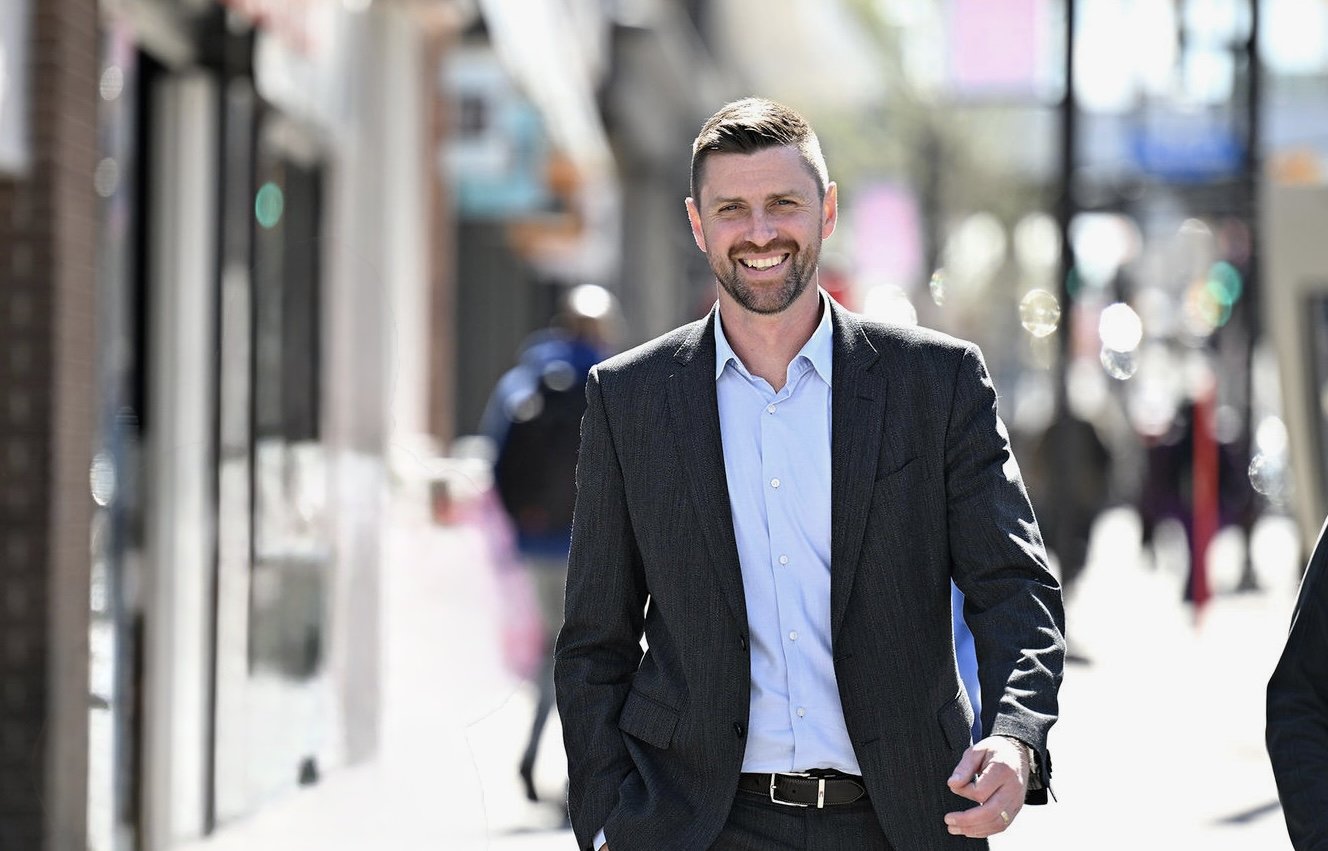
Homebuilder Alex Lawson says the city’s biggest challenges stem from a disconnect between city hall and the realities residents face every day. He sat down with iPolitics to discuss a platform focused on cutting development charges to spur housing construction and improving transit reliability through management reforms.
This is the first edition of iPolitics’ Ottawa mayoral candidate series. Over the next weeks, we will sit down and interview every major candidate for the mayor’s office in this fall’s election. You can check out Jeff Lieper’s profile here, and Neil Saravanamuttoo’s profile here.
Ottawa mayoral candidate Alex Lawson’s campaign office sits steps away from a community health centre that provides services for people who struggle with substance use – a location he says was chosen deliberately.
Instead of talking about homelessness, addiction and public safety from afar, Lawson said he wanted to see the challenges facing the city firsthand.
He is running for mayor on a simple premise: city hall has become disconnected from the realities of everyday life in Ottawa.
“You can’t solve a problem if you’re looking at it from a high level,” Lawson said in an interview with iPolitics.
Lawson argues Ottawa’s response to homelessness and addiction has become too focused on managing crises. Instead, he said there’s a need for the city to shift its focus on expanding a “pathway to recovery.”
He said that includes examining the safety of Ottawa’s shelter system and investing in community spaces.
“We need to make sure that we’re actually helping people, just not making ourselves feel a little bit better today,” he said.
Currently, the City of Ottawa manages and funds municipal emergency shelters and transitional housing through local social services.
Housing
Housing is where Lawson’s identity as a builder comes through most clearly. Drawing on his experience running a house framing company, he argues Ottawa’s affordability crisis is a result of city hall getting in its own way through rising development charges and regulatory barriers.
“If you talk to the builders, you talk to the developers, and you talk to them about why houses are so expensive… they’re going to point to development charges,” he said.
Lawson points to the recent federal announcement on eliminating harmonized tax on newly built homes and slashing development charges.
These programs require municipalities to “opt in,” he said, yet there’s hasn’t been a clear confirmation from the city about it.
“The rise in development charges has priced a lot of the smaller to medium sized builders out of the market,” he said, adding that this results in only bigger firms taking on the building projects.
To build up more housing availability, Lawson proposed to cut development charges in half in the first year, and give the private sector the opportunity to build more family-sized housing.
But Lawson also departs from the strictly free-market approach, adding that if builders fail to deliver within a year, the city should step in directly using public land and financing to build the housing Ottawa needs.
“I do believe in a smaller government, I don’t think the government should be taking over more… but when it comes to housing, if we’ve given the private sector every opportunity and every tool that they need to do something, and they haven’t, then I think it’s time for the government to step in,” he said.
Transit
On tackling transit, Lawson has a 12-point plan that focuses on bringing reliability back to public transport.
“It’s not hard to figure out what’s going on – buses aren’t showing up,” he said.
Lawson says OC Transpo’s problem stem less from a lack of funding than from poor management and unrealistic planning, based on his conversations with average commuters, bus drivers, and unions.
Rather than focusing on fare reductions or new subsidies, Lawson said the city should prioritize rebuilding through route redesigns, more realistic scheduling, and a review of management practices.
Part of his plan includes gathering more accurate information on ridership.
He says the current approach of looking at fares paid does not paint the full picture.
“We don’t actually know how much ridership we have,” he said, adding that he believes there is a certain level of fare evasion because of faulty equipment on buses.
Lawson says the idea isn’t to create more barriers for people who can’t afford a four dollar transit ride, but to look within the system and see what’s not working.
“We need to actually look at what we’re losing in that capacity.”
While other candidates have proposed investing more on transit, Lawson emphasized that the city should focus on bringing back reliability before introducing ideas like fare reductions.
“If you pour more water into a leaking bucket… the water’s not going to get where you need it to go,” he said.
When asked what sets him apart from the other candidates, Lawson said he would bring a “full” perspective to the mayor’s office.
“I’ve walked a lot of different roads in this city, and I’ve done it wearing a lot of different pairs of shoes,” he said.
Lawson gained traction in a recent polling done by Liaison Strategies, commissioned by iPolitics and Ottawa Compass, at 21 per cent – a seven per cent increase from last month.
READ MORE: Lawson gains ground as Sutcliffe maintains lead in Ottawa mayoral race: poll
Lawson said many voters feel politicians have lost touch with the realities of everyday life, and argued his experiences growing up in Ottawa and later running a construction business give him a broader understanding of the challenge residents face.
“People generally think that politicians don’t understand them. I’m somebody that’s doing my best to understand,” he said.