dailynewsnblog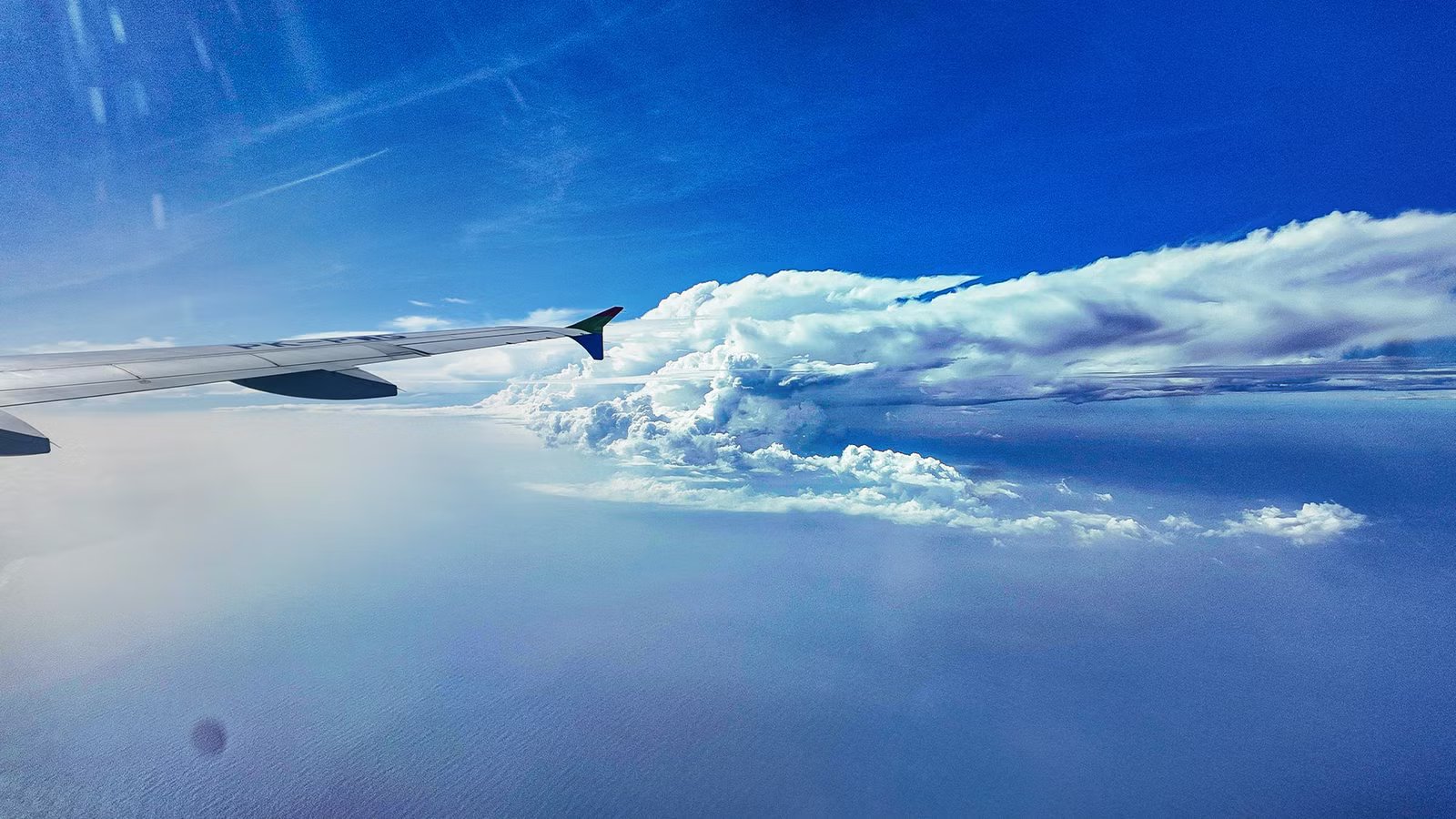
For decades, weather avoidance in the cockpit was largely a reactive exercise. Pilots relied on onboard weather radar to identify thunderstorms ahead, then maneuvered around whatever appeared on the display as the aircraft approached the weather. The system worked, but it often forced crews into a series of tactical decisions made relatively close to the threat itself, sometimes resulting in inefficient deviations, last-minute route changes, or lengthy holding patterns while waiting for a path to open.
Today, a quiet transformation has reshaped that process, as modern datalink weather systems have extended a pilot’s view far beyond the limits of onboard radar, allowing crews to see developing weather hundreds of miles ahead and make strategic routing decisions long before the first radar return appears on their own aircraft’s screen. The change has altered not only what pilots can see, but also how they think, turning storm avoidance from a reactive task into a planning exercise that can begin hours before an encounter with adverse weather.
From Tactical Storm Avoidance To Strategic Planning

The biggest shift brought by datalink weather is behavioral rather than technological. Aircraft radar remains an essential tool, but pilots no longer need to wait until a storm enters radar range before deciding how to avoid it. Instead, weather information transmitted from ground networks and satellites provides a much broader picture of atmospheric conditions across entire regions.
Research conducted through the US Federal Aviation Administration (FAA) and the National Center for Atmospheric Research’s Weather Technology in the Cockpit (WTIC) program demonstrated how uplinked weather products can dramatically expand a pilot’s situational awareness. Rather than reacting to weather cells one by one as they appear on radar, crews can evaluate entire convective systems while they are still hundreds of miles away. This allows them to coordinate route changes with air traffic control well in advance, often selecting a cleaner and more efficient path around weather before congestion develops.
The result is a fundamentally different style of decision-making, with pilots increasingly planning weather deviations as part of their overall flight strategy, examining weather trends, storm movement, and available routing options long before tactical maneuvering becomes necessary. In many cases, the best route around a storm is chosen before onboard radar would have been capable of detecting the threat at all.
What Pilots Actually Do During A 14-Hour Flight When The Autopilot Is Handling Everything
Modern airliners are incredibly automated, but pilots remain fully responsible for every decision during a flight. What do they actually do?
Why Onboard Radar Has Always Had Limits

Aircraft weather radar remains one of aviation’s most important safety tools, but it was never designed to provide an unlimited view of the atmosphere. Radar performance depends on several factors, including antenna size, beam width, tilt settings, and the curvature of the Earth. Even in large aircraft that are equipped with sophisticated systems, such as the Boeing 777-300ER or the Airbus A380, weather radar can only display conditions within a finite range.
As distance increases, radar beams climb higher above the Earth’s surface, and a storm that appears insignificant at long range may actually be severe below the radar beam, hidden from view because the radar is scanning over the top of it. Pilots must constantly adjust tilt settings to build an accurate picture of the weather ahead, and even then, there are limitations to what can be observed.
This reality often forced pilots into a reactive cycle. A thunderstorm complex might not become fully visible until the aircraft was already committed to a particular route, but by that point, alternative paths could be limited, especially in crowded airspace, such as that surrounding busy hubs like New York John F. Kennedy International Airport (JFK) or  Los Angeles International Airport (LAX), where numerous aircraft are simultaneously requesting deviations.
Datalink weather changes the equation by supplementing onboard radar with information collected from sources far beyond the aircraft itself. Instead of relying solely on what the aircraft can detect, pilots gain access to regional weathfver data that paints a much larger operational picture. The radar remains critical for close-range tactical decisions, but strategic planning increasingly begins with datalink information.
The Weather Data Arriving Directly In The Cockpit

Modern datalink weather systems deliver an impressive range of information directly to cockpit displays and electronic flight bags. Services such as SiriusXM Aviation and government-supported broadcasts provide radar imagery, lightning data, cloud-top information, forecasts, surface observations, winds aloft, and numerous other weather products.
One particularly useful tool is cloud-top height information, which helps pilots understand the vertical development of convective storms, as knowing whether a storm tops out at 25,000 feet (7,620 meters) or exceeds 40,000 feet (12,192 meters) dramatically affects route planning decisions. A towering thunderstorm can create turbulence, hail, and hazardous conditions far beyond its visible boundaries, making early avoidance preferable to close-range maneuvering.
The information also supports more efficient collaboration with air traffic control. When pilots can see weather patterns extending across multiple states, they can request deviations that make operational sense rather than waiting until they are forced into immediate action. Air traffic controllers benefit as well because earlier requests are generally easier to accommodate than urgent last-minute course changes.
The global aviation industry has increasingly embraced this approach – for example, the German flag carrier,  Lufthansa adopted a transoceanic weather-avoidance system that emerged from NCAR testing. The technology helps pilots identify and avoid large convective systems that can reach 40,000 feet (12,192 meters) or more, reducing operational disruptions while improving fuel efficiency and workload management.
  Emirates also recently began tackling turbulence with a more AI- and data-driven approach.
Preparing A Big Jet For Descent, Arrival, Approach, And Landing
For many passengers, descent feels like the relaxing part of the flight.
The Hidden Catch: None Of The Data Is Truly Real-Time

Despite the remarkable capabilities of datalink weather, one of the most important lessons pilots learn is that these products are not real-time depictions of the atmosphere. Every weather image displayed in the cockpit contains some degree of latency, and misunderstanding that delay can create risk.
This issue has become one of the central challenges of modern weather interpretation. Access to weather information is now widespread; using it correctly is what separates effective decision-making from poor judgment. The NEXRAD imagery distributed through the FAA’s FIS-B system is at least five minutes old by the time it reaches pilots. In reality, the total age can be greater because the weather must first be observed, processed, mosaicked, transmitted, received, and then displayed. During periods of rapidly developing convection, a thunderstorm can change significantly during that interval.
Satellite-based services offer faster refresh rates. SiriusXM Aviation updates dynamic weather elements such as radar imagery and lightning information approximately every 2.5 minutes. While that represents a substantial improvement, it is still not instantaneous.
For this reason, pilots are trained to treat datalink weather as a strategic planning tool rather than a tactical navigation aid. The information is excellent for identifying broad weather patterns and evaluating routing options far ahead of the aircraft, but it should not be used to thread between nearby thunderstorm cells. Once weather becomes close enough to require immediate maneuvering decisions, onboard radar becomes the primary tool because it provides a much more current picture of conditions.
Understanding The Colors Is Just As Important

Another unexpected challenge created by widespread datalink weather involves the interpretation of the imagery itself, as many pilots assume that colors displayed on weather products have universal meanings, but different systems often use different reflectivity scales and color schemes.
Reflectivity is measured in dBZ, a unit that indicates the intensity of precipitation echoes returned to radar systems, and as reflectivity increases, the likelihood of severe weather hazards generally increases as well. Research suggests that around 40 dBZ, there is approximately a 3.5% probability of severe turbulence, while at 50 dBZ, the chance of momentary loss of aircraft control rises dramatically to roughly 37%.
The challenge is that not all cockpit weather displays represent those values the same way, and a reflectivity level that appears green on one system may not even be displayed on another. For example, 15 dBZ echoes can appear as green returns on SiriusXM weather products while remaining absent on certain ADS-B weather presentations.
This means pilots must understand the specific display logic of the equipment they use, and simply recognizing colors is no longer sufficient. Crews need to know what those colors actually represent in terms of weather intensity and operational risk. As datalink weather becomes nearly universal across general aviation and commercial operations, this interpretive knowledge increasingly becomes a core cockpit skill.

Why Pilots Sometimes Avoid The Shortest Route On Purpose
Looking at a flight tracker often shows a wide range of interestingly shaped routes. They may look strange, but there is a method to the madness.
A New Era Of Fuel Efficiency & Reduced Workload

The practical benefits of strategic weather planning extend beyond safety. Early rerouting decisions often lead to significant operational efficiencies that affect everything from fuel burn to crew workload. When pilots identify weather threats hundreds of miles ahead, they have more opportunities to choose smooth and direct alternatives. Instead of executing a series of deviations around individual storm cells, they can frequently select a broader route that avoids the entire convective region. Such decisions reduce unnecessary maneuvering and minimize the chance of becoming trapped in crowded airspace where multiple aircraft compete for the same weather-free corridors.
Workload reductions can be equally important. Weather avoidance conducted at close range requires continuous monitoring, frequent communication with air traffic control, and rapid decision-making under pressure, while strategic rerouting distributes that workload over a longer period, giving crews more time to evaluate options and coordinate with controllers.
The cumulative effect is substantial, and pilots now routinely make weather decisions based on information that extends far beyond the reach of their own radar systems. What began as an effort to provide better weather awareness has quietly rewritten the workflow of the modern cockpit. Datalink weather has not replaced onboard radar, but it has transformed how radar is used, allowing crews to think in terms of hours rather than minutes and to plan around storms long before the aircraft’s own sensors ever detect them.