dailynewsnblog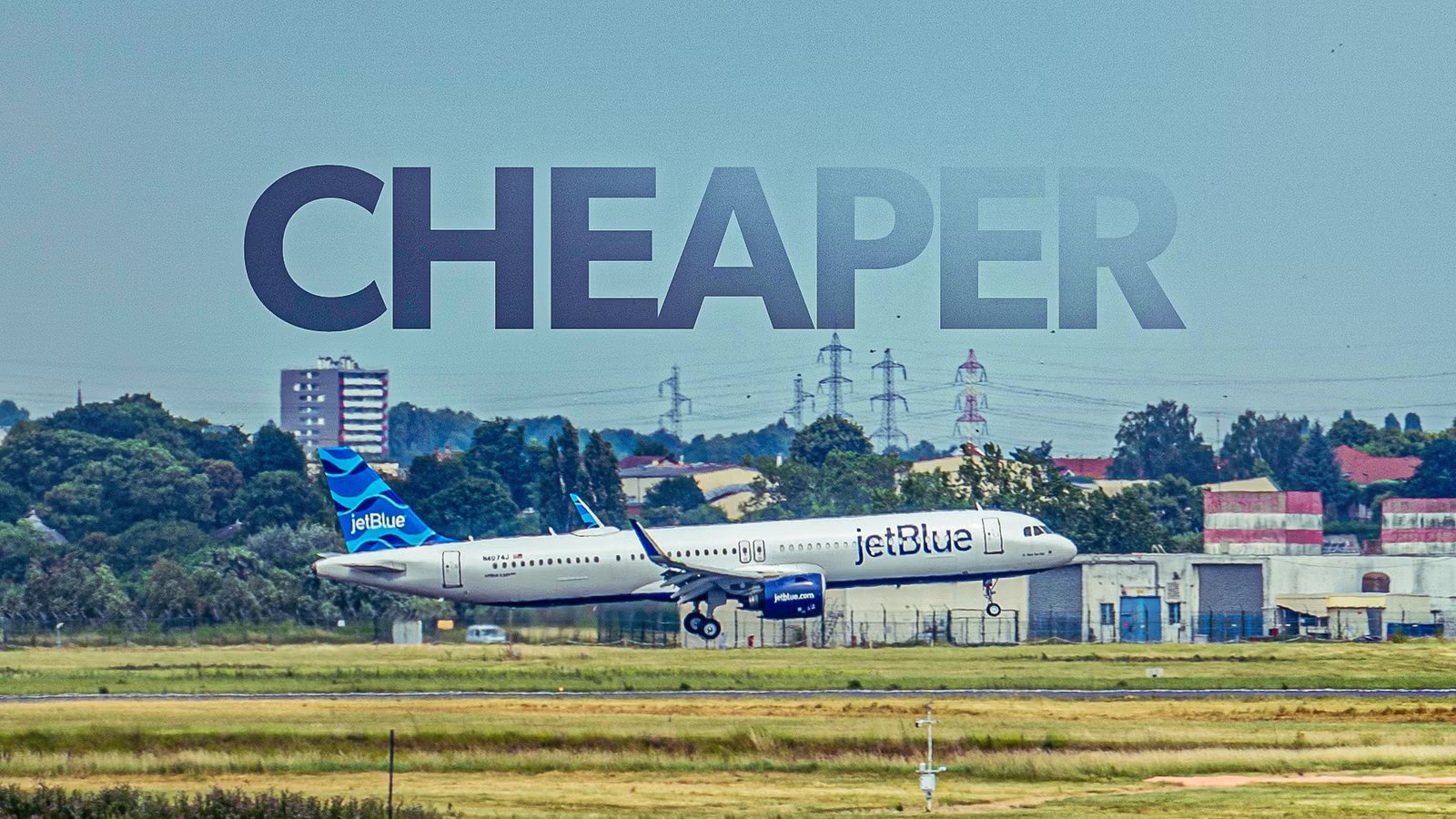
They both look the same, but the Airbus A321LR was always intended to be more of a stopgap solution to meet existing airline demand for a long-range narrowbody capable of crossing oceans. The Boeing 757 is out of production, while smaller derivatives of the A320neo family and 737 MAX don’t make enough money. As such, Airbus improved the A321neo to give it transatlantic range in the interim, but then performed a more thorough overhaul in the form of the A321XLR that would be truly optimized for these missions.
But the A321LR was the pioneer for transatlantic crossings using current-generation aircraft, and it’s been reasonably popular as a niche derivative of an existing type. The A321XLR is more capable and has received more orders, but it’s also a more expensive aircraft that entered service almost six years after the A321LR. But ultimately, neither is revolutionizing long-haul travel, and in terms of expanding the niche that they serve, the A321LR has already done most of the heavy lifting, while the A321XLR is simply an improved version.
What The Long-Range A321 Variants Bring To The Table

The Boeing 757-200 pioneered twin-engine narrowbody operations over oceans, but this happened almost accidentally. The plane was developed as a replacement for the short-haul Boeing 727, but it was a larger plane that could carry significantly more passengers. One of the requirements for the aircraft was that it should have equal or better field performance than the 727 with a full load, which is why it has an extremely high gross weight, powerful engines, and massive wings. Consequently, this gave the plane transatlantic range.
The 757 tackles the Atlantic through brute force, but the plane was also overbuilt for many domestic missions and has high operating costs today. The A321LR, based on the highly-efficient A321neo, addressed the market demand for a new transatlantic narrowbody with lower operating costs than the out-of-production 757. It has three Additional Centre Tanks (ACTs) along with a higher Maximum Takeoff Weight (MTOW) of 97 tons, and debuted the Airbus Cabin Flex (ACF) exit layout for greater interior flexibility. It’s estimated that Airbus has sold well over 200 A321LRs.
The A321XLR is the improved derivative purpose-built for transatlantic crossings. It has another MTOW bump to 101.5 tons (although the first few A321XLRs were delivered with the 97-ton option), along with a new Rear Centre Tank (RCT). This is integrated into the aircraft and takes up less space than three removable ACTs while holding more fuel. Airlines can also install an optional ACT for more range. In addition, the A321XLR has a new inboard flap design and a stronger landing gear. Airbus has received over 500 orders for the A321XLR.
The Impact Of The A321LR

The A321XLR can carry more payload across a longer distance, and has more space in its cargo hold than the A321LR. However, the A321LR has been available since 2018, and it’s already being successfully operated by several airlines on long-distance flights. This includes JetBlue, SAS, Aer Lingus, TAP Air Portugal, La Compagnie, Etihad Airways, Air Astana, and Arkia. The plane has proven its economics and capabilities, and this arguably makes the A321LR more impactful than the A321XLR.
The A321XLR is largely just an improvement on the aircraft that has already made narrowbody transatlantic flights viable for many airlines. The A321LR can perform most of the missions that the A321XLR can perform, while costing about the same to operate. The A321XLR’s capability makes it more flexible, but it’s also more expensive to buy. Given that the two planes are fairly similar, the lower acquisition price of the A321LR is appealing to airlines for which the aircraft is good enough.
Aircraft | Range |
|---|---|
Airbus A321neo (two ACTs & 97 ton MTOW) | 3,700 NM (6,850 km) |
Airbus A321LR | 4,000 NM (7,400 km) |
Boeing 757-200 | 4,100 NM (7,600 km) |
Airbus A321XLR | 4,700 NM (8,700 km) |
Because the A321LR’s capabilities come from its gross weight (which is now available for all A321neos) and removable ACTs, it can be easily converted into a standard A321neo if desired. The A321XLR’s capabilities make it useful for other missions besides long-distance routes (see, for example, Qantas’s use of the A321XLR for domestic flights), but an airline has to make sure that it can use the plane’s capabilities throughout the aircraft’s lifespan. In this sense, the A321LR is more flexible.

How Much Does An Airbus A321XLR Cost?
The range and efficiency of the XLR commands a premium over other narrowbody aircraft currently on the market.
The Advantages Of The A321LR

The A321LR solidified Airbus’s position as the default choice to buy a long-range narrowbody, particularly with European airlines. Icelandair, the most prominent European airline operating narrowbodies across the Atlantic, chose the A321LR to replace the Boeing 757, and later ordered the A321XLR. SAS and La Compagnie only ordered the A321LR. But beyond the importance of the A321LR in the market space, there is also a material benefit to the A321LR on certain missions.
Catch what other flight trackers miss
Emergency squawks, holds, NOTAMs — live signals, no signup.
Open tracker
Catch what other flight trackers miss
Emergency squawks, holds, NOTAMs — live signals, no signup.
Open tracker
Because the A321XLR is heavier than the A321LR, it burns more fuel. The difference is small, and the A321XLR is heavier because of the changes made to add capability, which makes it appealing for Iberia to fly it to the Caribbean, or for US airlines to fly it deep into Europe. But for  SAS, which flies the A321LR to the US East Coast, the A321XLR may be too much plane. Similarly, JetBlue mainly deploys the A321LR from the US East Coast to Western Europe, and the A321XLR would be more expensive to buy as well as to fly, while not providing much benefit on these routes.
The A321XLR is more expensive to buy and cost more to develop, meaning that Airbus would rather sell this variant. The manufacturer also designed the plane in such a way that the operating costs are similar enough that the A321XLR is equally appealing in most cases. But there’s a reason why many customers have ordered both, with the A321LR being available sooner while being just as good or arguably better than the A321XLR on missions within its range. For most airline needs, both planes are very appealing.
Catch what other flight trackers miss
Emergency squawks, holds, NOTAMs — live signals, no signup.
Open tracker
Catch what other flight trackers miss
Emergency squawks, holds, NOTAMs — live signals, no signup.
Open tracker
The Challenges With Long-Range Narrowbody Flying

A large component of route economics is operating costs and revenue. What makes the A321LR and Airbus A321XLR appealing is their extremely low fuel burn, which lowers operating costs. However, most flights that these airliners perform require augmented crew, driving up the operating cost. While the planes have low fuel burn, it’s still higher than what you’d see on a four or five-hour flight. Then, there’s the fact that these aircraft typically only seat 140 to 180 passengers, which means that revenue potential is limited.
The benefit of the A321XLR is its greater range and higher payload capacity, allowing it to fly farther or carry more payload. But given that it’s largely the same plane as the A321LR, what this really means is that it will carry a full load of passengers farther, as well as some cargo. However, the small size of the A321XLR means that it still won’t be carrying much cargo. What’s more, because of its size, the empty weight of the plane has a huge impact on range, with heavy lie-flat seats negatively impacting its capability.
Aircraft | Range | MTOW |
|---|---|---|
Airbus A321LR | 4,000 NM (7,400 km) | 97 tons |
Airbus A321XLR | 4,700 NM (8,700 km) | 101.5 tons |
Boeing 787-8 | 7,305 NM (13,530 km) | 227.9 tons |
Airbus A330-800 | 8,100 NM (15,000 km) | 251 tons |
Airbus A330-900 | 7,350 NM (13,600 km) | 253 tons |
Boeing 787-9 | 7,900 NM (14,630 km) | 259.2 tons |
Airbus A350-900 | 8,500 NM (15,742 km) | 283 tons |
All of this also holds for a widebody, but a twin-aisle plane will seat 250 or 300 passengers, meaning that these costs are spread over significantly more seats. They can carry meaningful cargo, while heavy seats don’t impact range to the same degree. What’s more, the high capacity means far more revenue potential. On established routes, an A321LR or A321XLR leaves money on the table, and the planes are only really economical when serving cities with relatively low demand, but still high-yielding. Otherwise, the plane doesn’t generate enough revenue.
In Photos: Onboard Air Canada’s Brand New Airbus A321XLR
AC introduces its most luxurious single-aisle yet.
Why The A321LR And A321XLR Are Successful

Both models are derivatives of the Airbus A321neo. With over 7,700 units sold, it’s the most popular commercial aircraft variant of all time, and this means that there’s a huge number of airlines already operating it, while even more are awaiting delivery. There are few differences between the A321neo, A321LR, and A321XLR, meaning that it’s easy to integrate these long-range variants into their fleet to serve marginal routes.
From Airbus’s perspective, the variants were fairly cheap to develop, and while their sales would be modest if they were larger programs, the scale of the projects means that they’ve been quite successful for Airbus. What’s more, their price premium means that each sale is highly lucrative for Airbus. However, they also demonstrate that the need for small long-range planes, frequently referred to as the ‘Middle of Market’ (MOM), is quite limited, and a new-build program in this space would not be a bestseller.
These planes work best as network optimization tools, allowing airlines to better manage frequencies and meet demand, but they’re not revolutionary. While they do enable new destinations to be served, the list is smaller than one might think, given the challenges of flying narrowbodies on long-distance flights. While it’s long been speculated that there’s a market for a small widebody to slot between the A321XLR and Boeing 787/Airbus A330, it would be in an awkward position where it would be costlier to run than the A321XLR while having less revenue potential than larger widebodies.