dailynewsnblog
A short time back, we covered an announcement by Amazon that it would be hosting a useful quantum computer from its partner QuEra as soon as sometime in 2028. The system promised some eye-popping numbers compared to anything on the market today: over 10,000 individual qubits, each with an error rate low enough that the system could support hundreds of error-corrected logical qubits. But QuEra has to get there from its current hardware, which sits at 260 qubits that are relatively error-prone.
Those details about how it was going to get there were left for last Wednesday, when QuEra announced its roadmap. But the announcement only accentuated the gap: There will be no new hardware releases between now and the useful machine, and QuEra is promising to deliver an even more powerful machine just one year later.
“The company made a strategic decision not to sell NISQ [noisy intermediate scale quantum] systems anymore,” QuEra’s Yuval Borger told Ars. The two systems it had previously made available have similar capabilities, with about 250 hardware qubits and an appreciable error rate—enough to test some error correction codes, but not sufficient for using logical qubits in applications.
The machine it proposes to build for Amazon will be a very different beast. It will have over 10,000 physical qubits, which QuEra intends to use to create 256 error corrected logical qubits. With error correction active, these will experience 99.9999 percent error-free operations, which the company expects will enable millions of operations to be performed successfully. And there’s a follow on. By 2029, QuEra promises a successor with twice as many hardware qubits, capable of supporting over 1,000 logical qubits. Error resistance will rise to 99.9999999 percent.
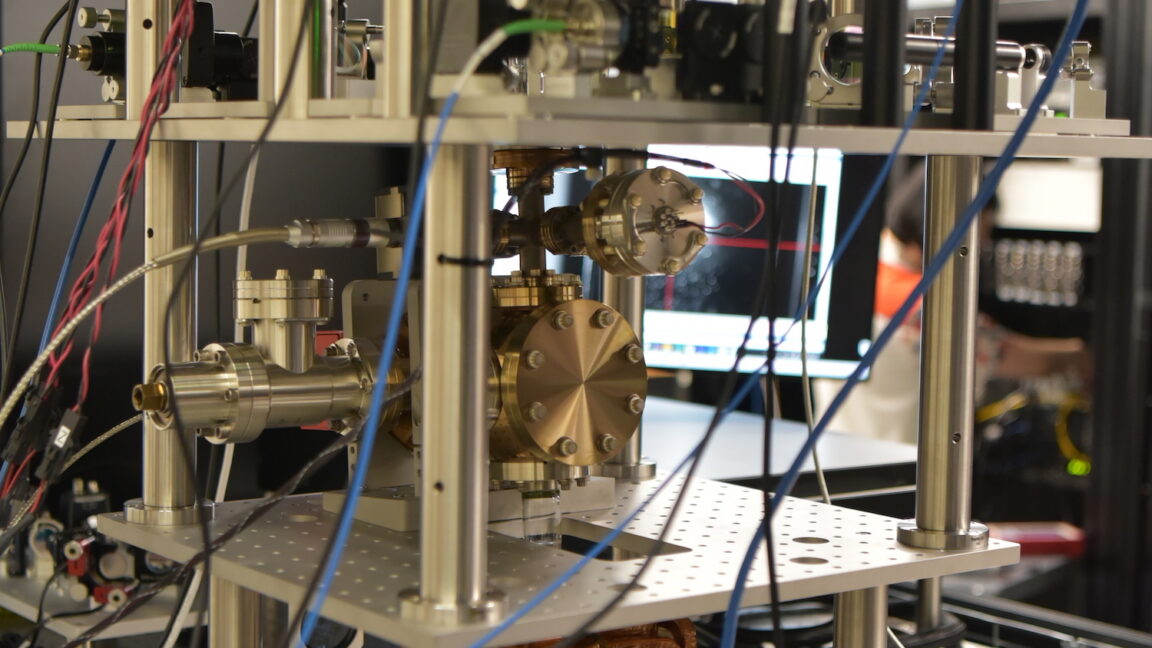
QuEra’s machines operate using neutral atoms that are held in a grid by lasers, so raising the qubit count is largely a matter of boosting the laser capacity. And the two academic labs that launched QuEra and licensed IP to it have already demonstrated a 3,000-qubit system. Scaling that will be a challenge, but there’s an obvious route to it. The labs have also demonstrated the ability to replace atoms lost during operations, an ability that’s critical to keeping these machines running.