dailynewsnblog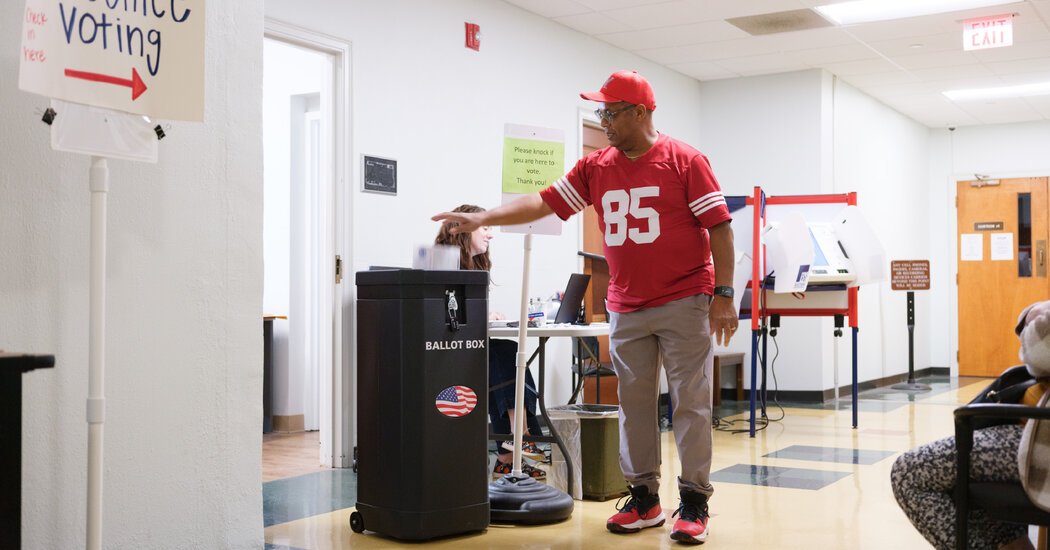
The Supreme Court on Monday upheld Mississippi’s grace period for late-arriving mail-in ballots, rejecting a push by the Trump administration to invalidate a state law.
The ruling means Mississippi’s law, which allows elections officials to count ballots postmarked by Election Day and received up to five business days later, will remain in place, at least through the midterm elections.
The vote was 5 to 4, with Chief Justice John G. Roberts Jr. and Justice Amy Coney Barrett joining the court’s three liberals in supporting the state law.
The decision is a blow to efforts by Republicans and Mr. Trump to roll back mail-in balloting, and will also leave in place similar laws in at least 18 other states and territories, including 2026 battleground districts in Nevada and California. It is also a defeat for President Trump, who has long criticized voting by mail, falsely claiming that the practice is open to fraud and helped lead to his defeat in the 2020 presidential election.
The issue before the justices was whether Mississippi state law had run afoul of federal law setting guidelines for when to hold Election Day.
The state law at issue was adopted by Mississippi’s Republican-led legislature during the pandemic. But the Republican National Committee and Mississippi’s state G.O.P. later challenged the measure in court, arguing that federal law sets out Election Day as the day that ballots should be considered final.
Much of the oral arguments in March had focused on how Mississippi could show that a ballot had been officially cast by Election Day if it was received later. Several conservative justices had raised questions about the state’s practice of allowing late-arriving ballots to be counted not only when they were postmarked by the U.S. Postal Service but also when they were delivered by FedEx, a private company.
The court’s three liberal justices had pointed out that the Constitution directs states to set election regulations.
Several justices also raised questions about whether striking down Mississippi’s law could open the way for broader legal challenges to election practices, including early voting and accommodations provided to allow mail-in voting by military and Americans living overseas, all of which are widely popular.