dailynewsnblog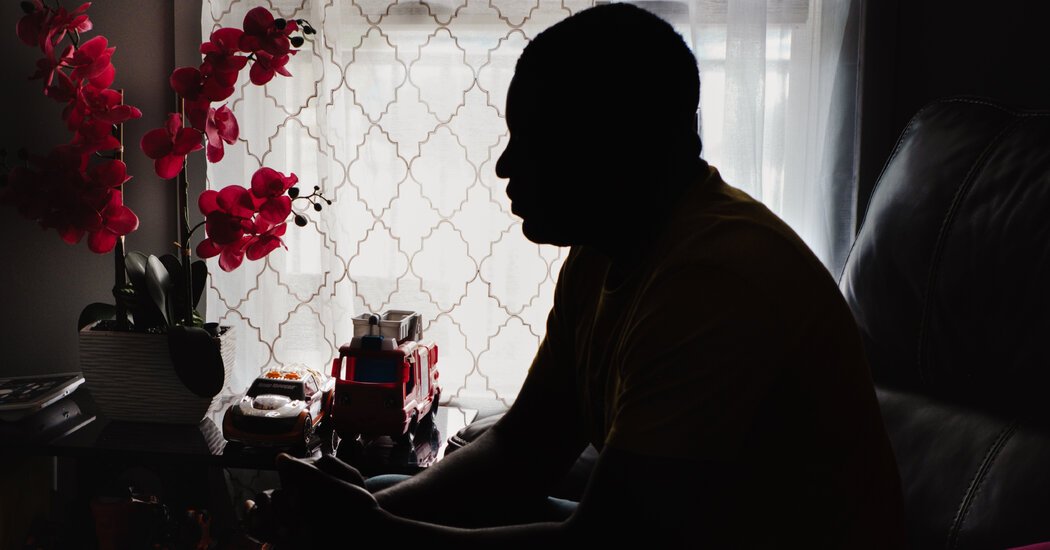
Haitians who arrived in Springfield, Ohio, by the thousands in recent years revived a city that had been in decline for decades.
They worked in manufacturing, distribution and the service sector, easing labor shortages and fueling economic growth. Their children starred on athletic teams and played in school concerts.
Now, Springfield faces the prospect of losing the people that powered its resurgence.
Last week, the Supreme Court ruled that the Trump administration can proceed with terminating Temporary Protected Status for more than 330,000 Haitian and 6,100 Syrians. The humanitarian program, maintained by successive administrations, had allowed recipients to live and work in the United States because their home countries were considered too perilous to risk a return.
The Trump administration has argued that the protection, granted for up to 18 months at a time, has been renewed repeatedly and turned into a de facto permanent residency program.
The court’s decision threatens to transform Springfield into ground zero for what some legal scholars are calling the first mass “de-documentation” of immigrants in modern American history. The city of 60,000 — including more than 10,000 Haitians — could become the target of a major enforcement operation.
American residents are preparing to protect Haitians, with some making plans to care for their Haitian neighbors’ native-born children and even to hide and shelter immigrants who remain.
“The Supreme Court decision is not just a tragedy for Haitians, it’s a tragedy for Springfield, Ohio,” said Carl Ruby, pastor at Central Christian Church. “We went from being one of the fastest-shrinking cities to one of the fastest-growing cities in America. This undoes all that progress.”
And, on a more prosaic level, it threatens the Springfield High School soccer team, whose co-captain was Haitian. Other Haitian students were often on the starting 11 last season, when the team had its best record in years.
“The Haitians brought skills and talents, and made our team better,” said Emerson Babian, an American player.
“If the Haitians had to leave Springfield, it would be devastating,” said the rising senior. “Skill, morale and friends would be gone.”
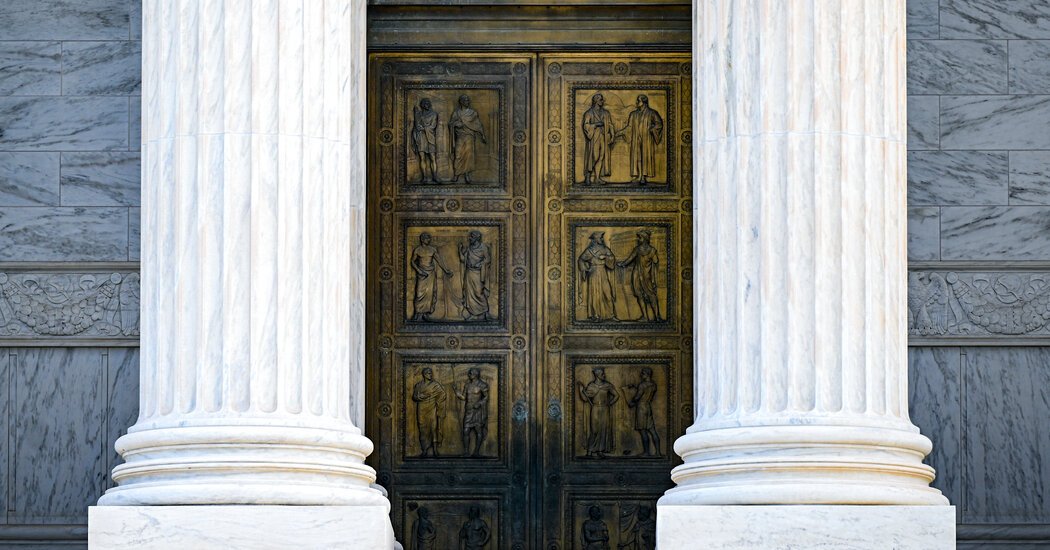
But the Supreme Court freed the administration’s hand with a 6–3 ruling split along ideological lines, holding that federal courts have no authority to review T.P.S. terminations by the executive branch.
The decision handed President Trump a significant victory. While the case specifically addressed Haiti and Syria, it established a precedent that would let the administration dismantle the program for nearly 1.3 million T.P.S. recipients, including those from Afghanistan, Somalia, South Sudan and El Salvador. Many have been in the United States for years.
Haitian migration to the United States surged after a 2010 earthquake devastated the impoverished country. It accelerated again following the 2021 assassination of its last president, which unleashed gang violence, deepened instability and pushed the state to the brink of collapse.
After initially settling in established enclaves in South Florida, Boston and New York, Haitians began dispersing in search of opportunity. Thousands moved to Springfield between 2020 and 2024.
Once an industrial powerhouse, the city between Dayton and Columbus had fallen on hard times as manufacturing migrated overseas; Springfield had shed more than a quarter of its population since the 1960s.
Equipped with work permits, thanks to their protected status, Haitians assembled car engines at Honda, operated robots at Amazon and packed salads at Dole. They were welcomed by Republican leaders and business executives who had invested millions after being lured by the city’s revitalization plan.
“These Haitians were working and contributing to our community and economy,’’ Ohio Gov. Mike DeWine said in a statement.
Haitians wove themselves into the fabric of the city: They filled church pews, bought new homes and renovated old ones. Their children played in high school recitals — and became soccer stars.
François, one of the starters, said that his parents sent him to the United States with an older brother in 2023 after their Port-au-Prince restaurant was ransacked by gangs.
“My friends were kidnapped,” said François, who asked to be identified by one name for fear of immigration authorities. “I hope I can stay here to study and maybe one day go back, if the situation gets better.”
Doubt began to suffuse Springfield in 2024 after the community was thrust into the rancorous national immigration debate: Mr. Trump amplified a baseless claim by his running mate, JD Vance, that Haitians there were stealing and eating their neighbors’ cats and dogs.
The falsehood inflamed tensions that had already been building. At City Commission meetings, some residents denounced the newcomers in racist terms, accusing them of ruining the city and draining public services. White supremacists marched. Bomb threats closed schools and government buildings.
Throughout it all, Haitians kept a low profile. Since the Supreme Court’s decision, many have been stunned and confused, said Viles Dorsainvil, who leads a support center. Some are in denial, he said, and Christians are praying for God to intervene.
For others, including a 38-year-old immigrant named Risner, who has a young family and owns a home, the ruling has brought despair.
Risner, who asked to be identified only by his first name for fear of attracting official attention, has had T.P.S. since 2021. In Springfield, he found work at an auto-parts plant and saved to bring his family, who came in 2023. The next year, they bought a three-bedroom house. They also welcomed a second son, an American-born child.
The family put down roots. Risner plays the bass and his wife, Fabiola, plays the saxophone in their church band. Fabiola, a nurse in Haiti, recently passed her U.S. licensing exam.
“If I’m forced to go back to my country, I don’t have a house. I don’t have anything,” he said. “All my money, I spent here in the United States.”
Sadrac Delva, a Haitian real estate agent, said that he had closed on more than 15 homes bought by Haitians since last month, reflecting the community’s cautious optimism.
Mr. Delva, who has lived in Springfield for six years, said he had entered the country lawfully and has a pending asylum claim. His daughters, 12, 7 and 4, take swimming lessons. The eldest is learning the violin. His wife, Gerda, is a nurse at the main hospital.
They had been thinking of buying a bigger house, he said, but the T.P.S. decision was making him uneasy.
“Even I am concerned about our future here,” said Mr. Delva, whose two younger girls were born in the United States.
Several American residents said that they favored better management of immigration, but that the administration would be going too far if it began roundups.
“I understand the need for laws around immigration and border control,” said Luke Taylor, 35, a software developer. “But the Trump administration should do a serious evaluation of conditions in Haiti.”
Haitians have been here legally, Mr. Taylor added. “Many have American children.”
Ben James, 44, who has a special-needs child, said that he had seen Haitians at a family services center.
“If your protected status is up, that’s it,” he said. “But if children are going to be separated from their parents, I disagree with that. These are humans.”
Amid the uncertainty, a loose network of Springfield supporters of Haitians has sprung into action.
Central Christian Church, which started a group called G92 after the ancient Hebrew word “ger,” for stranger, organized a City Hall rally to protest the court decision on Thursday.
“We are not laying down. We have been planning for this for 18 months,” said Jen Casto, an activist who spoke at the event.
Several churches have lists of congregants willing to care for American children of Haitian parents who are detained or deported.
A rapid-response group has been formed, and members are planning to drive through the streets and alert people about immigration agents if raids occur.
A small, secret network is ready to place Haitians in the homes of vetted Americans willing to shelter people in spare bedrooms and basements — hiding them the way that another generation of Springfield residents hid people fleeing slavery in the 1850s as part of the Underground Railroad.
At St. Vincent de Paul, a Catholic charity, more than 20 volunteers showed up Friday to pack boxes with rice, canned vegetables and cereal. Members of another organization, Springfield Neighbors United, delivered them to Haitian families afraid of leaving their homes.
“We don’t know if it’s going to get ugly,” said Tammy McEldowney, 67, a retired social worker who was among the volunteers.
Kevin Williams contributed reporting.