dailynewsnblog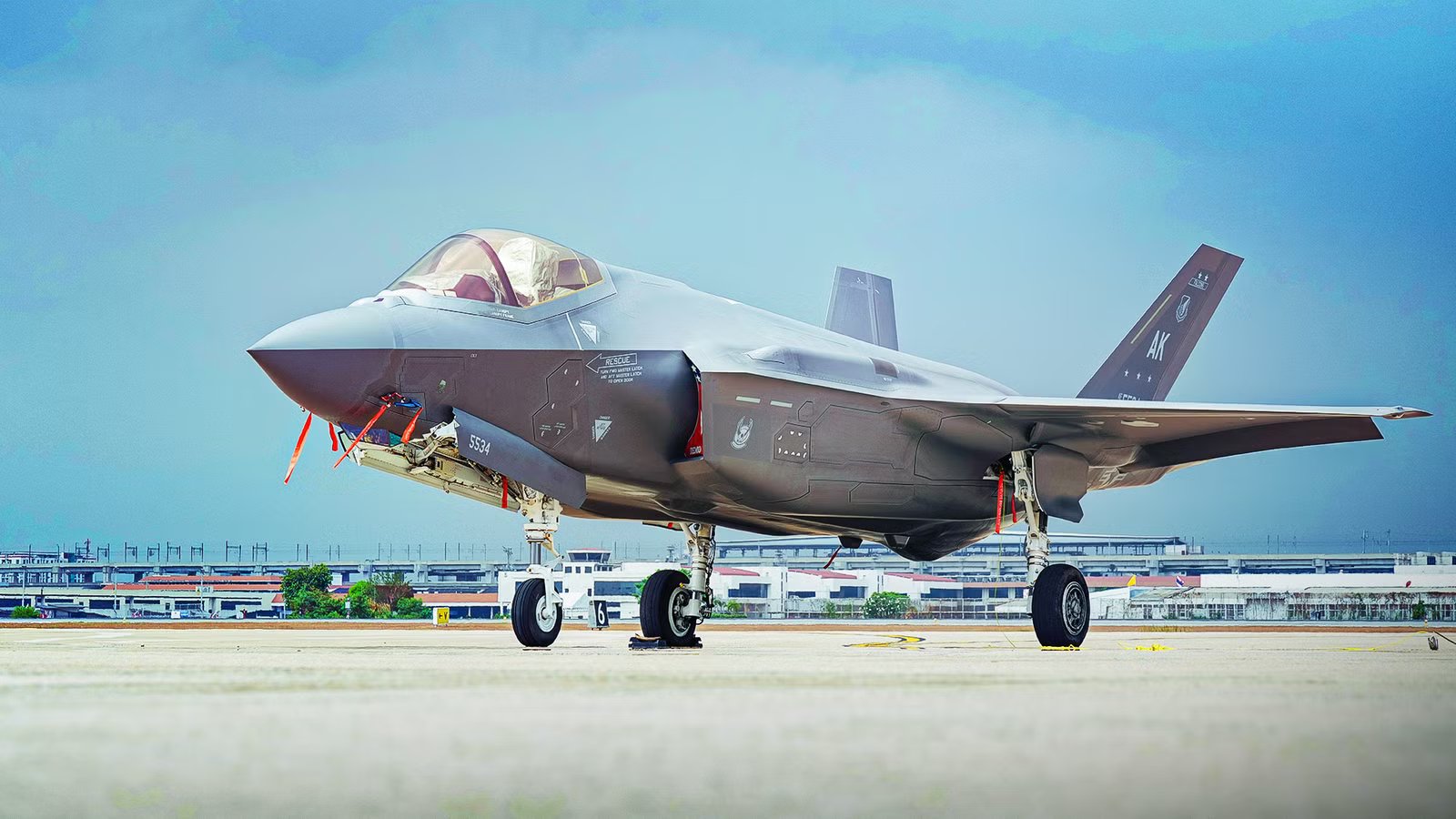
America’s exquisite stealth fighter, the Lockheed Martin F-35 Lightning II, has been crippled by recurring software and systems issues that have severely degraded the combat readiness of the global fleet. Designed to serve as a universal platform for every US service branch and dozens of allied partner nations around the world, the F-35 is a revolutionary breakthrough in technological power for the Western Bloc of air forces. Yet the potential that the fifth generation fighter holds has been held back by a plague of glitches.
A damning report released by the Pentagon in recent months revealed that fewer than half of the F-35 jets worldwide can fly one of the mission sets the plane is supposed to be capable of at any given time. That statistic applies to all three variants flown by the US Air Force, Navy, Marines, and 19 allied air forces. Then, on June 11, the Government Accountability Office publicly revealed that F-35 readiness levels had officially degraded to 25% overall.
The complexity of the F-35 makes it a logistical and technical challenge that far surpasses any of the fourth-generation legacy platforms that preceded it. The plane is more of a flying supercomputer than a fighter jet. Its systems contain millions of lines of code, and it is a delicate machine made from exquisite materials and components that often face severe supply chain bottlenecks.
Grounded By Bugs In The Code

The software bottleneck is currently the greatest operational and industrial dilemma for the entire F-35 Joint Program. Software integrated into the production line for the TR-3 iteration has proven highly unstable. Testing aircraft have experienced so many system failures that they often cannot even fly to demonstrate mission capability. The ones that do manage to fly often encounter so many problems with systems that they cannot actually perform combat testing. These are the factors that led to the DOT&E’s negative report and led to a slash in deliveries.
Software issues are the primary driver of the 24.6% full mission capable rate in 2025, down from 38.1% in 2021, according to Air and Space Forces Magazine. F-35s that can do at least one combat mission role, the general mission-capable rate of 44.1%, down from 66.8%, is also largely due to the same problems. So far, the US Air Force has the highest FMC rate at 28.5%, which is still a far cry from the 68% it is seeking.
The total projected cost for the global support solution being developed by the Joint Program Office to resolve the F-35’s chronic glitches is $13.7 billion. Of that number, $8 billion goes to the Air Force, $3.2 billion to the Navy, and $2.6 billion to the Marines, according to Stripes. Of the total budget for all three services, $7.3 billion is allocated solely for parts and materials that will go to maintenance depots. The GAO also now expects the lifetime cost of the F-35 fleet to exceed $2 trillion.
Roadblocks At Lockheed Martin’s Assembly Line

Based at the US Air Force’s bomber plant in Fort Worth, Texas, the F-35 final assembly line has been bottlenecked by delays with critical systems like the radar for the latest iteration of the Joint Strike Fighter, Technology Refresh 3. In March, the Pentagon’s Director of Operational Test and Evaluation formally declared the TR-3 software build “unsuitable for dedicated operational testing” and labeled older baseline updates as “predominantly unusable” because they delivered zero new combat capability.
Catch what other flight trackers miss
Emergency squawks, holds, NOTAMs — live signals, no signup.
Open tracker
Catch what other flight trackers miss
Emergency squawks, holds, NOTAMs — live signals, no signup.
Open tracker
One of the most important industrial roadblocks to the F-35 production line is the latest radar system developed by Northrop Grumman. The AN/APG-85 Active Electronically Scanned Array radar has been delayed by a combination of issues with the rare materials used for its core sensors and other disruptions to aerospace supply chains. To break the logjam on the factory floor, the assembly line began producing incomplete aircraft, famously rolling out Lot 17 jets with ballast weights instead of actual radar systems. While this cleared space in Fort Worth, it did nothing to help the fleet’s combat readiness.
These aircraft are only suitable for training until they are retrofitted with a working radar system. Furthermore, the delays in upgrading the systems forced older, un-upgraded aircraft to fly, punishing operational tempos and placing massive stress on aircraft already experiencing issues. The military also suspended deliveries of the F-35, and the number expected in 2026 will be roughly half of what was originally intended. Yet, pressuring the factory also exacerbates the problems facing active airframes.
The Pentagon Declared The F-35’s Most Critical Upgrade ‘Predominantly Unusable’
The problem with the Joint Strike Fighter.
Spare Parts Shortages Across The Globe

Parts management on the Fort Worth assembly line has severely disrupted the global sustainment supply chain. The factory has struggled with chronic component shortages, frequently running short on thousands of distinct parts during the assembly phase. To keep the production line moving and meet delivery quotas, components that were originally earmarked as spare parts for the global logistics pool were redirected straight to the Fort Worth factory floor.
This prioritization of new production over fleet sustainment emptied the shelves at supply depots worldwide. Technicians are often forced to strip parts from one grounded jet just to make another partially capable. Cannibalization multiplies the maintenance workload and leaves a massive portion of the fleet grounded, directly contributing to the historic drop in the Full Mission Capable rate. The decision to deliver F-35s without radar also creates a major maintenance logjam for brand-new planes, as they will require extensive overhauls almost immediately after entering service.
Instead of adding fully capable fighters to the global pool, the factory is delivering a massive backlog of incomplete aircraft. This is compounded by the fact that, despite being designed as a universal platform, different lots of the F-35 were manufactured in a series of ‘micro configurations.’ This lack of standardization splits the supply chain and thus requires distinctly different spare parts, making it more difficult to stock universally compatible components at air bases globally.

Before The F-35 Vs. After: How Air Combat Changed
Examining a paradigm shift in air warfare.
High Maintenance Equals Low Readiness

Intended to be a force multiplier for the American Military and its allies around the globe, the exquisite materials and supercomputers that make the fifth-generation F-35 a powerful fighter are also crippling it. The combination of fragile skin materials and strict security mandates creates a high-maintenance burden that traps aircraft in specialized facilities rather than keeping them on the flight line. Although the jet is more durable than other stealth aircraft that came before it, its radar-absorbent material is just one factor in the maintenance matrix.
The requirement for highly secure, specialized facilities directly exacerbates the supply chain issues. Because the exact composition and performance of the F-35’s stealth materials are among the military’s most closely guarded secrets, maintenance cannot be performed on an open flight line or in standard aviation hangars. There is a severe global shortage of these specialized, classified hangar bays at both domestic training bases and forward-deployed locations. Additionally, the diagnostic equipment used to verify that the stealth coating has been perfectly restored is highly classified and strictly controlled.
When an aircraft requires stealth skin maintenance, it must wait in a queue until a secure, climate-controlled bay becomes available. When local bases run out of secure hangar space or lack the specific classified diagnostic gear, the aircraft must be sent to specialized depot-level facilities. This removes the asset from the operational pool entirely, clogging up major depots, driving up lifecycle costs, and leaving front-line squadrons with fewer mission-ready airframes.

Here’s Why The Marines Corps Is Scattering F-35Bs Across Tiny Pacific Islands In 2026
Going back to Raider ops for the pivot to the Pacific.
Jarheads Lead The Way: USMC Fleet Readiness Center East

While Lockheed Martin’s Fort Worth factory struggled to push stable software out the door, FRC East became the lead global site to execute the physical TR-2 to TR-3 hardware and software conversions on operational, fielded aircraft. Technicians at Cherry Point must physically extract legacy processors, alter the internal wiring harnesses, and integrate the newer, highly volatile Technology Refresh 3 computer parts required to run future Block 4 combat software. The FRC East is pioneering the technical procedures that will be mirrored by the other maintenance depots around the world, like Cameri, Italy, and Nagoya, Japan.
This project was built to inject an additional 337,000 hours of heavy maintenance and repair capacity through fiscal year 2028. The massive increase in physical hangar space to handle the crushing influx of broken, un-upgraded, and incomplete aircraft caused by the factory’s delays prompted the Navy and Marine Corps to fund a massive physical expansion at the North Carolina depot. FRC East completed a major JSF Modification Line expansion project, cutting the ribbon on specialized new aircraft bays.
Still, fully resolving the F-35 fleet’s software, production, and readiness issues is no longer viewed as a near-term fix. JPO officials have formally stated that fleet readiness is highly likely to worsen before it improves, with initial tangible turnaround signs not projected to materialize until late 2026 or later. The objective of the GSS Reset is to raise the general Mission Capable rate up to 80% and the Full Mission Capable rate up to 65% by the year 2030.
The GAO confirmed that the Department of Defense is scaling back its initial ambitions and rewriting the schedule. The Pentagon originally planned to have all 66 advanced capabilities of the Block 4 package fully developed and operational by 2026. Now, the US does not expect to complete testing, verification, and delivery of even this reduced scope of Block 4 combat systems until 2031. Once that is complete, hundreds of aircraft will need to be cycled back to heavy maintenance depots like FRC East to receive updates and physical retrofits.