dailynewsnblog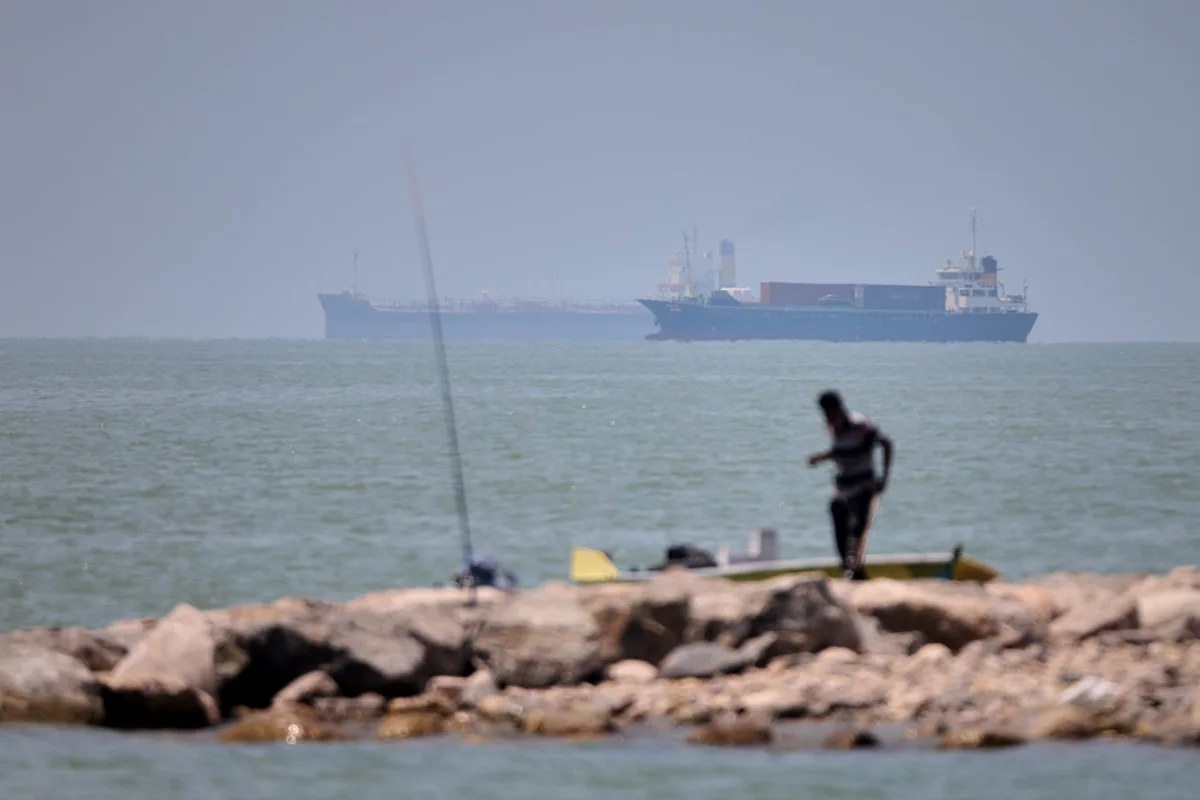
DUBAI, United Arab Emirates (AP) — Iran launched a drone assault targeting Bahrain while a ship in the Strait of Hormuz separately came under attack Saturday, in Tehran’s likely response to overnight airstrikes by the United States.
The attacks in the Persian Gulf show the danger of the Iran war again spinning out of control, even after Iran and the U.S. reached an interim deal to try and agree on a final accord to end the conflict.
The U.S. had launched airstrikes overnight in response to an Iranian drone attack on a container ship trying to leave the strait on Thursday, continuing a string of attacks that have shaken the war’s uneasy ceasefire.
Meanwhile, a multinational maritime body overseen by the U.S. Navy said Saturday that it would expand a route near Oman in the strait to allow for both inbound and outbound traffic. That likely sets up a new flashpoint with Tehran, which sees the strait as a key source of leverage in ongoing talks with the U.S.
Bahrain condemns Iran’s drone attack
Bahrain has been one of the strongest critics of Iran and is home to the U.S. Navy’s 5th Fleet. It just hosted U.S. Secretary of State Marco Rubio for a meeting of the Gulf Cooperation Council’s foreign ministers, which ended with a call for an end to Iran’s attacks and for the strait to be completely open.
A statement from Bahrain’s Foreign Ministry said a “number of Iranian drones” targeted the country. It called the attack “a flagrant threat to the security of citizens and residents.” There were no immediate reports of damage.
Iran’s paramilitary Revolutionary Guard earlier on Saturday issued a statement carried by the state-run IRNA news agency saying it had targeted several locations “of the U.S. terrorist army in the region.” It did not name what areas were targeted.
The U.S. military’s Central Command said the military struck Iranian missile and drone locations and coastal radar sites in the overnight strikes.
U.S. Vice President JD Vance, who has led the negotiations with Iran, said on social media Friday night that Iran should “pick up the phone” if there are disagreements about the ceasefire agreement, “but violence will be met with violence.”
The U.S. and Iran are negotiating terms of the deal including issues such as getting ships through the strait that’s vital to global supplies of oil and natural gas and addressing the future of Iran’s stockpile of highly enriched uranium.
Under the interim deal, the two sides have 60 days to work out the details.
Ship comes under attack as strait route expands