dailynewsnblog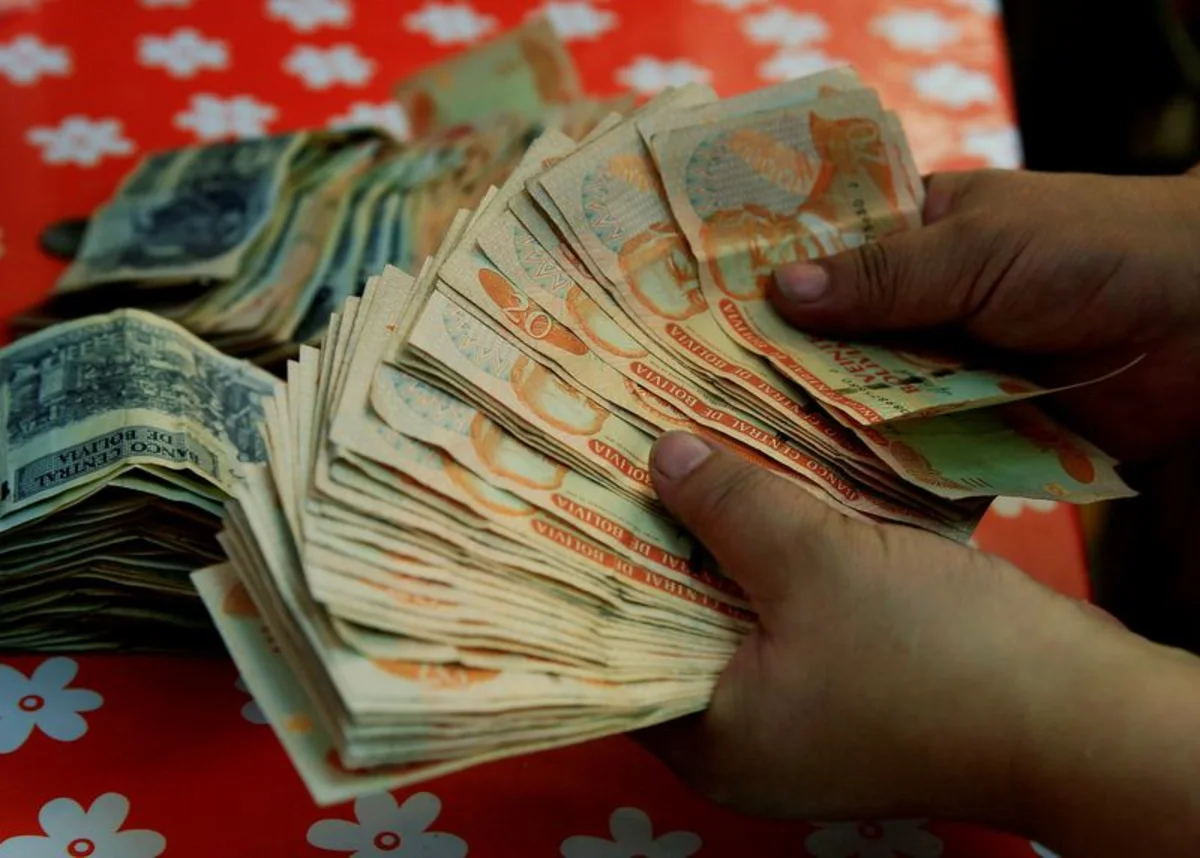
By Monica Machicao
LA PAZ, June 26 (Reuters) – Bolivia will adopt a flexible exchange-rate system, the government said on Friday, effectively devaluing the currency by ending a 15-year dollar peg in a major policy shift aimed at restoring economic stability.
Bolivia’s central bank will oversee the shift, as the government aims to “strengthen macroeconomic stability, preserve external competitiveness and contribute to the balance of payments equilibrium,” the economy ministry said in a decree.
The move is part of Bolivia’s broader effort to normalize currency markets and boost investor confidence as Bolivia negotiates a financing program worth at least $2.5 billion with the International Monetary Fund and grapples with severe scarcity of dollars.
Bolivia had kept its official exchange rate largely unchanged since 2011 at 6.86 bolivianos per dollar for purchases and 6.96 for sales. But falling foreign-exchange reserves and increasing dollar shortages fueled the emergence of a parallel market, with the dollar at times trading near 20 bolivianos.
More recently, the government has been using a reference rate of around 9.90 bolivianos per dollar, which accounts for most commercial and financial transactions.
Shortly after the decree, the central bank updated its website to show the official exchange rate at 9.73 bolivianos per dollar as of Monday, implying a loss of about 30% in the currency’s value from the previous buy rate.
The IMF did not immediately reply to a request for comment.
The fund had advised Bolivia to end the currency peg in last year’s annual report. The government’s move will be seen as positive for Bolivia’s request for a fund-supported program expected to be for around $3 billion.
Even so, Bolivia will still face challenges, said economist Gonzalo Chavez. “Once you have this, the important thing is to continue getting dollars, to have international reserves in the central bank,” he told local radio.
The prospect of the change, and Bolivia’s talks with the IMF, drew opposition from labor groups that since May have blocked major roads in protest against President Rodrigo Paz’s government.
One of the main groups, the Bolivian Workers’ Central, demanded the government rule out IMF borrowing as a condition for lifting the blockades, out of concern that an IMF deal could lead to austerity measures. The government has argued that external financing is needed to rebuild reserves, stabilize public finances and facilitate the transition to the new exchange-rate regime.
Paz declared a state of emergency last week, allowing security forces to clear roadblocks that had paralyzed the economy for nearly two months.
(Reporting by Monica Machicao and Daniel Ramos; Additional reporting by Fabiola Arámburo and Rodrigo Campos; Editing by Kylie Madry and William Mallard)