dailynewsnblog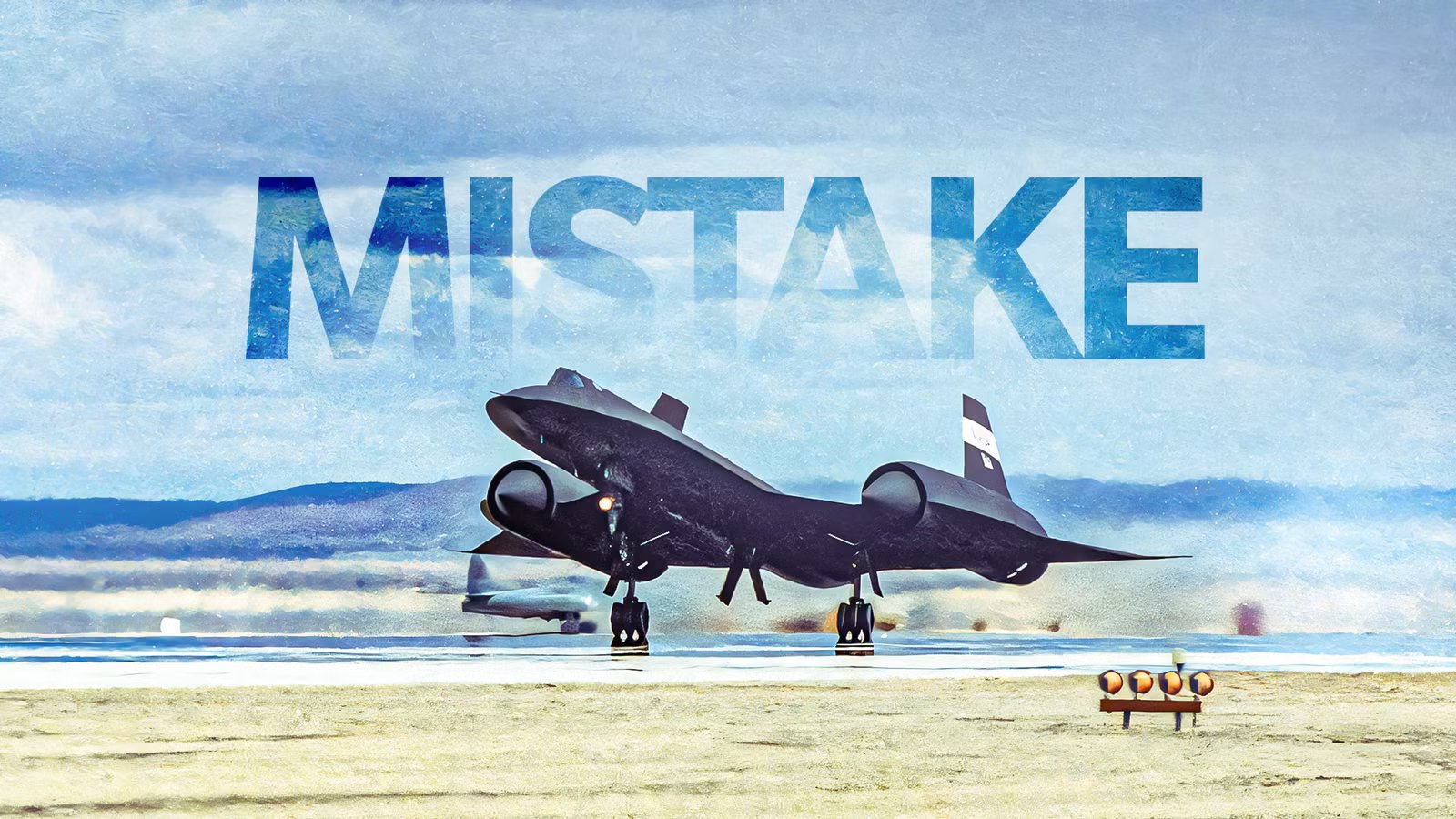
The Lockheed Martin Skunkworks’ SR-71 Blackbird is a tale of superb US Cold War engineering, thrilling covert espionage (both the aircraft’s missions and sourcing the titanium), technological development, and the harsh realities of what the Air Force can realistically afford to operate.
When discussing the SR-71, it is worth noting that the debate is held with imperfect information and a massive knowledge bias. The Blackbird was a black box project that has since been declassified; aircraft are on display, its engineering tales are known, and its juicy stories are written about. The Air Force has black box projects today, but these remain classified. It is widely believed that the RQ-180 exists, but little is known about it. Put another way, the public knows what was lost, but does not fully know what came after.
Why The SR-71 Blackbird Was Built

The SR-71 Blackbird was not built to demonstrate the ingenuity of American engineers, nor was it designed to be a national icon or patriotic prestige aircraft in the way that the supersonic Concorde was. It was built to solve a set of problems. In the early Cold War, the US was largely in the dark about what was happening deep inside the Soviet Union. This was an age before the development of satellites.
The US built the subsonic Lockheed U-2 Dragon Lady spy aircraft to fly over the Soviet Union at an altitude of 70,000+ feet (21,336 meters) and take images of points of interest. The usefulness of the U-2 became apparent in 1962 when it discovered the nuclear missile sites being constructed in Cuba, triggering the Cuban Missile Crisis. However, the aircraft also quickly became vulnerable.
The development of Soviet surface-to-air missiles (SAMs) in the late 1950s was known to US planners, and it was known that the U-2 would become vulnerable. The US embarked on what would be the SR-71 program, which would fly out of reach (80,000 feet or 24,384 meters), fast (Mach 3.3), and even incorporate radar cross-section reduction. The downing of the U-2 in 1960, piloted by Gary Powers, and another in 1962 over Cuba, drove the message home that the U-2 was vulnerable and the SR-71 was needed.
The SR-71’s Engineering Was Its Own Weakness
The SR-71 was indeed able to fly too high and fast for Soviet air defense to intercept, and none were ever brought down. But the very cutting-edge engineering of the SR-71 helped sow the seeds of its own demise. The aircraft’s high Mach, expensive materials (e.g., titanium), and heavy maintenance (e.g., the tires) made the aircraft exceptionally expensive to operate.
The Air Force was operating a small fleet that used expensive, specialized JP-7 fuel, unique tooling, and demanding infrastructure. Each SR-71 mission was expensive, and a 90-minute flight could consume around 12,000 gallons of fuel. Air Forces only have limited funds that they have to prioritize. Sortie rates, man-hours, and operating costs are almost as important to the Air Force as the capabilities themselves (with nuances).
Lockheed SR-71 Blackbird | |
|---|---|
First flight | 1964 |
Introduction | 1966 |
Retirement | 1989 (initial)/1998 (permanent)/1999 (NASA) |
Number built | 32 |
Top speed | Mach 3.3 |
Capability alone does not determine whether a military adopts a system. A platform must also be affordable to purchase, operate, maintain, and support throughout its service life. As an exaggerated example, New Zealand has a total defense budget in 2026 of around $3.7 billion. This makes an aircraft like the F-22 useless to it (in the sense of impractical). Even if the US were to export them (it won’t), and if New Zealand had a requirement for an air dominance fighter (it doesn’t), there just isn’t the funding to purchase and sustain them.
The Pentagon Declared The F-35’s Most Critical Upgrade ‘Predominantly Unusable’
The problem with the Joint Strike Fighter.
Demise Of The USSR

The SR-71 was first partially retired in 1989. While this was before the collapse of the USSR (1992), it was also a period when relations were thawing, and it was clear the Soviet Union was in dire straits. The final retirement (1998) was well after the USSR had disappeared. The collapse of the USSR changed everything. Many advanced programs were built explicitly to counter the Soviet Union. Competition with the Soviets drove the enormous US defense spending (including the Reagan-era defense buildup). These programs were expensive, and the US government had to make hard choices over where it could allocate funding.
All else being equal, money spent on defense was money not spent on education, healthcare, civilian infrastructure, or even tax cuts. When the USSR collapsed, the calculus changed. Many programs were scrapped. Some projects that had shown promise, although they had major budgetary and technical difficulties ( e.g., McDonnell Douglas A-12 Avenger II), were canceled outright. Others were trimmed back massively, like the B-2 (142 down to 21) and F-22 (750 down to 187).
Existing expensive systems, like the SR-71 and the Iowa-class battleships, found themselves on the chopping block. In 1993, the Pentagon hosted the “Last Super”, a gathering of 20–25 CEOs and top executives of the largest aerospace and defense contractors, saying that there would not be the funding to sustain all of them and that the industry would have to consolidate. Soon, a wave of mergers led to Northrop-Grumman, Lockheed Martin, and Boeing (merged with McDonnell Douglas).
Advancements In Satellites & Other ISR

To some extent, the Air Force will bite the bullet and absorb punishingly high costs if a system provides a required capability and there are no alternatives. This is seen in the US, keeping its expensive B-2 fleet (until the B-21 can take over). Perhaps the biggest nail in the SR-71’s coffin was the development of alternative systems able to absorb many of its missions.
Catch what other flight trackers miss
Emergency squawks, holds, NOTAMs — live signals, no signup.
Open tracker
Catch what other flight trackers miss
Emergency squawks, holds, NOTAMs — live signals, no signup.
Open tracker
As spy satellites developed and provided global coverage, they allowed for continuous monitoring at a lower cost without putting a pilot’s life at risk and risking a major diplomatic incident. As well as satellites, the US developed a range of unmanned aerial vehicles (aka spy drones) that were much cheaper, had reasonable endurance, and didn’t need human crews. Intelligence could also be increasingly gathered by signals intelligence systems.
Satellites are able to operate free from border restrictions and don’t violate sovereign airspace, unlike the SR-71. Another factor was that the SR-71 fell further behind technologically. The SR-71 was built in the 1960s to capture data on physical panoramic films and side-looking radar tapes. It had to return to back to retrieve the data. By the late 1980s and early 1990s, modern systems demanded immediate, real-time tactical intelligence. The Air Force didn’t invest in electronic upgrades, and so it became increasingly outdated.
Increasing Vulnerability

It is claimed that the SR-71 outran over 4,000 missiles shot at it and was never intercepted (although it’s unclear where that claim originated). That is an astonishing achievement. However, by the 1990s, the safety margin was narrowing, and aircraft like the MiG-31 interceptor were becoming increasingly capable while advanced integrated air defense networks developed. At the same time, the USAF was transitioning from speed to stealth as the primary defense against interception.
At the time, early stealth/low observable aircraft like the F-117 and B-2 appeared to be the technology of the future. Today, it is difficult to assess how survivable the SR-71 would be against modern integrated air-defense systems such as the S-400, S-500, HQ-9, and HQ-19. Modern radars, networking, sensors, and missile kinematics have improved enormously since the aircraft entered service. At the same time, the SR-71 would remain an unusually difficult target because of its combination of altitude, speed, and relatively reduced radar signature.
There were other reasons why the Air Force retired them. Some reasons are boringly bureaucratic, like inter-department competition. Another issue was the small fleet and availability. Still, the best predictor of obsolescence is not if a program is expensive, rare, capable, or even somewhat vulnerable. The better predictor is when there are new systems that can do the same or similar missions better and cheaper. The former factors are predictors of quests to find a viable replacement.
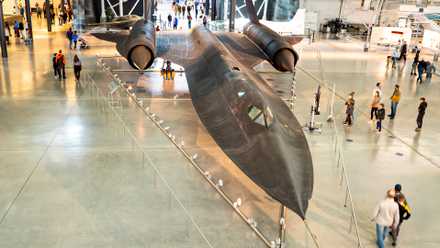
The Aircraft Lockheed Built That Was So Fast Even The Pilots Who Flew It Don’t Fully Understand How It Worked
A closer look at the black magic inside the SR-71.
The Question Of The When Of Retirement

Without knowing the full information about the classified ISR programs that filled the SR-71’s roles, it is impossible to say if the decision to permanently retire it in the late 1990s was a mistake. That said, retirement of these airframes was only a matter of time. By the late 1990s, they were already aging, becoming more expensive to operate, readiness rates were becoming a problem, and spare parts were dwindling.
The debate is not about whether they would be retired, it’s when. Should the Air Force not have retired them in the 1990s, it would have likely retired them in the 2000s. At any rate, it’s highly unlikely those original high Mach airframes would be flying in 2026. Alternatively, the Air Force could have built new, updated airframes, as it did with the U-2 in the 1980s. But that seemed expensive and unnecessary.
All this said, Lockheed Martin’s Skunk Works has publicly discussed a hypersonic reconnaissance and strike concept known as the SR-72, often described as a conceptual successor to the SR-71. Lockheed first unveiled this project in 2013, but the project went dark again in 2018. Lockheed said the aircraft would be unmanned, hypersonic (Mach 6+), fly at up to 100,000 feet (30,480 meters), and use scramjet propulsion. It is reported that Lockheed is developing the aircraft with its own money and that a prototype may be in production. That said, as a black box project, this is somewhat speculative.