dailynewsnblog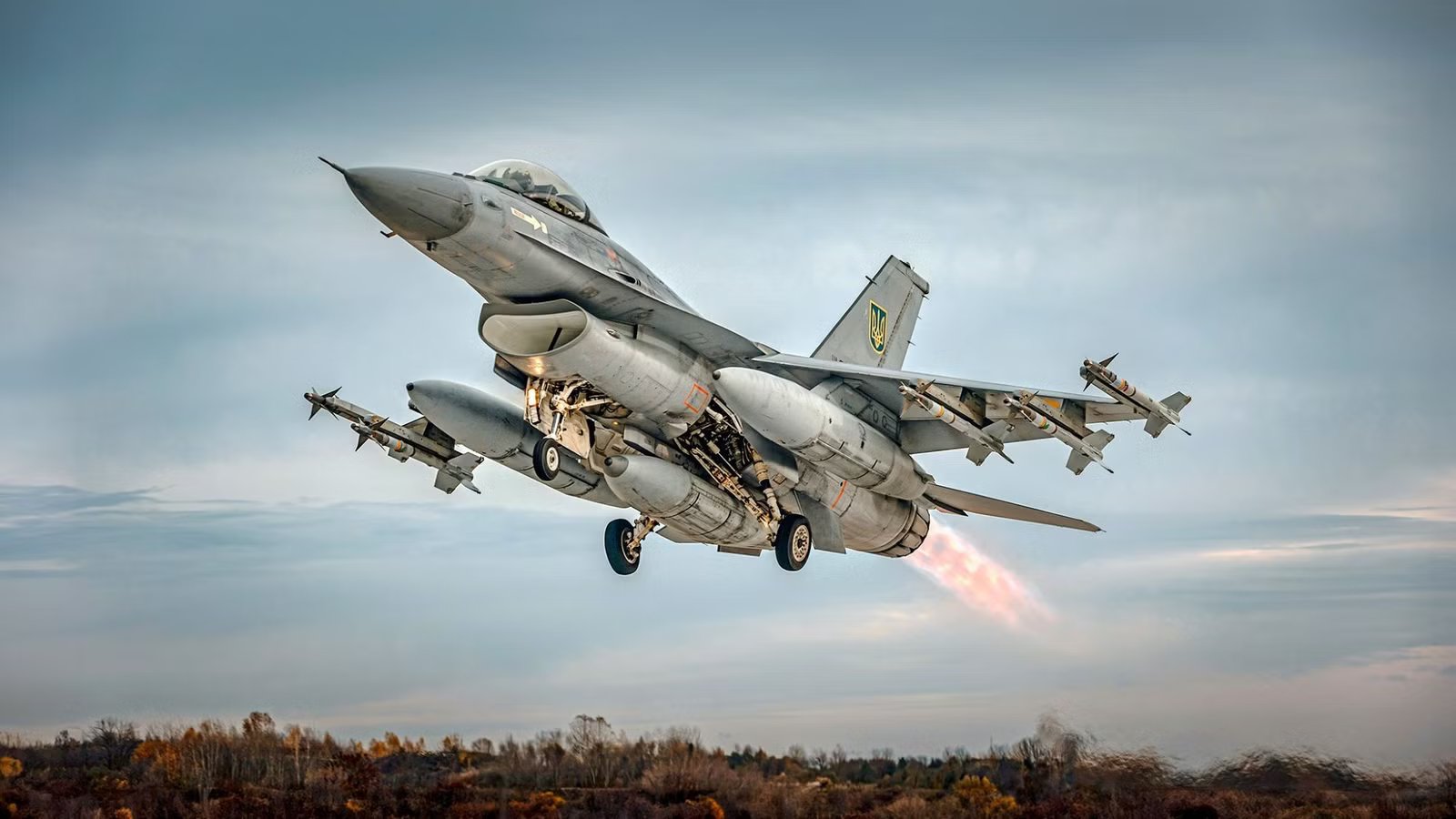
Since the late 1970s, General Dynamics’ (later Lockheed Martin’s) F-16 Fighting Falcon has been a workhorse light fighter for the United States and many allies. Its fundamental design and systems are from a time when all-digital cockpits, networked data links, and stealth technology were all things of science fiction. By the end of the 1990s, engineers had crammed nearly every upgrade possible into the airframe.
The goal of the US-led Joint Strike Fighter program was to create a single family of jets that could both replace multiple fourth-generation fighters and defeat the radar of contemporary air defenses. Lockheed Martin’s response was the F-35 Lightning II. The Skunk Works machine won the JSF award and has been replacing the F-16 progressively since it entered service.
The Fifth-Generation Difference

Across the US Air Force, squadrons are steadily transitioning to the conventional takeoff and landing F-35As as F-16s are retired. The same pattern is unfolding in Europe, the Pacific, and the Middle East, where allies like the United Kingdom, Italy, Norway, Australia, Japan, and Israel are already flying the Lightning. Still, others like Poland, Switzerland, and Greece, have orders pending. The overall trend is clear as the stealth fighter is gradually taking over.
The driving force behind the change is survivability. A clean F-16 appears on modern search radars like a bright light in a dark room, which allows enemy missiles to engage it long before it gets close enough to strike. The F-35, by contrast, was sculpted from the beginning to defeat radar systems. That stealth buys pilots precious seconds or minutes inside heavily defended airspace, letting them complete a mission before the enemy even realizes they are there.
The Lightning also has a suite of sensors that communicate with other aircraft and units on land, sea, and space continuously. The helmet visor has a panoramic cockpit display that streams data from its radar, infrared cameras, and electronic warfare equipment into a single, neat picture. The pilot of an F-16 must mentally piece together information that is displayed on various gauges, pods, and alert lights, while F-35 pilots can make decisions almost instantaneously.
By The Numbers: The Lighting II

The F-35 can travel hundreds of miles without requiring drag-producing drop tanks thanks to a generous internal fuel reserve. While meeting or surpassing reliability and maintenance standards, its engine produces almost 150% of the thrust of a late-model Falcon. The three closely related variants include the carrier-ready F-35C, the short-takeoff F-35B, and the land-based F-35A. These share many of their parts and software, making training and logistics easier than any F-16 variant could ever be.
Metric | F-35A Specifications |
|---|---|
Power Plant | One Pratt & Whitney F135-PW-100 turbofan engine |
Thrust | 43,000 pounds |
Wingspan | 35 feet (10.7 meters) |
Speed | Mach 1.6 (~1,200 miles per hour) |
Range | More than 1,350 miles with internal fuel (1,200+ nautical miles), unlimited with aerial refueling |
None of this comes cheap, but for countries that expect to face dense surface-to-air missiles and modern enemy fighters, the trade-off is worthwhile. Stealth, advanced sensors, extended range, and a powerful digital backbone give the F-35 a qualitative edge that the beloved but aging F-16 simply cannot match. That combination explains why, squadron by squadron, the Viper’s (as the F-16 is also known) long tenure at the tip of the spear is drawing to a close.
A Multinational Fighter For The Future

At least 30 countries now operate the F-16, which has been manufactured to the tune of more than 4,700 units. The F-16 airframe has been inching close to its upgrade capacity limits since the late 1990s, with things like radar size, armament volume, fuel capacity, and stealth enhancements. The Joint Strike Fighter (JSF) was started by the United States and allies to field a single family of aircraft that could replace the F-16 as well as the even more obsolete A-10 Warthog.
That same program aimed to design a successor to the Navy’s F/A-18 Super Hornet and the Marine Corps’ AV-8B Harrier. The Lockheed Martin F-35 Lightning II emerged victorious in 2001. Lockheed Martin created three versions: the F-35A for conventional takeoff, the F-35B for short takeoff and vertical landing, as well as the F-35C, which is carrier-capable and catapult-launched. The direct replacement for the F-16 is the F-35A.
Over 1,230 F-35s have been delivered to date, while the F-16 fleet has dropped from its peak of about 800 to a projected 400 by 2030. Older F-16 blocks retire first, and new USAF fighter squadrons fill their place with F-35As. In order to replace their own F-16s, allied operators such as Italy, Norway, the Netherlands, Poland, and Israel have ordered or are already operating F-35s.
Singapore has started replacing its Vipers with new JSFs, while South Korea and Japan are using F-35As to partially replace or supplement their F-16 derivatives. Israel flies both, gradually moving its active combat squadrons to the F-35A. Meanwhile, Bahrain and the United Arab Emirates have similar plans.
Why Replace The F-16?

Survivability in modern air-defense environments is the key factor. The F-16’s non-stealth design has a high radar cross-section, and modern S-400/SA-21 or HQ-9 systems can track and engage it well beyond its weapon release range. Sensor fusion & data dominance is next on the list. Combat now centers on finding, tracking, and sharing information faster than the enemy.
Metric | F-16C/D Specifications |
|---|---|
Thrust | 27,000 pounds |
Speed | 1,500 mph (Mach 2 at altitude) |
Range | More than 2,002 miles ferry range (1,740 nautical miles) |
Wingspan | 32 feet and eight inches (9.8 meters) |
Maximum takeoff weight | 37,500 pounds (16,875 kilograms) |
The F-16’s mechanically scanned AESA radars and separate electronic-warfare, targeting pod, and Link 16 systems provide useful but stove-piped data. Maintenance & life cycle cost trajectory are another major motivator, as many F-16 airframes are approaching 8,000 flight hours (their design limit).
Service life extension programs can push them to 12,000 hours, but cost roughly $20 million per jet and still can’t add internal weapons bays or signature reduction. Commonality across services greatly simplifies procurement, sustainment, and upgrades. A single JSF family simplifies training, logistics, and software upgrades for the Air Force, Navy, Marine Corps, and partner air forces.
High Tech Is The Name Of The Game

The F-35’s stealth design is the headline upgrade, and its radar cross-section is roughly that of a metal golf ball from the frontal aspect, versus several square meters for an F-16. This allows the F-35 to penetrate integrated air defenses, finish missions before being detected, or force enemy radars to emit at high power thereby exposing themselves.
The F-35 ‘s sensor suite is a generational leap and then some. AN/APG-81 AESA radar has around 1,200 transmit-receive modules, wide-bandwidth high-resolution mapping, and simultaneous air-to-air and air-to-surface modes. Its Distributed Aperture System integrates six IR cameras to give 360° missile-launch and aircraft detection, feeding the pilot’s helmet display. The Electro-Optical Targeting System has an internally mounted IRST/laser designator with external pods.
The F-35’s EW suite integrates radar warning, geolocation, jamming, and countermeasures. All sensors are fused by mission-computer software, presenting one coherent picture on the cockpit’s panoramic display and the pilot’s helmet. Meanwhile, F-16 pilots must manually correlate data from multiple displays.
Catch what other flight trackers miss
Emergency squawks, holds, NOTAMs — live signals, no signup.
Open tracker
Catch what other flight trackers miss
Emergency squawks, holds, NOTAMs — live signals, no signup.
Open tracker
Future-Proofing For A Strong Fleet Tomorrow

When the F-35 was drawn up, its designers didn’t just want to out-fly today’s threats. Rather, they wanted an airframe that could keep absorbing new sensors, weapons, and software for decades. That goal shaped almost every engineering choice and made the jet far easier to modernize than the outgoing F-16. All the F-35’s sensors feed into a bank of modular computers rather than dedicated, single-purpose boxes.
When the JSF program rolls out the upcoming Tech Refresh 3 package, that upgrade will be simply swapping a line-replaceable module, not gutting the cockpit avionics. The F-16 can receive better mission computers, too. However, the cramped space behind its instrument panel and its limited electrical power mean every improvement competes with something that is already there. Much of the F-35’s evolution is simply a matter of new code.
Indeed, a stealth cruise missile or a hypersonic weapon can be added to the jet’s arsenal largely through software. The radar and electronic warfare suite are software-centric, so engineers can push out new air-to-ground mapping modes or updated jam techniques without touching a screw. Meanwhile, the F-16 still needs physical modifications for almost all upgrades, and the F135 engine’s generators on the Lightning also produce about twice the electrical output of the F-16’s power plants.
The environmental control system was built to absorb more heat than the current avionics actually emit. That spare capacity is the hidden enabler for future high-energy lasers, advanced jammers, or yet-to-be-invented sensors that would quickly overload a Falcon. Every major component on the F-35 carries health-monitoring sensors that stream data to ground servers. As machine-learning algorithms mature, they can leverage that data for new predictive-maintenance patterns.
This is done without the need for additional instrumentation, while, in the F-16’s world, mechanics still rely on scheduled inspections and logbooks. The entire F-35 was born in a digital engineering environment. Lockheed Martin maintains a ‘digital twin’ of the jet, so proposed changes can be modeled, stress-tested, and even flown in software before a real wrench touches metal. The F-16 predates that practice, so each major change requires more physical prototyping and flight testing before rollout.