dailynewsnblog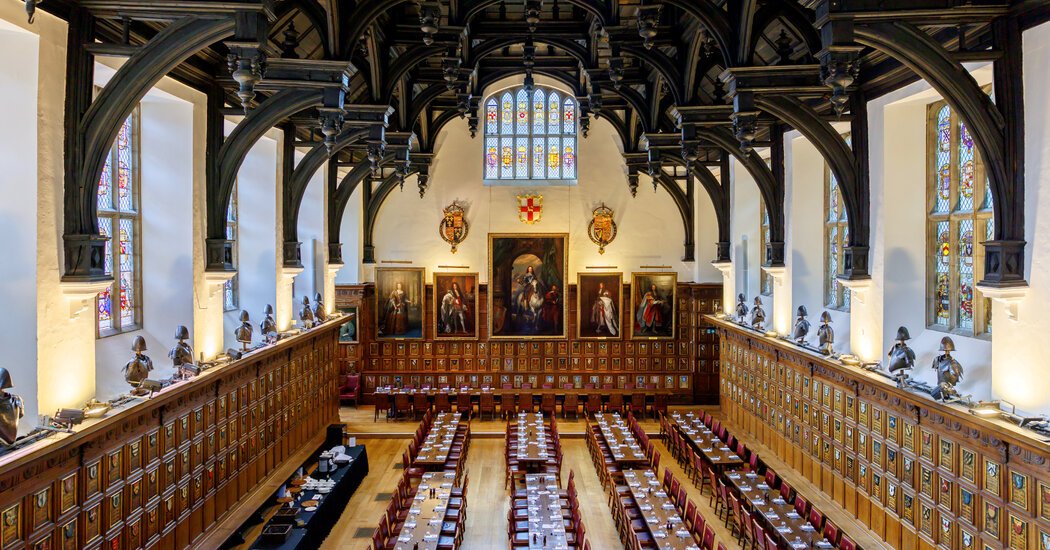
This is the eighth article in a series about travel and the 250th anniversary of the Declaration of Independence.
In the two-and-a-half centuries since America broke free from Britain, it’s not as if the two countries have taken much space from each other. The two nations have long been staunch allies. Winston Churchill in 1944 called the bond between Britain and the United States a “special relationship,” a term that is still often used.
But on the topic of the American Revolution — or, as it is often called on the other side of the ocean, the U.S. War of Independence — the British public is not that interested, historians say.
“It doesn’t receive the attention here it deserves,” said Tom Holland, a historian and co-host of the popular British podcast “The Rest Is History.” “That’s partly because we lost.” (British interest in U.S. history kicks back in around the assassination of President John F. Kennedy, he said.)
“Had Britain won the war,” Mr. Holland said, “you can imagine America being a little more like Canada.”
Still, remnants of the American Revolution can be found all over the city, including Benjamin Franklin’s living room and an original 1776 print of the Declaration of Independence.
Here’s how you can follow the footsteps of some of America’s notable founders and celebrate the country’s 250th birthday this summer in London.
Marvel at America’s original ‘breakup letter.’
The text of the Declaration of Independence was first spread with the help of John Dunlap, a printer in Philadelphia who produced 200 copies. This summer, visitors can see an original Dunlap broadside of the Declaration of Independence, one of only 26 surviving copies that were printed on July 4, 1776, in Philadelphia, at the National Archives in the leafy neighborhood of Richmond.
Although the document has been called a “breakup letter” by the news media, none of the copies that made it to Britain were sent to Parliament by Congress directly.
The Archives’ free “Revolution 250” exhibit, which runs through Nov. 29, also includes a handwritten letter by George Washington accepting Britain’s surrender after the Siege of Yorktown, among many other documents.
Step into Benjamin Franklin’s home.
It was in London that Benjamin Franklin, one of America’s most famous founders, turned into a revolutionary. From 1757 to 1775, he lived in a terraced Georgian house at 36 Craven Street, near Trafalgar Square.
He came to London as an unofficial diplomat to resolve a tax issue between the British government and the Penn family, who governed Pennsylvania, but soon turned into a popular figure around town.
“He really valued being at the heart of the British Empire,” said Megan King, a historian at Benjamin Franklin House, now a museum. “Franklin came as a loyalist and left a revolutionary.”
The museum, which is open to visitors for eight pounds (just over $10) and free for children 11 and under, is marking the 250th anniversary with a Fourth of July celebration.
The house is creaky but largely intact, including the parlor’s original wooden floor boards. Franklin’s visitors included Thomas Paine. “Lots of big ideas were happening in this room,” Ms. King said.
Franklin was not the only founder on Craven Street. In the early 19th century, after Franklin had moved back to America, Aaron Burr lived a few doors down at No. 30.
Stroll by ‘Little America’ and notable homes.
From 1785 to 1788, after the Revolutionary War, John Adams lived at 9 Grosvenor Square in Mayfair, one of London’s most upscale areas. The house is now an office building and has a plaque commemorating Adams, the second U.S. president, on its side.
The square was also home to Lord North, Britain’s prime minister at the time of the Revolutionary War who passed the Tea Act in 1773. He lived at 50 Grosvenor Square and died there in 1792.
In the nearby neighborhood of Marylebone, a plaque on the side of 62 Gloucester Place commemorates the final home of Benedict Arnold, America’s most famous traitor. Arnold initially fought against the British, rising to the rank of major general. As the war dragged on, he began feeding information to the British and defected. Perhaps ironically to American eyes, the plaque describes him as “an American patriot.” Arnold lived at the address form 1796 until his death in 1801.
If you find yourself in London around the Fourth of July, there are multiple ways to celebrate America’s 250th birthday. You can listen to a Great American Songbook concert in a church in southeast London, learn about the science of fireworks by an American chemist or hear historians at the British Library discuss how the world made the American Revolution. And for an even bigger party: London’s annual Pride Parade in Central London falls on July 4 this year.
Understand a divided city.
The war was a divisive issue in 18th-century London, according to Jerry White, a British historian. Merchants wanted to “avoid the war at all cost,” he said.
“It was a very disruptive moment for London’s trade,” he added. “And London was a commercial city.”
Many places representative of London’s traders still exist today. Fortnum & Mason, an upscale department store for tea, china and food and a favorite of tourists and locals, opened in 1707. It aimed to create food that was easily transportable for long-distance journeys, such as the Scotch egg.
Among other notable opponents of the war was William Pitt, the Elder, a statesman who served as prime minister. He was so staunchly against the war that he proposed an act in the House of Lords in 1775 that was supposed to reconcile Britain and the colonies. He was convinced that a British military victory in America was impossible. (Fun fact: Pittsburgh is named after him.)
Today, visitors can see the likeness of Pitt inside Westminster Abbey, where he was buried and commemorated with a white, nearly 33-foot-high marble monument made by the British sculptor John Bacon. Tickets to visit the abbey are £27.13 (about $36).
Step into the heart of Britain’s political life.
The British Parliament was the real center of power at the time of the American Revolution, historians said. “It is not just a debating chamber,” said Stephen Conway, a historian who focuses on 18th-century Britain. “It’s the body that more than anything else alienates the Americans as a result of its own conviction that it has the authority to legislate the Americans and tax them.”
The medieval St. Stephen’s Chapel, was the debating chamber of the House of Commons in 1548. After a fire destroyed the chapel in 1834, what remained of the site became St. Stephen’s Hall, which now serves as the public entranceway to the Parliament.
If you are in the neighborhood already, walk by 10 Downing Street, one of Europe’s most famous addresses. It has been Britain’s official prime minister’s residence since 1735 and is currently waiting for its new occupant.
See where Americans studied law.
Many young American law students in the 18th century came to London to join the Inns of Court, which educate and train barristers and are also professional societies.
Unlike today, in the 18th century there were no strict academic requirements to be called to the bar, said Barnaby Bryan, the archivist and head of collections for Middle Temple, one of the Inns of Court. Instead, being called to the bar was based on networking and how many dinners a student had in the main dining hall.
One of the key places inside the complex, a cobblestoned oasis of scholarly calm in the middle of Central London, is Middle Temple Hall. Visitors can book a guided tour and enjoy lunch in the hall.
In the 1770s at Middle Temple, by its nature a place for debating, “there was quite a lot of support for the American colonists,” Mr. Bryan said, adding, “It was a hotbed of colonial interest and activity.”
Go where the king spent his time.
Before he hardened against the colonists and declared them rebels, King George III played the part of a constitutional monarch, Mr. Conway, the historian, said. Early on, he even emerged as a moderating force, he added, “urging caution and preventing conflict and a showdown with the colonies.”
King George III’s main royal court in London was at the Tudor brick building St. James’s Palace, close to Buckingham Palace and Westminster Abbey in Central London. (Entering the palace is only possible on select dates.) That is where, on Aug. 23, 1775, he signed the Proclamation for Suppressing Rebellion and Sedition, the document that declared the colonies were in a state of rebellion.
About a four-minute walk from the palace, Lord George Germain, who was the secretary of state for the colonies during the Revolutionary War and led the war effort, lived at 167 Pall Mall, which no longer exists.
For modern Londoners and visitors, the best interaction with the king — albeit a fictionalized version — is probably at the Victoria Palace Theater in the London production of “Hamilton.” (Ticket prices are generally less expensive than in New York City, ranging from about $106 to $298.)
The productions of “Hamilton” are almost identical on both sides of the Atlantic Ocean. But in London, the actor who plays the king receives a warm welcome on his home turf. To loud cheers, the king warns the Americans as he sings: “Oceans rise, empires fall / It’s much harder when it’s all your call / All alone, across the sea / When your people say they hate you / Don’t come crawling back to me.”
Follow New York Times Travel on Instagram and sign up for our Travel Dispatch newsletter to get expert tips on traveling smarter and inspiration for your next vacation. Dreaming up a future getaway or just armchair traveling? Check out our 52 Places to Go in 2026.