dailynewsnblog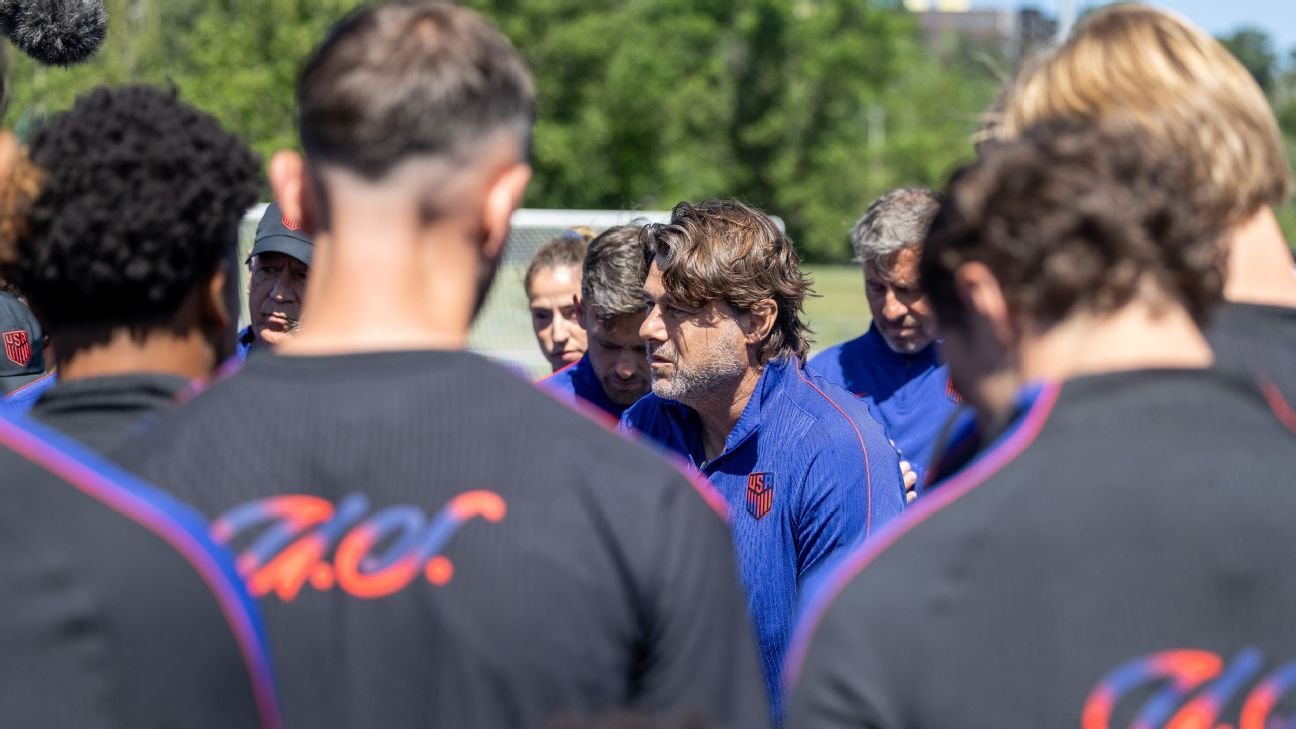
IRVINE, Calif. — Thursday’s group stage finale between the U.S. men’s national team and Türkiye won’t impact the Group D standings, but it will still provide some valuable tests for the USMNT, as well as offer some clues as to how it will do in the knockout rounds.
The U.S. has already locked up the top spot in Group D thanks to victories over Paraguay and Australia. Meanwhile, Türkiye is among a handful of teams that have already been eliminated from the tournament.
Technically, neither team has anything to play for, but each side will be motivated to play well. The U.S. will want to maintain momentum heading into the round of 32, while Türkiye — who, to be fair, has played well at times during this FIFA World Cup — will be aiming to salvage a bit of pride, and show off its quality before heading home.
U.S. manager Mauricio Pochettino has some tricky decisions to make in terms of his lineup. Does he engage in a full rotation of his team, or does he keep a few familiar faces in there to maintain continuity and momentum?
How he answers that question will have a cascade effect on how the U.S. fares against what is still a potent opponent.
U.S. depth will be tested
Thursday’s match would seem to be an opportune time to rest some players, and give some heretofore bench players a run-out, especially with the top spot in the Group D standings set. For that reason, Pochettino should err on the side of rotation. This way, more players will have received minutes and will be better prepared if called upon.
In terms of who should sit, there are some obvious candidates. At minimum, the four players sitting on yellow cards — midfielder Tyler Adams, forward Folarin Balogun, center back Chris Richards and left back Antonee Robinson — should all sit on the bench, and thus not risk picking up a second yellow card and being suspended for the round-of-32 match. That would allow the likes of Sebastian Berhalter, Ricardo Pepi, Mark McKenzie and Max Arfsten the chance for more minutes.
One complication is the injury to midfielder Cristian Roldan. Roldan was the most likely replacement for Adams, but a muscle strain looks as if it could sideline him for the match. That means that Weston McKennie or Malik Tillman might have to be drafted in to provide some defensive support alongside Berhalter.
Tillman has excelled as a No. 8 in Pochettino’s system, toggling between providing defensive cover and dynamic attacking play. McKennie has more World Cup experience, which might be needed given what is likely to be a less experienced lineup.
Regardless, Pochettino will get a clear idea of just how deep his team is.
1:03
Robson: Pulisic must start vs. Türkiye to gain match fitness
Should Pulisic play?
Ahead of the Australia match, the status of Christian Pulisic’s left calf became a national obsession. Was it all an elaborate ruse to keep the Aussies guessing, or was he really injured? As it turned out, the latter explanation proved to be true, and though the U.S. ended up prevailing, the team’s attack hasn’t quite looked the same since Pulisic exited the Paraguay game at halftime.
This leads to another thorny dilemma for Pochettino. He could put Pulisic on the field in a bid to regain some match sharpness ahead of the knockout rounds. There’s also the option of sitting him entirely and not risk aggravating the injury before the round of 32, which is arguably the biggest game in USMNT history. Or Pochettino could find a middle ground and bring Pulisic on as a substitute for, say, 20 minutes or so.
Pochettino probably will try to surmise how the game is going before he puts Pulisic on the field. Is it intense or rather subdued? Is it getting nasty in the latter stages, or limping across the finish line? The prudent course of action would be to sit Pulisic for the whole match, but Pochettino is all about “arriving in the best condition, and might opt for the cameo route.
Türkiye pose a unique challenge
No two teams are alike, but the first two opponents for the U.S. in Paraguay and Australia did rhyme to a degree in terms of their tactical approach. Both were defensively gritty teams that liked to get out on the break.
Türkiye is completely different. With the likes of Real Madrid’s Arda Güler, Inter Milan’s Hakan Çalhanoglu and Juventus’ Kenan Yildiz in their ranks, the Crescent-Stars are capable of keeping possession and creating chances in a way that Paraguay and Australia couldn’t. Türkiye have held the ball to the tune of 74.3% in their two games, and the team’s 46 chances created are the most in the World Cup so far. The problem has been finishing, with no goals scored despite an xG of 3.53.
All of this means that the U.S. is likely to spend more time defending in a low block than it did in its first two games combined. This isn’t necessarily a bad thing, as the U.S. probably will have to defend for stretches in the round of 32. This might also allow the U.S. to get out on the break and see how adept it is in transition.
So though Türkiye is already eliminated, it probably will pose the toughest test yet to the U.S. The match will provide insight as to how defensively stout the U.S. is, and should prepare it well for what’s ahead.