dailynewsnblog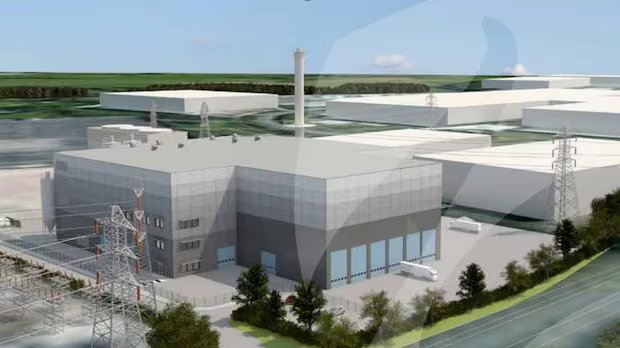
A shovel-ready, $400-million facility proposed for Edmonton that would convert landfill waste into electricity could be cancelled after a recent carbon tax agreement between the Alberta and federal governments.
The national industrial carbon price was supposed to rise to $170 a tonne by 2030, but a revised deal last month by Prime Minister Mark Carney and Alberta Premier Danielle Smith means the price would instead reach $130 a tonne by 2040.
For Varme Energy, the policy change is putting its proposed waste-to-energy project on life support. The facility would capture greenhouse gases and store them underground. The project would also generate carbon credits that could be sold. However, a lower carbon price means those credits would be worth less.
Without further government policy changes over the next few months, Varme Energy chief executive Sean Collins warns the company may have to pull the plug on the project.
“Unfortunately, nobody has runway forever,” said Collins. He now describes the company as facing a “very challenging” financial situation.
Carney and Smith signed the deal as part of a broader agreement between the governments to reduce methane emissions, expedite the regulatory process for major projects in the province and pursue a new oil export pipeline to the West Coast.
Some large industrial companies had pushed for a lower carbon price to avoid higher costs and remain competitive compared with counterparts in the United States, which do not have to pay a carbon tax.
In Alberta, a carbon price that rises more slowly and does not climb as high will result in less investment in emissions reductions, said Ross Linden-Fraser, a researcher with the Canadian Climate Institute.
“It’s just the reality of what happens when you set a lower value on one of the main sources of revenue for emissions-reducing projects,” he said.

Lower target price
Varme Energy already has agreements in place with the City of Edmonton’s landfill, as well as provincial permits to produce electricity. The proposed project has received funding from the Alberta government and support from the federal government’s Canada Growth Fund to ensure the carbon credits are sold for at least $85 a tonne.
Still, the project has an expected operating cost of about $118 a tonne, said Collins. That would have made financial sense under the federal government’s previous plan to raise the price to $170 a tonne by 2030.
“We’re calling a mayday to Ottawa and we hope they listen,” said Collins. He said the federal government’s message should be: “Ottawa: We have a revenue problem. And the solution to a revenue problem is revenue.”
Varme Energy is a subsidiary of a Norwegian-based clean energy company that has developed similar projects to divert waste from landfills. Instead, the garbage is converted into steam to generate electricity.
The proposed project aligns with the federal government’s priorities of attracting foreign investment, reducing emissions and producing clean electricity, said Collins.
Carbon capture projects vary in size and in operating cost. For instance, a higher concentration of emissions in a smokestack can reduce the cost of capturing them, while expenses can rise if the carbon dioxide must be transported by pipeline before being pumped underground for storage.
Currently, Alberta’s carbon price is $95 a tonne. However, polluters can also purchase carbon credits on an open market, where the effective price is much lower — around $25 to $40 a tonne.
The new policy will introduce a price floor for those credits, beginning at $60 a tonne in 2030 and rising to $110 a tonne by 2040. The federal government says that minimum price should give companies confidence to build in Canada.
“The agreement reflects a shared commitment by both governments to a strong and predictable carbon market that supports investment, reduces emissions, and keeps Canadian industry competitive,” said Emily Jackson, a spokesperson for the federal environment minister, in an emailed statement.

‘Not viable’
Varme Energy is not alone in facing financial pressure following the changes to Alberta’s industrial carbon price, with other carbon capture companies pushing both levels of government for additional support.
“That change in schedule and the lower price makes pretty much every carbon capture and storage project in Canada not viable,” said Jamie Stephen, managing director of Torchlight, a Nova Scotia-based bioenergy developer.
The company is developing a $2-billion carbon capture and storage project at a pulp mill near Hinton, west of Edmonton. The facility is designed to permanently store about 1.6 million tonnes of carbon dioxide every year, which Stephen said would have a greater climate impact than Canada’s entire battery-electric vehicle fleet.
The federal and provincial governments offer tax credits and other incentives to reduce construction costs for such facilities, but Stephen said that does not make much difference if the carbon credits are worth so little.
“It doesn’t matter how large the capital support is, if there’s nobody to buy the product, there is no business,” he said.
The carbon capture sector is hopeful the federal government will make other policy changes that would allow companies to sell carbon credits into different markets to get a better price, including in the United States, internationally or through Canada’s own market linked to the Clean Fuel Regulations.
As Alberta and the federal government implement their new agreement, the sector will also be watching key details, including how strictly credits are calculated and whether polluters can use loopholes to reduce their carbon tax obligations.
For Collins, with Varme Energy, time is running out.
If the right fiscal policies are introduced to support the sector, he said construction on the proposed project could begin.
However, if the status quo remains, he will likely have to cancel the project this fall.
“It’s years of your life and your team’s life put into developing a project that you’re all really, really passionate about,” he said. “We all get up everyday believing in the value proposition of a landfill-free future for Canada and our role in in helping enable that.”