dailynewsnblog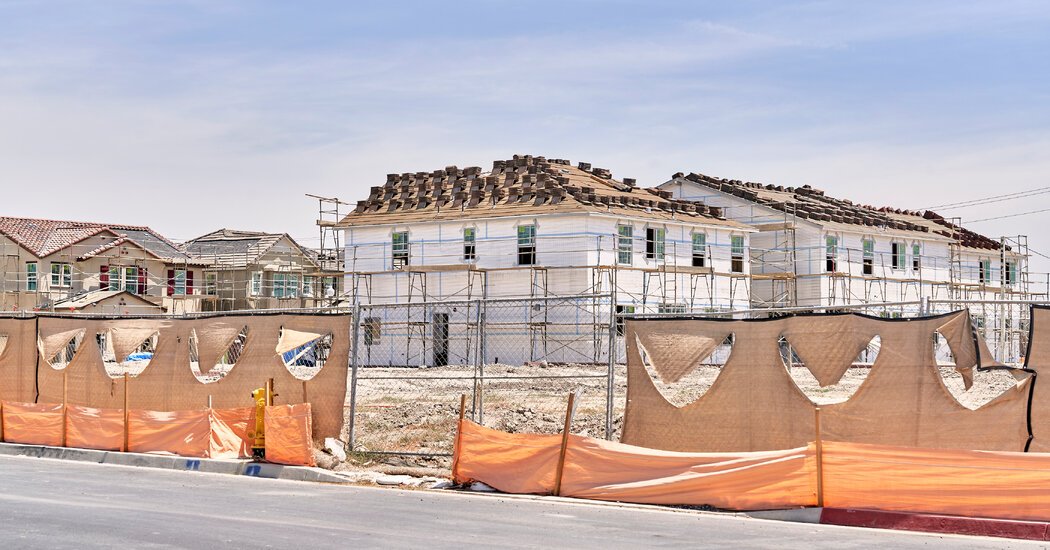
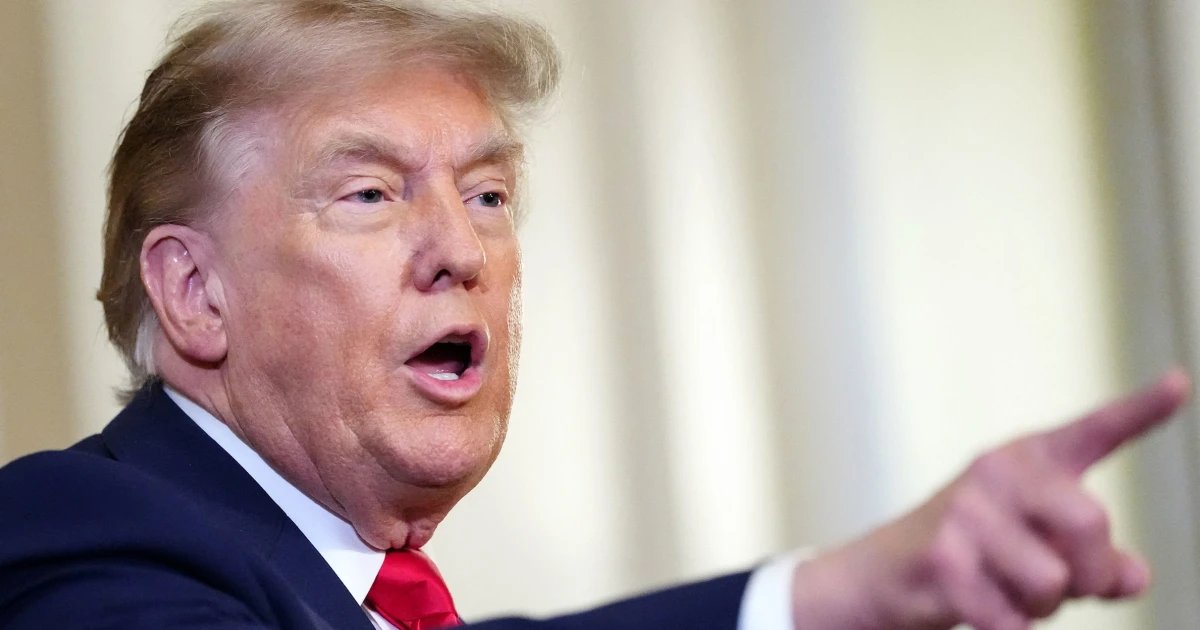
The first major bill to address the nation’s housing crisis in more than three decades seemed headed for President Trump’s signature on Wednesday. But the bipartisan effort descended into chaos after Mr. Trump abruptly canceled a ceremony to sign the measure into law over a series of political grievances with Congress.
Democrats and Republicans began the day on a jubilant note, as they prepared to commemorate a new set of policies meant to lower housing costs — a long-sought priority that both parties hoped to trumpet to voters anxious about the economy ahead of the midterm elections.
But Mr. Trump swiftly and unexpectedly upended those plans. Hours after his own aides praised the bill and promised the president would sign it, Mr. Trump instead canceled a scheduled event at the Capitol. Eschewing an opportunity for rare bipartisan accord, the president opted to turn the bill into political leverage, aiming to force Congress — and members of his own party — to bow to unrelated demands over voting restrictions and the war with Iran.
Mr. Trump insisted on social media that he would only sign the housing measure into law if Congress first approved the SAVE America Act, a divisive measure that would impose new requirements for voter identification and limits on mail-in ballots. Republicans have been unable to advance that bill over fierce Democratic opposition.
Mr. Trump then continued to pile on the grievances during a previously scheduled lunch with Senate Republicans at the Capitol. The president lashed out at his own party after the Senate adopted a resolution instructing him to end the war with Iran, a vote that saw four G.O.P. senators join Democrats in rebuke of the White House. An irate Mr. Trump said the move could impede the ongoing negotiations between Washington and Tehran.
The day ended with Republican leaders seeking to mollify Mr. Trump by holding a late-night vote to prevent another war powers resolution from coming to the floor, characterizing it as a do-over in the face of fierce anger from the president. Mr. Trump went on social media to celebrate the gesture, which has no legal bearing on the resolution the Senate adopted a day earlier, without indicating whether or not it was enough to get him to sign the housing bill or work to dislodge other stalled priorities that have piled up on Capitol Hill.
As Mr. Trump issued his demands, the fate of the housing measure slipped only further into doubt. The White House declined to say if the president might sign the bill another time, or if he might take the more extreme step of vetoing a law that his party views as a way to convince voters that Republicans are doing something to address the cost of living.
Technically, the president has 10 days while Congress is in session to either sign or veto a bill that is presented to him. Otherwise, it becomes law, even without his signature. But that clock only begins once he is formally sent the measure from the Hill, a requirement that has no clearly defined time limit in law.
By late Wednesday, Speaker Mike Johnson, Republican of Louisiana, had not yet formally presented the housing bill to Mr. Trump for his signature, according to two people familiar with the legislative process. Asked later about his exact thinking, the president seemed unmoved by his party’s hope to promote the legislation in time for the midterms.
“I said I’m not signing the housing bill,” he told reporters in the Oval Office, pointing again to his demand that Congress adopt restrictions on voting.
The president’s stance marked a painful setback for Democrats and Republicans who had spent more than a year in painstaking talks, trying to make progress on one of the most pressing financial issues facing families. And the developments seemed likely to deliver a political blow to both Mr. Trump and his Republican majority in Congress, at a moment when many in the party are desperate to showcase a legislative success in a year with very few of them.
“House Republicans are going to be the party that governs and delivers,” said Representative Tom Emmer of Minnesota, the No. 3 House Republican, on Wednesday morning, just as Mr. Trump said he had canceled the ceremony to sign the housing bill into law.
Many Democrats fiercely attacked Mr. Trump for the abrupt shift. Senator Chuck Schumer, Democrat of New York and the minority leader, accused Mr. Trump at one point on Wednesday of “running away from one of the very few accomplishments that could actually help the American people.”
Later, in an interview, Mr. Schumer said that Democrats were still hoping to see the housing bill enacted, acknowledging that the legislation was an increasingly rare bipartisan feat. Mr. Trump “almost never will work with us on lowering costs,” he said.
In many ways, the outrage and puzzlement that greeted Mr. Trump’s ultimatum on Wednesday underscored the tough political reality facing lawmakers with four months until the midterm elections. Affordability is a top-of-mind issue for many voters, who increasingly blame Mr. Trump for the nation’s poor economic trajectory.
Prices rose last month at their fastest pace in about three years. And for many Americans, housing represents their greatest and most burdensome expense. Rates on a 30-year mortgage have hovered around 6.5 percent, which has deterred some families from buying new homes and priced many out of the market altogether. And although monthly rents have moderated, they are still more than 37 percent higher than they were before the coronavirus pandemic.
Spanning roughly 380 pages, the so-called 21st Century Road to Housing Act sought to address some of these challenges by taking a longer-term view. In general, the bill takes aim at the nation’s housing shortage, estimated at 4 million to 6 million homes. The measure would ease a bevy of federal regulations to boost housing development, while incentivizing more construction at the local level.
The approach won broad support among economists and policymakers. It even included some of Mr. Trump’s own priorities, such as a new prohibition on large investors that snap up single-family homes, which the president tried to tackle in a limited executive order earlier this year. Shortly after the proposal passed the House, Karoline Leavitt, the White House press secretary, described it as “one of the most significant pieces of housing affordability legislation in American history,” adding that the “historic bill signing is another promise made, promise kept.”
But Mr. Trump sharply reversed course on Wednesday morning. In a series of social media posts, he said the housing bill was “of minor importance” to other priorities, as he used a derogatory term to describe Senator Elizabeth Warren of Massachusetts, one of the Democrats who joined with Republicans in the House and Senate to craft the bill.
Some Republicans later seemed uncomfortable with Mr. Trump’s move. Senator Susan Collins of Maine, who is among the most vulnerable Republicans running for re-election this year, later called Mr. Trump’s announcement a “complete surprise.”
Mr. Trump’s reversal on Wednesday was not the first time he stirred doubt around congressional housing legislation. Even though he said he supported the measure, he also had been dismissive of it, telling The Washington Examiner at one point in April that he was “looking at other things very strongly.”
Then, and now, Mr. Trump argued that he believed the most important force to lower housing costs would be a reduction in interest rates, which could ultimately help to push down mortgage bills.
“It’s all about the interest rate,” Mr. Trump said in the Oval Office on Wednesday, reviving his past attacks on the Federal Reserve. The central bank does not directly set mortgage rates, but its actions can influence what Americans pay. Still, Mr. Trump added that Republicans are “doing great” on bringing down costs.
Many of the groups that had spent months lobbying to advance the bill were apoplectic when they saw Mr. Trump’s social media post flash across their phones. Some were even en route to the Capitol, having been invited to the ceremony that the president suddenly canceled.
Sharon Wilson Géno, the president of the National Multifamily Housing Council, was on the Washington subway to the event when she received an email at 10:34 a.m. from the office of Mr. Johnson, saying the event had been canceled because of scheduling changes.
“I guess I shouldn’t have been surprised by this. But I woke up this morning and I thought, ‘Wow, you know, this is really happening,’” she said. “So, yes, this was a big turn of events.”
Shamus Roller, the chief executive of the National Housing Law Project, was just getting up at his home in San Francisco when he saw the president’s announcement. The day before, once the bill cleared the House, he had warned his deputy to hold off on any premature celebrations.
“I said: ‘Don’t count your chickens before they hatch. Anything could happen,’” Mr. Roller said. “I don’t know if it was her bad luck or my bad luck. I don’t know what it was.”