dailynewsnblog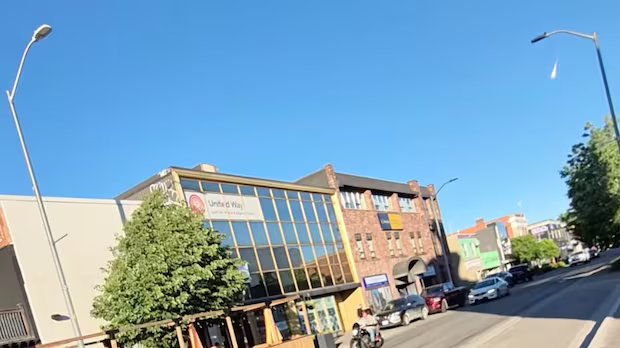

Listen to this article
Estimated 4 minutes
The audio version of this article is generated by AI-based technology. Mispronunciations can occur. We are working with our partners to continually review and improve the results.
Gerri-Annette Grenier was taking videos of vintage vehicles at the Queen Street Cruise car show in Sault Ste. Marie, Ont., last week when something unexpected entered her shot.
A meteor travelling at high speeds broke through the atmosphere and created a brief but bright fireball in the sky just before 8:15 p.m. ET on Friday.
“It was about a minute into [my recording], and I started to notice something coming from the sky,” she said.
“I just panned over in time to see that it was coming out of the top right corner of my screen.”
Grenier was among many residents in the region and across several U.S. states, including Michigan and Ohio, who reported witnessing the event.
But she was one of only a few who actually caught it on camera, garnering thousands of views for the unintentional capture.
“We just started freaking out. I was so shocked and amazed.”
Over the weekend, other videos of the meteor made its way to social media, including from Nathan Polaski.
The security camera at his family’s cottage in Posen, Mich., roughly two hours south of the Sault, caught a clear shot of the event.
“My parents were there. I was [away] but I read the news and checked the camera recordings and found it,” he said. “My parents heard and saw nothing.
“It looks like it captured the meteor breaking up into two big parts.”
Meteorites landed in northeast region
Phil McCausland, a planetary scientist and member of Media Physics Group at Western University in London, Ont., said fragments from the object — known as meteorites — landed on Cockburn Island.
The island is a mostly uninhabited land mass in Lake Huron’s north channel between Manitoulin Island and Drummond Island.
But some people camp on the island in the summers, which McCausland said increases the chances of the fragments being located.
“Meteorites in Canada found on private land belong to the landowner,” he said. “If they find something, we’ll negotiate with them about loaning the meteorites to do scientific studies.”

McCausland estimates the meteor was travelling as fast as 28 kilometres per second when it entered the atmosphere last Friday.
He said the object could have weighed hundreds of kilograms before breaking apart into several dozen, tinier fragments.
While events like this happen many times each year around the world, McCausland said last week’s occurrence has some unique qualities.
“It’s more remarkable because it was a bigger fireball. It’s unusual to see them this bright, and bright enough that it would be seen in broad daylight.
“For anyone who saw this event, you can count yourself as extremely lucky.”

McCausland said his team won’t be making the trip to search for the meteorites as there are likely too few fragments in an already heavily wooded area.
But he does have tips for residents with ties to the island who may want to do a search of their own.
“They’re freshly fallen, so they’ll look out of place,” he said. “They’ll be sitting on top of vegetation and won’t look like they’re part of the ground.
“Having just come through the atmosphere, they’ll have a black outer fusion crust on them, which is melted rock, but only about a millimetre thick. On the inside, very likely it’s a stony type of meteorite — gray, maybe slightly brownish with a stony-looking interior.”
While he anticipates most of the meteorites won’t be found, McCausland encourages searchers to get in contact with Western University if they believe they’ve found a fragment.