dailynewsnblog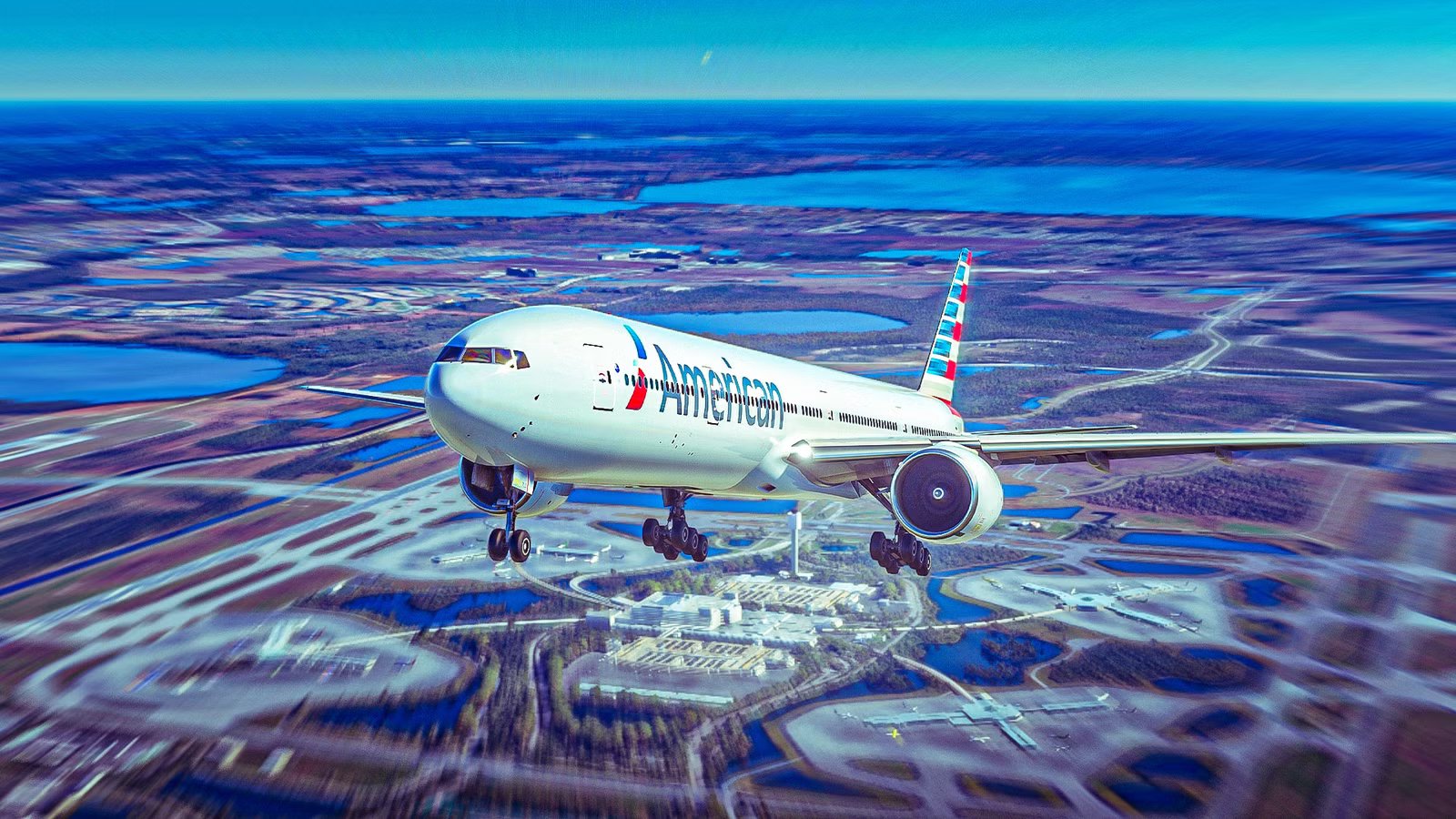
The CEO and President of the US airline trade group Airlines for America (A4A) has told a Senate subcommittee that there are far more close calls between aircraft than the public ever hears about, claiming there are “hundreds” of near misses on almost a daily basis across US airspace.
Chris Sununu made the remark during a hearing on aviation safety, citing a significant gap between incidents that make headlines and a larger number of concerning incidents observable in safety data. His comments came just days after an alarming near-miss at  Boston Logan International Airport (BOS), when the flight crew of a Delta Air Lines jet on final approach took the initiative to go-around after spotting a possible collision with an American Airlines plane on its takeoff roll.
Frequent Near-Miss Incidents In The US

During a Senate Commerce Subcommittee on Aviation, Space, and Innovation hearing titled “Close Calls: Improving Safety Across the National Airspace System” on Tuesday, June 23, Sununu was questioned on the scope of near-miss incidents across the National Airspace System. Following the crash of American Airlines Flight 5342) and scores of other concerning near-miss incidents, the US Department of Transportation (DOT) is in the process of investing billions of dollars to modernize the industry’s safety systems, while the Federal Aviation Administration (FAA) has stated its aim of achieving “zero close calls.”
While prominent close calls tend to make national headlines, Sununu was asked if there were more incidents than those reported on in the media. According to Sununu, publicly known incidents represent only a fraction of the true figure of near-misses, telling the committee that there are “thousands more” than those that make the headlines, adding that there are “hundreds of them every single day.” Sununu said,
“The data is absolutely there. But there are many more, thousands of more, of near misses, than are probably out there in the public, and that, you know, get the headlines. There are hundreds of them every single day.”
How The US Is Tackling Safety Concerns

The Senate hearing was called to examine recent near-miss and runway incursion incidents and to conduct an overview of efforts to improve aviation safety. Among the initiatives being taken by authorities to reduce near-misses include the implementation of new safety technologies and runway safety programs, as well as overall efforts by the FAA to modernize its systems. Among the most important changes is the requirement for aircraft to be equipped with ADS-B In technology by December 2031.
Also speaking at the hearing, Todd Hauptli, President and Chief Executive Officer of the American Association of Airport Executives, cited a lack of sufficient information sharing between industry stakeholders, claiming that pilots, air traffic controllers and airports “aren’t getting all the information” needed to maintain a safe airspace.
According to Senator Jerry Moran (R-Kan.), there were around 15,000 close calls in and around  Ronald Reagan Washington National Airport (DCA) alone over a three-year period. The heavily congested airport had long been at the forefront of safety concerns, which intensified following the collision of American Flight 5342 and a US Army Black Hawk helicopter in January 2025.
FAA Acting Administrator Admits “Something Was Missed” Amid American Airlines Flight 5342 Crash
These remarks came at a recent Senate hearing.
Looking At The Data

The FAA has a page dedicated to close calls, which includes a section detailing the number and severity of runway incursion incidents at US airports. 2026 has already seen three of the most serious ‘Category A’ incursion incidents, compared to four in 2025 and two in 2024, although overall incursions per one million takeoffs and landings have dropped from 30 in 2025 to 25 so far this year.
The worst of these occurred on March 22, when an Air Canada Express Bombardier CRJ900 landing at  LaGuardia Airport (LGA) smashed into a fire truck after the latter was cleared to cross the runway. The recent incident at Boston could have been far worse had Delta pilots not reacted as quickly following a Traffic Collision Avoidance System (TCAS) warning, reportedly coming within 300 feet of the approaching American jet.