dailynewsnblog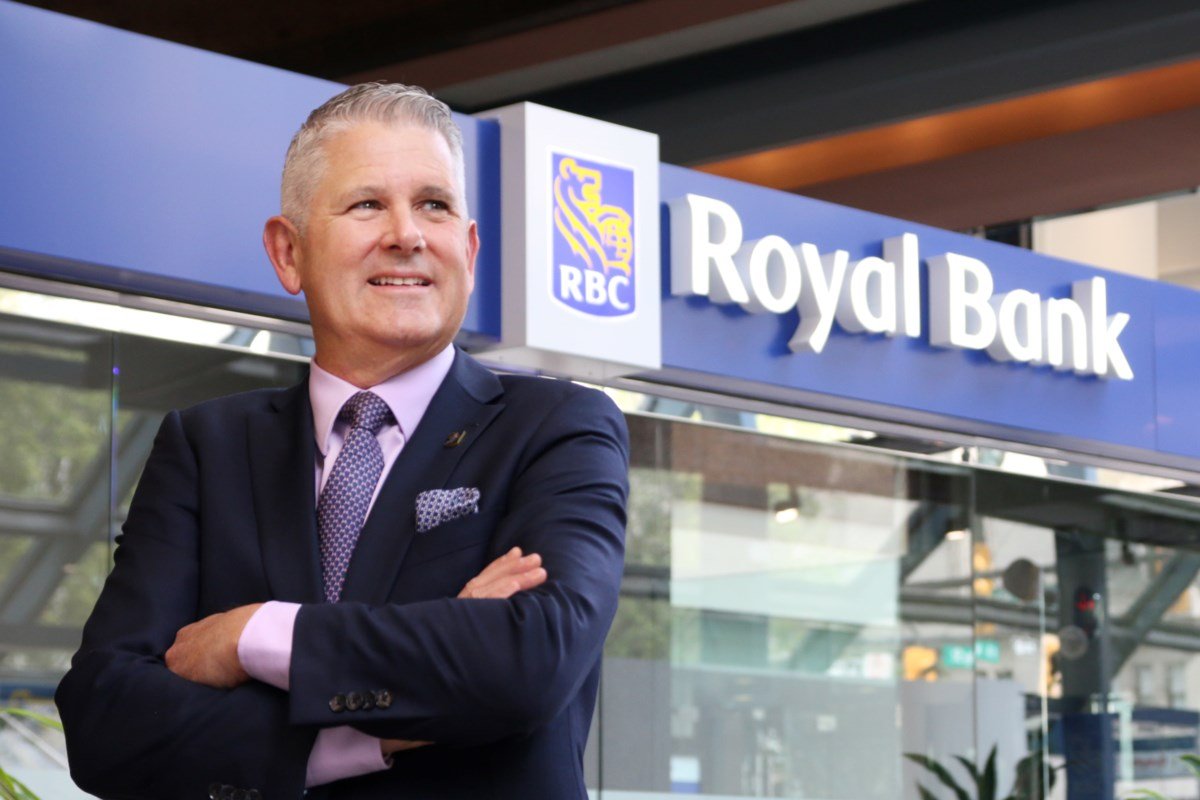
Largest domestic bank acquisition in Canadian history bumped Royal Bank’s West Coast staff count 13%
Fresh from digesting the former Vancouver-based HSBC Bank Canada in April 2024, the largest financial institution in B.C. is expanding its local presence by adding staff to its banking and innovation hub.
This hub is separate from the Royal Bank of Canada’s (TSX:RY) day-to-day banking operations.
It owes its roots to a 2023 promise that RBC made to the federal government for Ottawa to approve Canada’s largest domestic-bank acquisition in history—RBC’s $13.5-billion deal to buy HSBC Bank Canada from London-based HSBC Holdings plc (LON:HSBA).
The RBC workers at this banking hub develop technologies to keep customers and others free from fraud, hacking and other online harms, according to Martin Thibodeau, the bank’s regional president for B.C.
He said he aims to increase the size of the unit to 600 employees by year-end, up from 450 employees today. He then wants to get it up to 1,000 workers by 2029.
“The banking hub is really to protect our clients,” Thibodeau said.
“There is so much fraud. More work [is needed] in AI, fraud detection, cybersecurity and protecting our data, our client data, to make sure everything is safe.”
He said the hub integrates RBC’s AI capabilities. The bank recently announced its goal to achieve between $700 million and $1 billion in enterprise value generated from AI-driven benefits by 2027.
That comes from various AI uses.
The Vancouver hub is also set to serve commercial clients across the country.
Achieving the HSBC acquisition took finesse.
Federal Opposition Leader Pierre Poilievre had urged Ottawa to reject the deal. That gave then-finance minister Chrystia Freeland leeway to insist on strict conditions in order for the deal to proceed because she did not need to fear an opposition saying her conditions were too strict.
Another condition required RBC to provide $7 billion in financing within five years for affordable-housing construction across Canada, enough capital for developers to build 25,000 new homes.
RBC agreed to earmark about $2 billion of that financing for B.C. projects.
Thibodeau said the bank is ahead of pace nationally and in B.C.
As of Oct. 31, 2025, RBC had provided $4.5 billion in financing for properties that include affordable and sustainable housing units, he said. That amounts to about 64 per cent of the national commitment roughly 19 months into the five-year period.
In B.C., RBC had provided $749 million toward its $2-billion commitment by the same date, or about 37 per cent of the total.
Thibodeau said his bank’s book of business has also grown by about one per cent in B.C. year-over-year despite fewer new mortgage loans.
Defaults in B.C. are “increasing,” Thibodeau said, although he would not quantify to what extent.
Decisions in the B.C. government’s most recent budget could make the B.C. economy, and the lending environment worse, he said.
One of his concerns is that the government is projecting a record $13.3-billion deficit for the 2026–27 fiscal year, and that this could prompt credit-rating agencies to lower the province’s credit rating.
“We’ve seen five drops in our credit rating,” Thibodeau said.
Another of his concerns is the province’s decision to put the provincial sales tax on professional services, such as accounting and bookkeeping services as well as security services.
That increased taxation could be a drag on the economy, he suggested.
The bright side, Thibodeau said, is that Vancouver is hosting seven matches in the FIFA World Cup.
“We’re very excited about the World Cup,” he said.
“This will be viewed by billions of people. So that kind of marketing is difficult to get.”

RBC quick to integrate HSBC Bank Canada operations
Thibodeau said RBC long ago integrated HSBC Bank Canada’s operations.
Approximately 1,000 of that acquired bank’s 4,600 employees were based in B.C. when RBC took over.
This bumped RBC’s B.C. workforce nearly 13.3 per cent to about 8,542 workers in April 2024, according to RBC data.
RBC later told BIV that in 2025 it had 9,160 workers in B.C., and Thibodeau said in May that the bank’s B.C. workforce had increased to 9,500 workers.
“It’s fair to say that by 2029, we’ll be at 10,000 [workers in B.C.] for sure,” Thibodeau said. “I can guarantee you that.”
Many former HSBC branches were closed, instead of being rebranded.
B.C. accounted for 44 of HSBC Bank Canada’s 128 branches, or about 34 per cent of its national network.
RBC made good on its commitment to keep open a total of 33 former HSBC Bank Canada branches–a figure that included 10 branches in B.C., Thibodeau said.
RBC immediately closed 15 former HSBC Bank Canada branches in B.C. and has since closed a further 19, he added.
Thibodeau explained that many of the previous HSBC Bank Canada branches were near RBC branch locations so it made little sense to keep them open.
“You don’t want to have two branches kitty corner,” he said. “So, we took the best locations and kept the best locations and consolidated a number of branches.”
Some distinctive elements of HSBC Bank Canada have remained, such as distinctive offerings for local customers with global financial ties.
HSBC Bank Canada had offered bank accounts 10 different currencies.
RBC had long allowed customers to have bank accounts denominated in Canadian or in U.S. dollars. In the lead-up to its HSBC Bank Canada acquisition closing, RBC added options for customers to bank in British pounds, Euros and Hong Kong dollars, Thibodeau said.
Those options continue to exist, he said.
The other currencies in which HSBC Bank Canada offered banking services were little used and costly to provide, Thibodeau added.
Royal is the king of banking in B.C.
RBC is the largest financial institution in both Canada and B.C.
RBC was the only institution to respond to BIV‘s request earlier this year for its B.C. staff count.
The banks did provide numbers last year for how many financial planners they employ in the province.
On that score, RBC pulled away as the leader with 950 financial planners. Bank of Nova Scotia (BNS) (TSX:BNS) came second, pinning its total at 600, while Toronto Dominion Bank (TD) (TSX:TD) was third with 310 financial planners.
When BIV ranked banks by customer deposits in the province, RBC came out on top in 2025 with $1,515,616,000, or nearly 20 per cent more than second-ranked Toronto Dominion Bank (TSX:TD).
By assets, RBC bested others with $2,325,006,000, or about 11 per cent more than TD.
Many of RBC’s internal statistics similarly bear out the bank’s dominance.
RBC normally does not provide its internal data for what it thinks is its share of the lending market by province, Thibodeau said.
He did say RBC’s market share in B.C. among big banks for small business loans that were $250,000 and less was 44.9 per cent.
At the end of December 2025, the bank’s national share of all business loans made by the largest six banks that were under $25 million was 28.4 per cent—up 3.2 percentage points from a 25.2 per cent market share two years earlier, according to RBC.
RBC did not provide the total value for those loans.
It said when it comes to all lending to individuals across Canada, its market share among the six largest banks was 25.8 per cent at the end of December, up from 24.7 per cent two years earlier.
RBC once again declined to provide a value for all those loans.
RBC’s growth in market share in bank lending in B.C. has likely grown faster than it has in the country as a whole in the past few years in part because RBC acquired HSBC Bank Canada, which had a disproportionate part of its business in the province.

Can’t rule out future acquisitions
If RBC makes another major acquisition, it will likely be one outside Canada, Thibodeau said.
“We’re always looking at opportunities,” he said. “The likelihood to have an acquisition in the short term in Canada is probably low. In the U.S., probably higher.”
Consolidation in the Canadian financial sector outside of the blockbuster RBC-HSBC Bank Canada deal has tended to be among credit unions.
Vancouver City Savings Credit Union (Vancity) and First Credit Union announced in December that they had closed their merger. First Credit Union then started operating as FCU Community Financial, a division of Vancity.
Effective May 6, Coast Capital Savings merged with Sunshine Coast and Prospera credit unions.
Sunshine Coast rebranded as Sunshine Coast Financial, part of the Coast Capital Savings Federal Credit Union. Prospera acted similarly, keeping its branding but becoming part of the larger Coast Capital Federal Credit Union family of brands, according to Prospera.
Gavin Toy, who had been president and CEO at Prospera for more than six years leading up to May, became the new president and CEO of the combined credit union.
Credit unions play a significant role in B.C.’s financial institution sector, accounting for 18 per cent of deposits, according to data from the Canadian Bankers Association (CBA).
That is only slightly more than the 16 per cent share of deposits that credit unions have countrywide.
The six largest banks in the country include RBC, TD, BNS Canadian Imperial Bank of Commerce (TSX:CM), Bank of Montreal (TSX:BMO) and National Bank of Canada (TSX:NA).
Those entities have about 74 per cent of all consumer deposits in B.C., and the same percentage across Canada, according to CBA data.
[email protected]