dailynewsnblog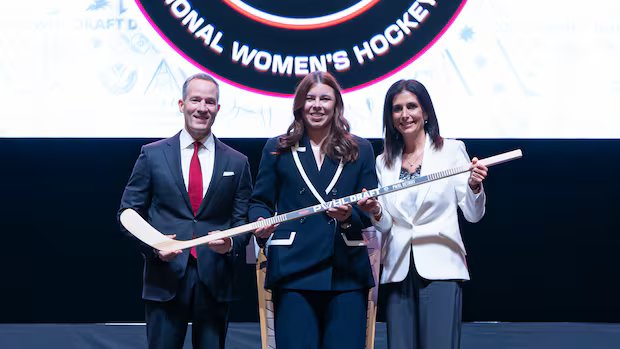
Detroit sports executive Ryan Gustafson sat in the third row of the city’s historic Fox Theatre during last week’s PWHL Draft, waiting into the second round for the new PWHL Detroit team’s first franchise draft pick.
When the time came, Ilitch Companies CEO Chris Ilitch left his spot beside Gustafson to climb the stage and make the pick alongside Detroit GM Manon Rhéaume, who selected Swiss goaltender, Andrea Brändli.
That pick, made in front of a loud crowd inside Fox Theatre, was the culmination of years of work behind the scenes to bring professional women’s hockey to Detroit.
“Just the moment of sitting with [Ilitch] and being both excited and proud, both of us, for how it’s come together and belief in what it’s going to become — it was a really cool moment,” said Gustafson, who is the president and CEO of Ilitch Sports + Entertainment, which owns the MLB’s Detroit Tigers and NHL’s Detroit Red Wings.
Behind the scenes, there was more history being made. The public didn’t know it yet, but the PWHL had already completed a deal to accept private investments from the Ilitch Companies and Toronto businessman Larry Tanenbaum’s Kilmer Sports Ventures.

The investment, according to reporting from both Sportico and The Canadian Press, is valued at more than $100 million, though neither Gustafson nor PWHL officials would confirm financial details.
But Gustafson described it as a “significant” investment that indicates the company’s belief in the growth of the league and women’s hockey.
“I think it’s on just an incredible trajectory coming out of the Olympics with the momentum that the sport already had,” Gustafson told CBC Sports.
It comes less than four years after the creation of the PWHL, which is owned by Mark and Kimbra Walter of The Walter Group. The league’s single-entity ownership structure is unchanged by the investments announced this week.
“We have money to tackle our mission, which is to make our league permanent,” Stan Kasten, a veteran sports executive who sits on the PWHL’s advisory board, said in an interview. “I have always felt that way from the start before these new investors came in. I feel more strongly about it today.”
‘We were immediately interested’
Interest from the Ilitch Companies dates back to 2023, when Kasten and Royce Cohen, another member of the PWHL’s advisory board, were working on creating the PWHL on behalf of the Walters.
Kasten, who’s run various teams in the NHL, MLB and NBA over the last four decades, goes back more than 30 years with the Ilitch family.
“Our first conversation was when [Kasten and Cohen] first started getting involved in the league,” Gustafson said. “I’d say that the Takeover Tour games really ignited the conversation around expansion franchises and the right time for that, both for them and for us. And then as they were looking for partners from a financial standpoint, we were high on their list and we were immediately interested in it.”
There was a target for what the PWHL’s executives wanted to raise in an initial round of fundraising. They decided to surpass that number “because of who these guys were,” Kasten said, referring both to the Ilitch Companies and Tanenbaum’s Kilmer Sports Ventures.
Kasten has also known Tanenbaum for decades, having worked with him in the NHL and NBA. Tanenbaum is a minority owner of Maple Leafs Sports & Entertainment, the parent company of the Toronto Maple Leafs and Toronto Raptors, among other sports teams. He is also the majority owner of the WNBA’s Toronto Tempo.
“Their reputation is sterling among investors, among sports people,” Kasten said about both investment groups.
But they weren’t the only people interested in putting money into the PWHL.

At a recent MLB owners’ meeting, Kasten — who is also president of the Los Angeles Dodgers — fielded questions about when the PWHL will do another funding round.
“There are no short-term plans for more teams or individual ownerships or more fundraising —none of those things are on our near-term menu of items to be discussed,” Kasten said. “Right now, we need to stand up four teams in a little bit of time.”
Investment comes as league grows
The cash infusion comes as the PWHL just expanded its footprint, primarily across the United States. In addition to Detroit, the league added new teams in Hamilton, Las Vegas and San Jose.
The three-year-old league isn’t yet making money, as Kasten told CBC Sports earlier this year. Every expansion team costs the league more money, and the PWHL has added six additional teams in short order.
But it’s a long-term play for The Walter Group, which is still targeting a major U.S. broadcast rights deal.
The league’s single-entity structure, with one small advisory board making the decisions, has made it easier for the league to grow quickly, Kasten said. It means consulting a handful of people instead of individual owners across the continent.
“The single-entity structure that we have is what makes all of this possible, and I know people who aren’t used to this construct have a really hard time digesting it,” Kasten said. “This could not have been done this quickly or this amicably with six or eight different owners with different agendas and different budgets and different time constraints and different political considerations in their city.”

American hockey defender Caroline (KK) Harvey has had an array of honours in the last year, as the MVP of the 2026 Olympic tournament and the International Ice Hockey Federation’s Female Player of the Year. After being selected No. 1 overall by the Professional Women’s Hockey League’s Vancouver Goldeneyes, she spoke to the CBC’s On The Coast on her first day in the city and what mentality she hopes to bring to the team.
For the Ilitch Companies, the interest in the league was there even without the chance to own a specific team right now.
Growing women’s hockey is at the core of the company’s beliefs, Gustafson said. He pointed to Ilitch Companies co-founder Marian Ilitch, who was one of the first women to have her name engraved on the Stanley Cup.
“We’re excited to be committed both with our time, energy and emotions, but also just financially in supporting their growth,” Gustafson said. “Obviously right now it’s a single-entity structure and if it stays that way, great, we believe in it. And if there are opportunities down the road as teams might eventually get sold, then we’ll explore that as well.”