dailynewsnblog
Anthropic has billed Mythos as capable of discovering critical cyber security gaps, initially limiting its access on safety grounds to certain US organizations. The company had been working with government officials on a controlled rollout before releasing Mythos more widely earlier this month.
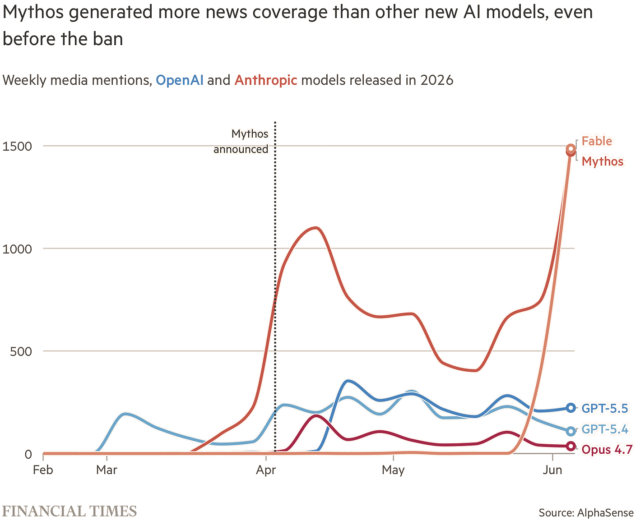
News coverage of Mythos, which the company announced in April, was significantly higher than coverage of other models released this year, according to data from AlphaSense. Media mentions of Mythos surged after it was unveiled and again this week following the export ban.
Some in the industry have criticized Anthropic’s handling of government talks over the new models.
David Sacks, former AI tsar to the US government, wrote on X that a “credible trusted partner had approached the administration with a way to circumvent the guardrails placed on Fable. Anthropic had downplayed their concerns, he claimed, forcing the government to “reluctantly” impose the ban.
The export ban follows public clashes between Anthropic and senior government figures over issues such as the use of Anthropic’s technology in domestic surveillance and lethal autonomous weapons. In February, the Pentagon named Anthropic as a supply-chain risk to national security. The two sides are in litigation over the designation.
Anthropic declined to comment.
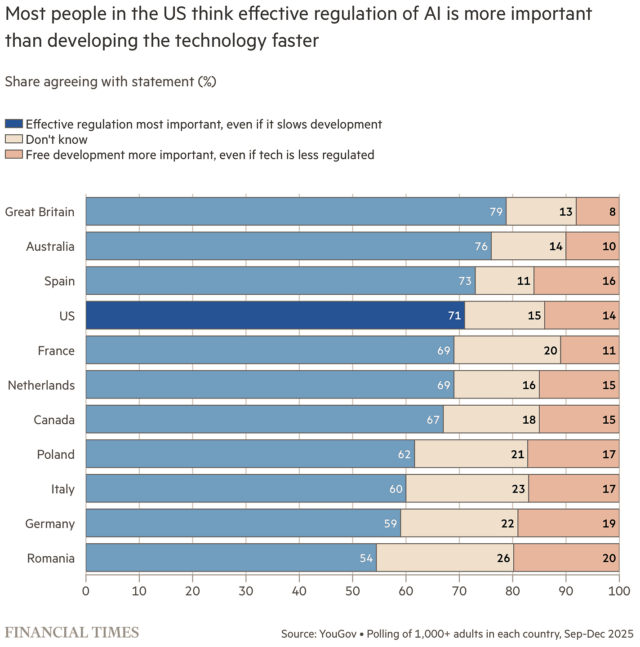
Research shows that the government’s recent move may tally with US public opinion, with YouGov polling showing that the majority surveyed agreed that effective regulation was important even if it slowed technological advances.
French President Emmanuel Macron this week said the Anthropic dispute had “clarified the stakes” for the US and its allies in the G7. He called for “stronger regulation of artificial intelligence” and warned against the risk of “non-cooperation among democracies.”
Lennart Heim, an independent AI policy researcher who formerly worked at think-tank Rand, said the US government’s response did “not inspire confidence.”
“You have an administration that has positioned itself as pro-innovation, has pushed to export advanced AI chips to China, and has criticized safety-focused regulation—and then it turns around and bans the most advanced US model.”
© 2026 The Financial Times Ltd. All rights reserved. Not to be redistributed, copied, or modified in any way.