dailynewsnblog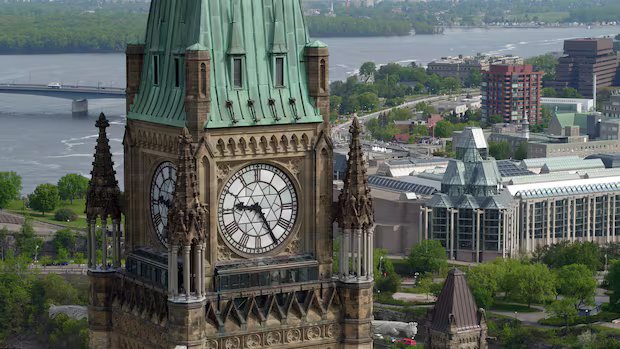

Listen to this article
Estimated 4 minutes
The audio version of this article is generated by AI-based technology. Mispronunciations can occur. We are working with our partners to continually review and improve the results.
The countdown for half a dozen byelections is on as MPs who have signalled they won’t be returning to Ottawa in the fall begin to vacate their seats.
Six MPs say they intend to resign over the summer. While voters in those ridings wait to choose replacements, party standings in the House of Commons will shift ever so slightly.
Two MPs officially resigned on Friday, just a day after the House of Commons rose for the summer recess.
Liberal Jonathan Wilkinson will be heading off to Brussels to fill the role of Canada’s ambassador to the European Union and Simon-Pierre Savard-Tremblay, formerly of the Bloc Québécois, is set to run provincially this fall with the Parti Québécois.
Once an MP officially resigns, the Speaker has to inform the chief electoral officer of the vacancy, at which point Prime Minister Mark Carney has 11 to 180 days to call a byelection.
Byelection campaigns last at least 36 days and can go as long as 50 days.

Chief political correspondent Rosemary Barton speaks with this week’s Sunday Scrum – Rob Russo, writer for The Economist, Catherine Levesque, parliamentary reporter for the National Post, and Gary Mason, columnist for The Globe and Mail – for a wrap up of the spring sitting in Parliament. Plus, looking ahead to the summer priorities for Ottawa, and what challenges lie ahead for Mark Carney.
The government could hypothetically call byelections for the two officially vacant seats as soon as possible and get them over with during the summer. Such was the case when former MP Damien Kurek vacated his seat to open up a byelection for Conservative Leader Pierre Poilievre last year. Kurek officially left in June, the vote took place in August and Poilievre was back in the House on the first day of the fall sitting.
But the government has had a tendency to schedule multiple byelections at once, meaning Carney may be inclined to wait until all six MPs have officially left.
Former Liberal cabinet ministers Steven Guilbeault and Nathaniel Erskine-Smith are expected to step down, though neither have given specific dates.
Like Savard-Tremblay, Independent (formerly NDP) MP Alexandre Boulerice is tossing his hat in the provincial ring and has said he’ll wait for the Quebec election to be called before officially resigning.
Conservative MP Cathay Wagantall indicated she will make her resignation official on Aug. 31.
If Carney is inclined to wait for the remainder of the MPs to officially go, he has time. Elections Canada was notified of the two current vacancies on Monday, meaning Carney has until Dec. 19 to call byelections for those ridings.
The Liberals may also try to avoid overlapping campaigns with the Quebec provincial election — which will happen on Oct. 5 unless called earlier — given three of the vacancies will be in that province.
These factors combined point to potential voting days sometime in November or December.
Liberals will maintain thin majority for now
In the meantime, Carney’s Liberals will maintain a thin majority when September rolls around even after losing three MPs.
In the wake of five floor-crossers joining the governing party, the Liberals officially gained majority status following three byelections in April.
When the House adjourned last week the Liberals had 173 MPs (not counting Speaker Francis Scarpaleggia) and the remaining opposition parties had a combined 169 MPs.
Now that Wilkinson and Savard-Tremblay are officially gone, that drops the Liberals to 172 seats and the combined opposition seats to 168.
With two additional MPs leaving this summer, the Liberals will be sitting at 170 seats when the House resumes sitting in late September. While that would bring them below the threshold for a majority if all the seats were occupied, the distribution of the vacancies means the Liberals will still have more votes in the House than the opposition parties.
The opposition side of the aisle will have 166 votes total in September when Wagantall and Boulerice have officially vacated their seats.
When the ballots are counted, the only way the Liberals could slip back into minority territory is if they lose all six byelections.
The Liberals will need to win at least one race to maintain a technical majority in the House — where they would need to rely on the Speaker to break ties.