dailynewsnblog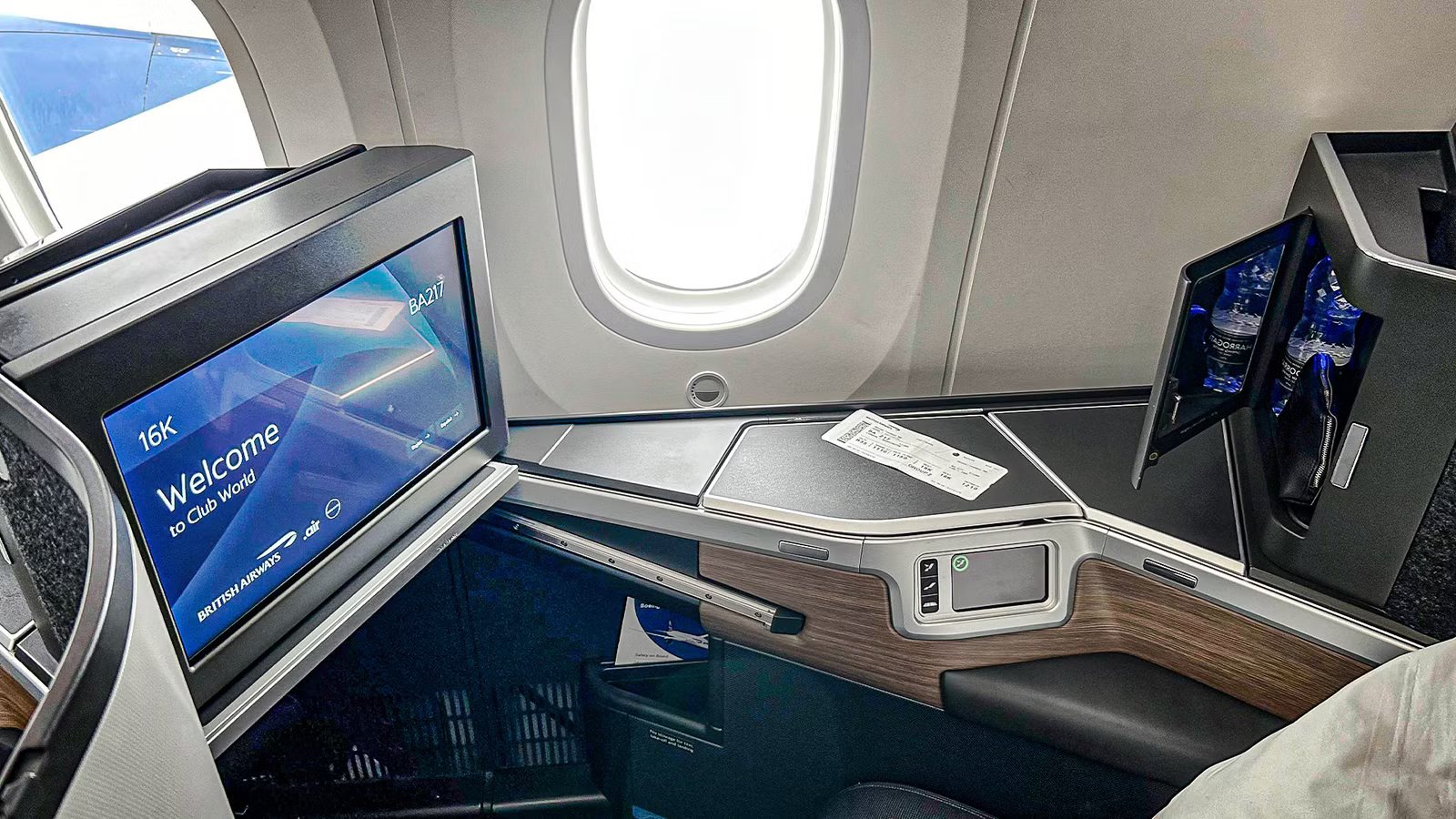
In aviation, innovation is usually followed by imitation. Airlines introduce a breakthrough product, competitors catch up, and the cycle starts again.  British Airways broke that pattern. In 2000, the airline fundamentally changed premium travel by introducing the world’s first fully lie-flat business class bed. Then, remarkably, it spent almost two decades relying on the same basic concept while rivals raced ahead. But why? We will explain the history of this seat below, according to reports from Executive Traveller and British Airways.
Today, the era of this long-standing and often criticized seat is finally ending. British Airways is preparing to retrofit its fleet of 12 Airbus A380s with its newer Club Suite product beginning in mid-2026, effectively removing the last major stronghold of the airline’s controversial “Yin-Yang” Club World seat from flagship long-haul routes. The retrofit marks the conclusion of one of the longest premium-cabin innovation droughts in commercial aviation history.
The Product That Changed Business Class Forever

When British Airways launched its new Club World seat in March 2000, it did something no airline had previously achieved in business class: it offered passengers a fully flat bed. Developed with London-based design firm Tangerine under the secretive “Project Dusk” initiative, the seat transformed expectations of premium travel almost overnight. It was indeed an innovative solution back then.
Before Project Dusk, lie-flat beds were generally reserved for first class passengers. Business class travelers received increasingly sophisticated recliners, but none offered a truly horizontal sleeping surface. British Airways recognized that sleep was becoming the most valuable commodity on long-haul flights and decided to redesign the cabin around that concept.
The challenge was fitting a six-foot bed into the limited space available. Tangerine’s solution was revolutionary. By alternating passengers so that some faced forward and others backward, designers could interlock the wider shoulder sections and narrower foot sections of adjacent beds. The resulting arrangement resembled the ancient Yin-Yang symbol and quickly became one of the most distinctive cabin designs ever created, yet was often criticized by passengers unwilling to travel in a backward-facing position.
What emerged was arguably the most influential business class product of the modern era. Within a few years, airlines across the globe were scrambling to develop their own flat-bed seats. The lie-flat bed became the new benchmark for premium travel, and British Airways deserved much of the credit for creating that expectation.
The Economics That Made The Seat Impossible To Kill

In fact, the genius of the Yin-Yang design was not just passenger comfort. It was profitability. The configuration allowed British Airways to install eight business class seats across the width of aircraft such as the Boeing 747, using a dense 2-4-2 layout. Most competing airlines at the time could only fit seven seats across while still providing premium comfort. The result was an extra revenue-generating seat in every row.
From a business perspective, the numbers were compelling. British Airways had successfully created a product that was simultaneously industry-leading and exceptionally space-efficient. That combination made Club World one of the airline’s most profitable offerings for years. Industry experts and airline executives frequently cited the cabin’s economics as a key reason the airline showed little urgency to replace it.
Passengers, however, viewed and reviewed the cabin differently. The layout’s efficiency came with major compromises. Window-seat passengers often had to climb over neighboring passengers to reach the aisle. Travelers seated in the middle pairs faced similar challenges. Depending on seat selection, passengers could spend an entire flight staring directly at a stranger sitting just a few feet away. Privacy was minimal by modern standards, and direct aisle access was unavailable for many travelers.
Many rival airlines, such as  Qatar Airways,
  Singapore Airlines, and Virgin Atlantic, introduced increasingly sophisticated business-class suites with greater privacy and no weird backward-facing seats, so British Airways’ once-revolutionary product began to look outdated.
Why British Airways Is Slashing 88 Economy Seats To Build The World’s Largest Business Class
British Airways is reimagining the A380 as a luxury vessel for high-demand corridors.
How The Industry Passed British Airways By

The irony of British Airways’ business class story is that the airline spent years leading the market before eventually becoming one of its laggards. While competitors introduced direct aisle access, enhanced privacy, larger entertainment screens, and eventually enclosed suites, British Airways continued flying a product whose fundamental layout dated back to the turn of the millennium. Although the airline introduced an updated version of Club World in 2006, the redesign retained the core Yin-Yang concept and many of its limitations.
By the late 2010s, aviation reviewers routinely ranked the old Club World seat among the least competitive long-haul business-class products still in service. Criticism focused on the lack of privacy, awkward seating arrangements, and passenger inconvenience. Many travelers found it difficult to reconcile the product with British Airways’ status as one of the world’s largest premium carriers.
The contrast became particularly apparent after the launch of Qatar Airways’ QSuite in 2017. The QSuite offered sliding doors, exceptional privacy, customizable seating arrangements, and industry-leading passenger space. It represented everything modern business class had become—and highlighted how far British Airways had fallen behind.
Catch what other flight trackers miss
Emergency squawks, holds, NOTAMs — live signals, no signup.
Open tracker
Catch what other flight trackers miss
Emergency squawks, holds, NOTAMs — live signals, no signup.
Open tracker
Many frequent flyers were puzzled: how could the airline that invented the lie-flat business bed spend nearly two decades without fundamentally rethinking its business class experience?
The answer appeared to be simple. The old seat continued generating strong revenue, and replacing thousands of business class seats across a global fleet represented a costly undertaking. As long as passengers kept booking tickets, there was little commercial pressure to accelerate change.
Club Suite Finally Arrives After A 19-Year Wait

British Airways finally acknowledged the need for a complete reset in 2019. In March of that year, the airline unveiled Club Suite, a completely new business class concept designed around passenger privacy and direct aisle access. Installed first on the Airbus A350-1000, the seat was based on a customized version of the Collins Aerospace Super Diamond platform and featured a modern 1-2-1 configuration. Every passenger received direct aisle access, while sliding privacy doors addressed one of the most common complaints about the old Club World cabin.
The transformation was dramatic. Instead of eight passengers per row in a 2-4-2 arrangement, Club Suite reduced density to four seats across. The tradeoff was significantly more personal space, greater storage, enhanced technology, and vastly improved privacy. The new product also introduced larger entertainment screens, improved connectivity, and a more contemporary aesthetic.
British Airways Business Class Evolution
Feature | Club World Yin-Yang (2000) | Club Suite (2019) |
Layout | 2-4-2 | 1-2-1 |
Seats Across | 8 | 4 |
Direct Aisle Access | No | Yes |
Privacy Door | No | Yes |
Passenger Direction | Mixed forward/backward | Forward-facing |
Years In Service Before Major Redesign | 19 years | Current |
Primary A380 Retrofit Product | No | Yes |
Industry reaction and travelers’ reviews were overwhelmingly positive. Aviation analysts, such as The Points Guy, viewed Club Suite as a long-overdue modernization that finally brought British Airways back into the conversation among leading global business-class operators. Reviews consistently highlighted the improved passenger experience compared with the previous Yin-Yang layout.
The rollout, however, proved slower than many expected. Supply-chain challenges, pandemic-related disruptions, and the complexity of retrofitting older aircraft meant that some long-haul jets continued flying with the legacy Club World product years after Club Suite’s debut.
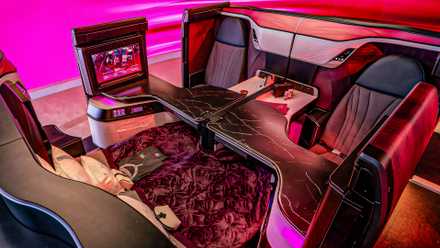
How Qatar Airways’ Qsuite Next Gen Stacks Up Against Every Rival Business Class Suite In 2026
Qatar Airways unveils Qsuite Next Gen, a business class suite designed to silence doubters and maintain its position at the top of luxury travel.
The Airbus A380 Is The Last Major Holdout

As of 2026, the Airbus A380 remains the most visible reminder of British Airways’ old business class era. The airline’s fleet of 12 superjumbos still operates many premium-heavy routes, including key transatlantic services from London Heathrow. These aircraft continue to feature the legacy Club World cabin, making them one of the final strongholds of the Yin-Yang seat.
That is finally about to change. British Airways has confirmed plans to begin retrofitting the A380 fleet from mid-2026, with refurbished aircraft expected to enter service later in the year. The project represents the final major phase of the airline’s long-haul cabin transformation.
The retrofit will dramatically reshape the aircraft. Reports indicate that the upper deck will be dedicated entirely to Club Suite business-class seating, with approximately 110 business-class suites installed. Direct aisle access will be available from every seat, finally eliminating the need for passengers to climb over neighbors during overnight flights.
For travelers who have spent years avoiding A380 Club World flights because of the outdated seating arrangement, the refurbishment represents the end of an era. Once the project is complete, the airline’s flagship routes will finally offer a consistent premium experience across most of the long-haul fleet.
What Comes Next? The Boeing 777X Could Bring Club Suite 2.0

With the original Club Suite now seven years old, attention is increasingly turning toward British Airways’ future premium strategy. The airline is expected to receive its delayed Boeing 777-9 aircraft no earlier than 2027, following years of certification and production delays that have affected the broader 777X program.
Industry speculation suggests the Boeing 777-9 could introduce an updated version of Club Suite featuring refinements aimed at closing the gap with products such as Qatar Airways’ QSuite. Possible improvements discussed by aviation observers include enhanced privacy, higher suite walls, larger storage areas, and upgraded technology. However, British Airways has not officially confirmed any such plans.
What is clear is that competitive pressures continue to intensify. Premium passengers expect suite-style accommodations, and airlines are investing heavily to differentiate their business-class offerings. The next generation of British Airways cabins will need to compete in an environment where direct aisle access is merely the starting point, not a selling point.
British Airways’ business class story remains one of the most fascinating case studies in airline product development. The innovation introduced almost 30 years ago reshaped passenger expectations and influenced cabin design across the industry for decades.
At the same time, the airline’s greatest achievement also became its biggest weakness. The extraordinary profitability of the Yin-Yang layout removed much of the incentive to innovate further, allowing competitors to seize the premium-cabin leadership position. For 19 years, British Airways relied on the same basic concept while the rest of the industry evolved around it.
As the final A380 retrofits begin and attention shifts toward the Boeing 777X era, British Airways is finally closing the chapter on a seat that was simultaneously revolutionary, profitable, controversial, and ultimately obsolete. This aviation product, nonetheless, has had such a profound impact that it remained in service for so long after its moment of innovation had passed.
Simple Flying Quiz
Think you really know British Airways?
Answer 10 questions and put your knowledge to the test
Think you really know British Airways?
Answer 10 questions and put your knowledge to the test
Easy (15s)Medium (10s)Hard (5s)