dailynewsnblog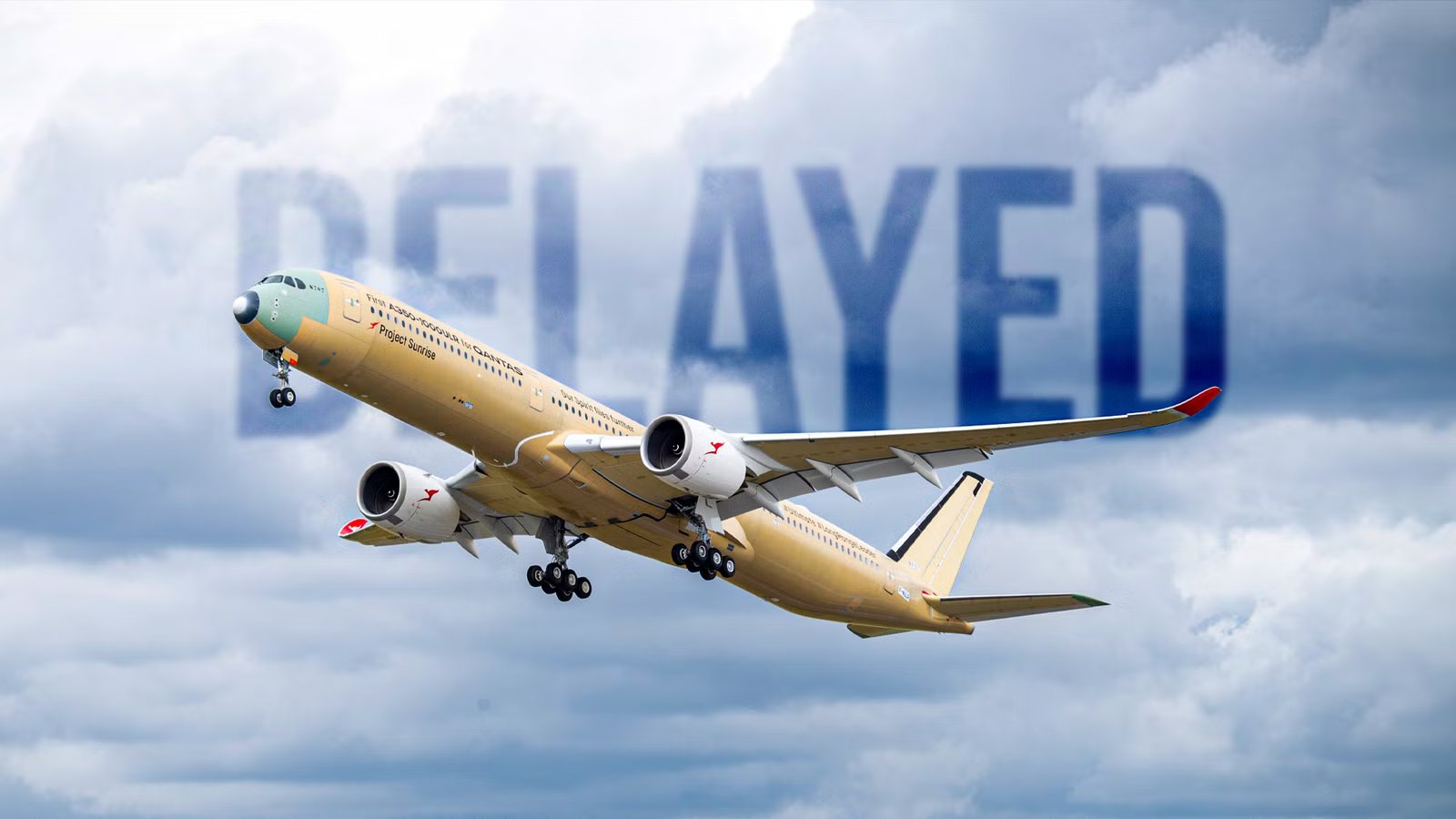
The Project Sunrise initiative, easily the most anticipated and ambitious project of modern aviation, is starting to look rather doubtful. Linking Sydney directly with London and New York, Qantas seeks to eliminate the traditional layovers that have punctuated global travel for generations. However, turning these sprawling 22-hour flights into a daily commercial reality leaves virtually zero margin for error.
The industry-wide anticipation surrounding these flights has intensified as technical complexities and supply chain backlogs push the initial deployment dates further down the line. The project relies heavily on an intricate balance between aerospace manufacturing limitations and rigid international certification standards, which reveals why even minor production disruptions can alter multi-year fleet rollouts. This guide heads straight to the production floor to examine what is really delaying this historic leap forward.
Pressure Is On

The latest scheduling shift announced by Airbus has pushed the delivery window for the premier Project Sunrise variant of the A350-1000 from late this year into April 2027. The highly anticipated entry into service will have to wait a little longer before commercial passenger operations can begin, adding another layer of delay to an initiative that originally targeted a 2025 launch. As has been a common trend across the aviation industry, many often view these timeline slips as signs of foundational trouble, though the current four-month setback stems primarily from macro-level manufacturing constraints rather than engineering failure.
Airbus officially pointed to broad, systemic supply chain friction across its entire commercial assembly operation as the leading cause for the revised delivery estimates. The post-pandemic aerospace sector is still grappling with chronic shortages of specialized raw materials, micro-components, and highly skilled structural technicians, which limit the rate at which widebody jets can advance through the assembly stations. These constraints impact the entire global aviation supply chain, so even standard commercial models face significant production setbacks, such as the company’s most popular A320 family of aircraft.
The lack of flexibility within global production schedules means that any downstream disruption cascades and settles directly into specialized programs. Qantas executive teams confirmed that, even as the scheduling changes require logistical adjustments, the primary challenge is navigating these international manufacturing pressures. The specialized assembly sequence for these aircraft means that work cannot simply be accelerated to recover lost time, as every structural phase is tightly bound to parts availability from international tier-one suppliers. Consequently, the revised timeline highlights the reality that even the most well-funded aviation programs are tethered to the constraints of global industrial output.
Specialization In Manufacturing

The defining physical characteristic that separates the Project Sunrise variant from standard commercial widebodies is an advanced fuel storage architecture designed to maximize endurance. To cover distances stretching up to 10,573 miles (17,016 kilometers) non-stop, engineers designed a massive, custom fuel repository integrated directly into the rear fuselage. This additional rear center tank holds approximately 5,283 gallons (20,000 liters) of supplemental Jet A, providing the immense energy reserves necessary to conquer the final frontiers of global route networks.
Catch what other flight trackers miss
Emergency squawks, holds, NOTAMs — live signals, no signup.
Open tracker
Catch what other flight trackers miss
Emergency squawks, holds, NOTAMs — live signals, no signup.
Open tracker
Far from being a simple bolt-on auxiliary container that can be easily dropped into the cargo hold, this tank is built directly into the load-bearing framework of the airframe. Naturally, adding this kind of modification alters the weight distribution and structural elasticity of the fuselage, with roughly 1,000 nautical miles (1,852 kilometers) of extra range but requiring complex assembly techniques. Workers must carefully install the tank within the primary manufacturing flow, a step that adds significant time to the build process.
The meticulous nature of this manufacturing phase explains why any delay in the delivery of specialized parts brings the specific assembly station to a complete standstill. The fuselage sections must be joined around the newly integrated tank structure, so any delay in the interior fuel-system components halts the entire build. This creates an engineering bottleneck, making the manufacturing timeline highly sensitive to the delivery schedules of boutique component builders, leaving Airbus with little ability to shorten the process when supply lines contract.
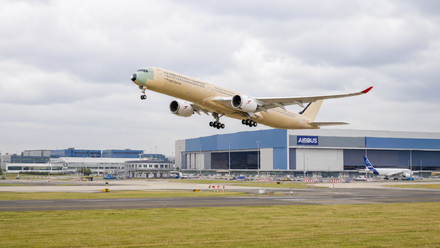
Project Sunrise Nears Reality As Qantas’ First Airbus A350-1000ULR Makes Maiden Flight
Airbus’ A350-1000ULR begins testing as Project Sunrise moves closer to reality.
Winning Over Authorities

Building an ultra-long-range passenger jet is only half the battle; earning the trust of international aviation safety regulators that the novel design is completely safe is often the more demanding hurdle. European safety agencies have subjected the unique fuel architecture to intense regulatory scrutiny, demanding rigorous proof that the massive tank does not compromise the aircraft’s structural integrity or crashworthiness. The certification process for such a highly modified system is intentionally slow and uncompromising, ensuring that the unique design meets modern fire and crash isolation safety standards.
The path to final approval requires a massive mountain of engineering data, virtual simulations, and destructive testing to satisfy the high expectations of global safety authorities. Regulators are particularly focused on how the integrated rear tank responds to extreme structural loads or unexpected engine failures. Satisfying these strict requirements meant engineers needed to refine the internal protective walls and isolation valves of the fuel system, a step that consumed critical buffer time originally built into the production schedule. In the long run, this helps achieve the highest levels of safety, but it removes any possibility of rushing the aircraft through the final stages of production.
To officially validate these structural modifications and secure formal type certification, Airbus launched an intensive two-month flight-test campaign at the beginning of June 2026. The initial test airframe, known as MSN 707, completed a highly successful maiden flight lasting three hours and 43 minutes, climbing well above 41,000 feet to evaluate handling characteristics with the extra weight. It shows promise for the project, but the sheer volume of real-world flight data that must be recorded, processed, and submitted to regulators imposes a rigid timeline that cannot be compressed to accelerate final customer delivery.
No Alternative Available

The single-source nature of the custom widebody leaves Qantas with zero structural alternatives to absorb these mounting manufacturing shifts. When an airline orders standard long-haul aircraft, it can typically negotiate with competing leasing firms or move to alternative variants within a manufacturer’s catalog if production lines stall. However, because Project Sunrise demands performance capabilities that push the absolute limits of modern aerodynamics, the Australian flag carrier is entirely tethered to a single, highly specialized production sequence in France.
Boeing initially pitched its prospective 777-8X platform to fulfill the requirements of the project, but development delays in that program eliminated it from the running years ago. This left the heavily modified Airbus platform as the lone operational survivor capable of handling a 22-hour flight envelope with a viable commercial payload. If manufacturing lines experience further disruptions in Europe, Qantas cannot simply wet-lease replacement airframes from the global market because no other commercial passenger jet in existence possesses the necessary payload-to-fuel ratio to safely cross these vast oceanic distances nonstop.
The absolute dependence on a lone single-source platform creates an all-or-nothing strategic reality for the network planning teams in Sydney. Every adjustment to the delivery timeline forces rescheduling across the airline’s broader international network, as older 787 and A380 fleets must be kept in service longer than originally anticipated to fill the capacity gap. Consequently, the lack of a viable fallback option intensifies the operational friction caused by the current four-month delivery slide, turning the manufacturing backlog into a direct bottleneck for the airline’s long-term fleet renewal strategy.
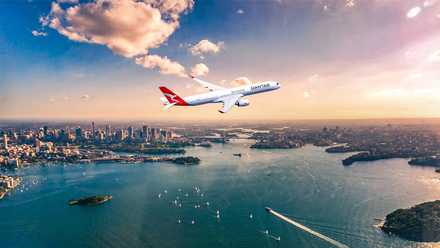
Why Only The Airbus A350-1000ULR Can Make Sydney To London Work Without A Fuel Stop
Larger fuel tanks and a lower passenger and cargo capacity are needed for Qantas’ Project Sunrise flights.
The Market Has Already Been Tested?

It is easy to question whether the recurring timeline shifts and volatile global economic conditions indicate that Project Sunrise is fundamentally doomed before the first passenger ever boards. The skepticism many share is often fueled by the reality that ultra-long-haul flights require immense fuel burn simply to carry the fuel required for the final hours of the flight, a reality that can quickly erode profitability if energy markets experience sudden cost spikes.
The economic model behind these incredibly long flights relies heavily on the willingness of high-yield business and premium leisure travelers to pay a substantial premium to bypass traditional intermediate hubs. Saving up to four hours of total travel time by eliminating high-friction transfers in the Middle East or Southeast Asia allows the carrier to command ticket prices that readily offset higher operating costs. The A350-1000ULR will be configured with a highly localized, premium-heavy layout featuring just 238 seats, requiring fewer passengers to break even compared to a standard high-density widebody layout.
Qantas has already established a highly successful real-world proof of concept with its existing non-stop services linking Perth with London and Rome. Those specific routes have consistently achieved among the highest load factors and passenger satisfaction scores across the airline’s international network. This is where the underlying commercial thesis Qantas is presenting remains incredibly robust, indicating that the current delays reflect temporary manufacturing limitations rather than a fundamentally flawed business strategy.
Progressing As Planned?

Shifting the analytical focus away from abstract timeline adjustments to the reality of the assembly line shows that the ultra-long-range variant is steadily progressing from concepts into operational hardware ready to take on the world. The initial flight validation campaign launched in Toulouse provides concrete evidence that the engineering phase has successfully transitioned into real-world performance verification. The testing phase allows flight test engineers to gather critical aerodynamic and fuel-flow data that cannot be replicated in a virtual laboratory environment.
The second production airframe, which will actually serve as the historic first delivery vehicle for the Australian carrier, has already reached an advanced stage of final assembly in France. Scheduled to exit the paint shop shortly, it will receive its distinctive flying kangaroo livery immediately prior to entering the final cabin integration and engine installation bays.
As the current flight test campaign systematically validates the range-extending modifications over the summer, the real-world metrics recorded will be used to finalize the advanced training curricula for the initial group of line pilots. Clearing these technical milestones solidifies that when the first delivery occurs in April 2027, the operational framework will be fully prepared to support immediate revenue generation.