dailynewsnblog
When the McDonnell Douglas MD-11 entered airline service in 1990, it appeared to be a logical evolution of one of aviation’s most successful widebody aircraft. Developed from the McDonnell Douglas DC-10, the MD-11 promised greater range, lower operating costs, advanced avionics, and improved efficiency. McDonnell Douglas envisioned the aircraft as a long-term competitor to emerging twin-engine widebodies from Boeing and Airbus, while retaining the distinctive three-engine configuration that had defined the DC-10.
On paper, the aircraft seemed well positioned for success. Airlines initially responded enthusiastically, placing orders for a jet that offered intercontinental range and substantial passenger capacity. Yet within two decades, nearly every passenger operator had retired the type, while the aircraft found an unexpected second life as a freighter. The reasons behind that outcome extend beyond fuel efficiency, economics, or market competition. One of the most significant factors involved the aircraft’s handling characteristics. In pursuit of improved performance, McDonnell Douglas introduced aerodynamic and flight control changes that altered the aircraft’s stability and flying qualities. The resulting design demanded greater precision during critical phases of flight, particularly landings. Several high-profile accidents further highlighted these challenges and damaged the aircraft’s reputation among airlines and pilots.
The MD-11’s three-engine layout was not solely responsible for its difficulties. However, the effort to modernize the trijet concept produced aerodynamic compromises and handling characteristics that distinguished the aircraft from both its predecessor and its competitors. Ultimately, those characteristics contributed to a decline in passenger appeal and helped push the aircraft toward a future dominated by cargo operations.
The MD-11 Was Designed To Be A More Efficient DC-10

The MD-11 emerged during a period of rapid change in commercial aviation. Airlines were demanding greater efficiency, longer range, and lower operating costs. Rather than designing an entirely new aircraft, McDonnell Douglas chose to develop an advanced derivative of the DC-10 (pictured above). According to Boeing’s historical overview of the aircraft, the MD-11 incorporated numerous improvements over the DC-10, including winglets, updated avionics, increased fuel capacity, and a redesigned flight deck that reduced crew requirements from three people to two. These changes aimed to make the aircraft more competitive with newer widebody designs.
A critical objective was to reduce drag and improve fuel efficiency. To achieve this goal, engineers refined the wing design and adjusted the aircraft’s aerodynamic balance. The horizontal stabilizer was made smaller relative to the DC-10, while the aircraft’s center of gravity was allowed to operate farther aft. This arrangement reduced trim drag and improved cruise performance. From an efficiency standpoint, the strategy made sense. A more aft center of gravity reduces the downward force required of the tailplane during cruise, which lowers drag and decreases fuel consumption. However, this configuration also reduced natural longitudinal stability.
NASA studies examining MD-11 stability characteristics noted that the aircraft possessed less inherent pitch stability than earlier airliners. As a result, sophisticated flight control systems played a greater role in maintaining desired handling qualities. The tradeoff reflected a broader trend in aircraft design. Manufacturers increasingly pursued aerodynamic efficiency by reducing built-in stability and relying on technology to compensate. While the MD-11 remained fully certifiable and safe, it displayed handling characteristics that many pilots considered less forgiving than those of comparable aircraft. These design decisions would become particularly noticeable during takeoff and landing, where precise control inputs were essential.
Three-Engine Configuration Created Unique Aerodynamic Challenges

The MD-11 inherited the DC-10’s trijet arrangement, featuring two engines mounted beneath the wings and a third engine located at the base of the vertical stabilizer. This configuration offered several advantages when the aircraft was conceived. During the 1970s and 1980s, engine reliability standards limited the routes available to twin-engine airliners. A third engine allowed aircraft to operate in long over water sectors without restrictions that affected twin-engine competitors.
By the time the MD-11 entered service, however, the aviation landscape had begun to change. Improvements in engine reliability enabled twin-engine aircraft to obtain Extended-range Twin-engine Operational Performance Standards (ETOPS) approvals, allowing them to serve routes that previously required three or four engines. The MD-11 therefore faced a difficult challenge as it retained the structural complexity of a trijet while attempting to match the efficiency of newer twins.
The large engine installation influenced airflow around the vertical stabilizer and rear fuselage while adding significant weight high above the aircraft’s centerline. Engineers had to carefully balance aerodynamic forces generated by the engine, tail surfaces, and fuselage. Flight dynamics studies conducted during the aircraft’s development revealed that achieving the desired performance targets required precise management of stability margins. The design’s reduced aerodynamic stability improved cruise efficiency but also resulted in flying qualities that differed substantially from those of earlier widebody aircraft. Pilots transitioning from the DC-10 frequently noted that the MD-11 demanded greater attention during manual flight. While the aircraft remained predictable when operated correctly, it offered less tolerance for imprecise control inputs.
The trijet configuration itself was not inherently unsafe. Numerous three-engine aircraft operated successfully for decades. However, combining that configuration with aggressive efficiency improvements produced a machine that behaved differently from the aircraft many pilots were accustomed to flying. Those differences became most evident during landings.
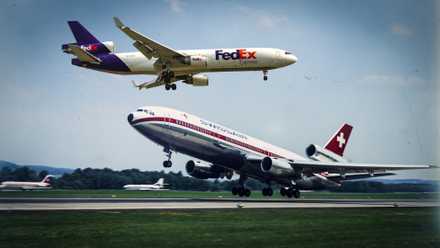
The Striking Differences Pilots Notice Between The McDonnell Douglas DC-10 & MD-11
A tale of two jets: the striking differences pilots notice between the McDonnell Douglas DC-10 and MD-11.
Landing Characteristics Became The Most Persistent Challenge

The MD-11 earned a reputation for being difficult to land smoothly, a perception supported by both pilot reports and formal studies. According to an FAA report examining MD-11 operational characteristics, pilots frequently described the aircraft as pitch-sensitive during the landing flare. Small control inputs could produce significant attitude changes, requiring precise handling during the final moments before touchdown. The aircraft’s reduced longitudinal stability played a major role. Because the design relied more heavily on active control systems than earlier aircraft did, pilots had less natural aerodynamic feedback during manual flight. In practical terms, the aircraft often demanded greater precision to achieve consistently smooth landings.
The MD-11 also exhibited a tendency to bounce if touchdown occurred at excessive vertical speed. A bounced landing can occur in any aircraft, but the MD-11’s aerodynamic characteristics made recovery more challenging in some situations. Flight Safety Foundation analysis following several accidents highlighted how the aircraft’s pitch response and energy management characteristics could complicate landing recoveries. Pilots who attempted aggressive corrections after an initial bounce sometimes encountered rapidly changing aircraft attitudes and descent rates.
Training programs eventually evolved to address these issues. Airlines revised procedures and emphasized specific techniques designed to improve touchdown consistency. Nevertheless, the aircraft’s reputation had already begun to solidify within the industry. Unlike many widebody jets that developed reputations for forgiving handling qualities, the MD-11 became known as an aircraft that demanded careful attention until the wheels were firmly on the runway.
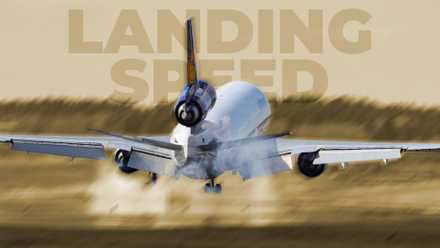
Why The McDonnell Douglas MD-11 Had Such An Insane Landing Speed
A closer look at the design choices that made the MD-11 a challenging aircraft to land.
High-Profile Accidents Focused Attention On The Aircraft’s Handling

The MD-11’s handling characteristics attracted intense scrutiny following several major accidents during its operational life. Among the most notable was the 1997 crash of a FedEx MD-11 at Newark Liberty International Airport (EWR). During landing, the aircraft bounced, rolled, and ultimately overturned before coming to rest. Investigators examined pilot actions, landing technique, and aircraft behavior during the event.
Another widely discussed accident occurred in 1999 when China Airlines Flight 642 crashed while landing in Hong Kong during adverse weather conditions. The aircraft experienced a hard touchdown and loss of control during the landing sequence. In 2009, FedEx Flight 80 crashed during landing at Tokyo Narita Airport (NRT) after a severe bounce led to loss of control. The investigation again examined the interaction between aircraft characteristics and pilot inputs during the landing phase.
Importantly, accident investigators did not conclude that the MD-11 was fundamentally unsafe. Instead, reports consistently pointed to a combination of operational circumstances, environmental conditions, and aircraft handling characteristics. They noted that the aircraft’s sensitivity during flare and touchdown could increase the consequences of improper control inputs. Situations that might be recoverable in other aircraft could become more difficult to manage in the MD-11 if a bounce developed.
As these events accumulated, airlines became increasingly aware of the aircraft’s operational demands. Training standards improved significantly, and operators implemented revised procedures. However, public perception and industry sentiment were already shifting. In commercial aviation, reputation matters. Aircraft associated with repeated operational challenges often face market disadvantages even when statistical safety records remain acceptable. The MD-11 carried that burden throughout much of its service life.
Note: The high-profile crash involving a UPS MD-11 in late 2025 was not the result of a handling issue, but nevertheless added to the ill-fated reputation.
Economics Ultimately Sealed The Aircraft’s Fate In Passenger Service

Handling concerns alone did not end the MD-11’s passenger career. The decisive factor emerged from economics. During the 1990s and early 2000s, aircraft such as the Boeing 777 and Airbus A330 demonstrated that modern twin-engine airliners could deliver superior fuel efficiency, lower maintenance costs, and comparable range. Advances in engine reliability eliminated many of the advantages that had once justified a third engine.
Range and fuel burn figures also proved less favorable than anticipated, reducing the aircraft’s competitiveness against rival designs. The MD-11 required three engines to maintain, consumed more fuel than newer twins, and possessed handling characteristics that demanded specialized training. Competing aircraft offered better economics while avoiding many of those challenges. Passenger operators gradually withdrew the type from service. Airlines including American Airlines, Delta Air Lines, Swissair, Finnair, KLM, and Japan Airlines eventually retired their fleets. The aircraft’s cargo career, however, told a different story.
Freight operators valued attributes that passenger airlines considered less important. The MD-11 offered substantial payload capacity, long range, and a large main-deck cargo volume. Cargo carriers were also less sensitive to fuel burn disadvantages because acquisition costs for used aircraft remained attractive. As a result, companies such as FedEx and UPS became major operators of the type. The aircraft’s operational economics proved considerably more favorable in the freight market than in passenger service. Ironically, the same airframe that struggled to remain competitive as an airliner became one of the most successful cargo aircraft of its generation.
Final Thoughts

The MD-11 represented an ambitious attempt to modernize the trijet concept for a new era of aviation. Engineers pursued greater efficiency through aerodynamic refinements, advanced flight controls, and a more optimized balance between performance and stability. Those improvements produced unintended consequences that, while entirely manageable with proper training and technique, demanded a level of precision that many pilots found less forgiving during takeoff and especially during landing.
Its three-engine configuration posed a challenge, as it required designers to balance efficiency goals with the aerodynamic complexities of a trijet layout. The resulting aircraft achieved many of its technical objectives but developed a reputation for difficult landings that followed it throughout its career. Ultimately, handling issues alone did not doom the MD-11. More efficient twin-engine competitors emerged and proved capable of flying the same routes more economically, making the MD-11’s disadvantages increasingly difficult to justify.
The aircraft’s passenger career therefore ended through a combination of factors. Nevertheless, its distinctive handling qualities remain one of the most important reasons why the MD-11 never achieved the commercial success that McDonnell Douglas originally envisioned. Today, its enduring presence in cargo fleets serves as a reminder that an aircraft can be technically capable and commercially useful while still falling short of its ambitions in passenger service.