dailynewsnblog
Russia made headlines years before many of its rivals when it became the first country to deploy a hypersonic weapon in operational combat. The Kh-47M2 Kinzhal missile was presented by Moscow as a revolutionary capability that could evade existing missile defenses and fundamentally alter the balance of military power. At the time, it appeared Russia had seized the technological initiative in one of the most important areas of modern warfare.
However, less than a decade later, the picture looks dramatically different. The United States has unveiled the F-47; Europe is advancing both the Future Combat Air System (FCAS) and the Global Combat Air Program (GCAP); and China has already flown multiple next-generation fighter prototypes. At the same time, Russia finds itself struggling to complete production of its current-generation combat aircraft. The contrast raises a critical question: how did the first nation to operationally field a hypersonic weapon, and overall, the country with a long aviation history dating back to the Soviet military power, with some breakthrough projects, such as Sukhoi T-4 Sotka or Su-47 Berkut, end up lagging behind in the 21st century in the race for sixth-generation airpower?
Russia’s Hypersonic Breakthrough Created The Image Of Technological Leadership

When President Vladimir Putin delivered his annual address to Russia’s Federal Assembly in March 2018, one of the most widely discussed announcements concerned the Kinzhal hypersonic missile. Putin revealed that the system had already entered experimental combat duty on December 1, 2017, and described it as a weapon unlike any other nation possessed. According to Russian officials, the missile could reach speeds of up to Mach 10 while maneuvering throughout its flight path.
The Kinzhal immediately attracted worldwide attention because hypersonic weapons had become one of the most sought-after military technologies. Their extreme speed significantly reduces defenders’ warning times, while their maneuverability complicates interception efforts. Russia’s achievement appeared to place it years ahead of Western competitors that were still testing experimental systems. According to Russian news outlets, such as TASS, the missile could strike targets more than 2,000 kilometers away while evading existing air-defense networks.
However, many analysts have long noted that the Kinzhal occupies a gray area within the hypersonic category. Rather than being a true hypersonic glide vehicle, it is generally viewed as an air-launched ballistic missile derived from existing missile technology. While it undoubtedly travels at hypersonic speeds, its flight profile differs from the advanced boost-glide concepts currently being pursued by the United States and China. Even so, Russia deserves recognition as the first nation to place such a system into operational service, prompting other nations to invest in similar or superior technology.
While Rivals Unveiled 6th-Generation Fighters, Russia Remained Focused On The Su-57

The aerospace landscape has changed dramatically since Kinzhal entered service. The world’s major military powers have increasingly shifted their attention toward sixth-generation combat aircraft designed to operate alongside autonomous drones, employ advanced artificial intelligence, and function as nodes within vast combat networks.
The United States took a major step forward with the unveiling of the F-47 as part of its Next Generation Air Dominance initiative. Europe is pursuing two separate sixth-generation programs through FCAS and GCAP, both intended to replace current frontline fighters in the coming decades. Meanwhile, China surprised many observers by revealing and testing advanced aircraft widely referred to as the J-36 and J-50. Together, these developments suggest that the sixth-generation race is already underway.
Russia, by comparison, remains focused on achieving goals associated with fifth-generation aviation, which is still behind its NATO rivals and Chinese peers. The country’s flagship stealth fighter, the Sukhoi Su-57, continues to be produced in relatively small numbers years after its entry into service. Rather than discussing flying sixth-generation demonstrators, Russian officials are still working to expand production of an aircraft that was originally intended to compete directly with the American F-22 Raptor and later the F-35. According to Army Recognition, production rates for the program remain significantly below long-term objectives.
This reality has created a widening gap between Russia and its competitors. Nations that once viewed Moscow as a peer competitor in advanced fighter development are increasingly moving into an entirely new generation of air combat technology while Russia continues to work through challenges associated with the previous one.
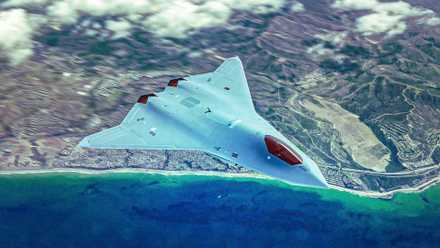
Why The Country That 1st Flew A 6th-Gen Fighter May Now Be A Decade Behind
The global race to fly the ultimate stealth fighter.
The Su-75 Checkmate Was Supposed To Be The Bridge To The Future

One of Russia’s most ambitious aviation projects in recent years has been the Sukhoi Su-75 Checkmate. Unveiled in 2021 at MAKS Airshow, the aircraft was marketed as a lower-cost fifth-generation fighter that could attract export customers while complementing the heavier Su-57.
The program was also expected to demonstrate that Russia retained the ability to design and field modern combat aircraft despite increasing economic and technological pressures. Success with the Checkmate could have provided a foundation for future sixth-generation developments and reassured potential customers that Russia remained a viable aerospace partner.
Catch what other flight trackers miss
Emergency squawks, holds, NOTAMs — live signals, no signup.
Open tracker
Catch what other flight trackers miss
Emergency squawks, holds, NOTAMs — live signals, no signup.
Open tracker
Instead, the program has become symbolic of the industry’s broader difficulties. The aircraft’s first flight was initially targeted for 2023. That timeline subsequently slipped to 2024, then 2025, and now 2026, yet it is still not on the radar. Multiple reports indicate that while work continues, the aircraft remains years behind its original schedule. According to Technical One Russia, the first prototype is still being built by the OAK factory.
Delays are common in advanced aerospace programs, but repeated postponements matter because they reveal deeper industrial challenges. Every year spent attempting to field a fifth-generation fighter is a year not spent developing the technologies required for sixth-generation systems. While competitors conduct flight testing of future concepts, Russia is still attempting to move Checkmate from prototype status toward operational reality.
Another factor that might have significantly delayed the Checkmate program is the radar’s problems, which don’t meet the 6th-generation criterion. According to Technical One Russia, the Checkmate radar detection range of just 100 miles (160 km) lags behind even the 3rd-generation F-14 Tomcat, which had a range of 133 miles (215 km). Unless these problems are addressed, we are unlikely to see this aircraft enter production, let alone the export variant.
Sanctions And The Ukraine War Have Hit Aerospace Harder Than Other Defense Sectors

One of the most significant factors behind Russia’s aerospace difficulties is access to advanced electronics. Modern combat aircraft rely on sophisticated radar systems, sensors, processors, communications equipment, and mission computers. These technologies require highly specialized components that are often difficult to replace with domestic alternatives.
Research cited by analysts suggests that sanctions have placed production of the Su-57 under significant pressure by limiting access to critical electronics and radar components. Unlike simpler military equipment, advanced fighters cannot be produced without highly specialized semiconductors and integrated systems.
The war in Ukraine has amplified these challenges. Defense spending has increasingly prioritized equipment needed for ongoing combat operations, while sanctions have complicated procurement efforts across the aerospace sector. Fighter aircraft require manufacturing precision and technological sophistication that cannot easily be substituted through improvised supply chains.
The result is a disproportionate impact on aviation programs compared with other areas of defense production. Tanks, artillery systems, and ammunition can often be produced without high-tech elements by using more readily available industrial resources. But advanced stealth fighters cannot. Consequently, aerospace programs have become one of the clearest indicators of the broader pressures facing Russia’s defense-industrial base.
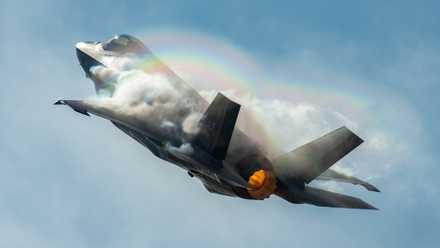
How The F-35 Lightning II Stacks Up Against The Sukhoi Su-57 Felon In 2026
Stealth, speed, and strategy: Unraveling the secrets of the F-35 and Su-57 showdown.
Production Shortfalls, Brain Drain, And Export Losses Have Created A Dangerous Cycle

Another challenge is simple production capacity. Despite years of development and substantial investment, the Su-57 fleet remains relatively small. Estimates place the number of operational aircraft at roughly 40 examples as of late 2025, with annual production rates generally measured in single digits. Such numbers remain far below long-term targets and raise questions about how quickly Russia can modernize its combat aviation force.
The human factor may be even more significant. Russia’s aerospace sector historically relied on highly educated engineers, designers, and manufacturing specialists. However, mobilization, combat losses, and emigration have reduced the pool of skilled workers available to support advanced aerospace programs. Innovation depends on people as much as technology, and rebuilding that talent base can take years.
At the same time, Russia’s traditional fighter export market has weakened considerably. Many countries that once purchased Russian aircraft now face concerns about sanctions, spare parts availability, and long-term support. Others are increasingly turning to Chinese alternatives. The loss of export revenue removes an important source of funding that historically helped sustain research, development, and production activities.
Major Aeronautical Milestones Achieved By The USSR And Then Independent Russia
Year | Program / Aircraft | Significance |
1957 | Sputnik 1 | First artificial satellite launched into orbit, demonstrating Soviet leadership in aerospace technology. |
1961 | Vostok 1 | Carried Yuri Gagarin, the first human in space, marking a major Cold War aviation and space milestone. |
1964 | MiG-25 Foxbat | One of the world’s fastest operational combat aircraft, capable of speeds exceeding Mach 3. |
1968 | Tupolev Tu-144 | Became the world’s first supersonic transport aircraft to fly, beating Concorde into the air by several months. |
1975 | MiG-31 Foxhound | Introduced one of the first operational fighter radars capable of tracking multiple targets simultaneously. |
1981 | Space Shuttle Buran Program | Demonstrated advanced Soviet reusable spacecraft technology, culminating in an autonomous orbital flight in 1988. |
1988 | Antonov An-225 Mriya | Entered service as the world’s largest and heaviest aircraft ever built. The last major aeronautical project in the USSR before the collapse. |
2010 | Sukhoi Su-57 Prototype (PAK FA) | Russia’s first stealth fighter program aimed at matching Western fifth-generation aircraft. |
2017 | Kh-47M2 Kinzhal | First hypersonic weapon placed on operational combat duty by any nation. |
2020s | Su-75 Checkmate | Intended as Russia’s next-generation export fighter, though development has faced repeated delays. |
The table above illustrates the major Soviet achievements in aeronautics, followed by those of Russia. The collapse of the USSR negatively affected production, and it took years to adapt to the new system. Many projects continued to thrive thanks to collaboration among independent republics, such as Russia and Ukraine, which maintained a highly integrated aerospace partnership, as both countries boasted well-established aeronautical industries, highly qualified engineering workforces, and factories. The most notable example is the Antonov AN-70 project, which was halted after the 2014 Invasion of Crimea. Similarly, all other binational projects were abandoned.
Russia Still Has Concepts, But Not Yet A Coherent Sixth-Generation Program

Perhaps the clearest sign of Russia’s current position is the absence of a well-defined sixth-generation fighter program. Russian officials and aerospace organizations have periodically discussed future combat aircraft concepts, including the long-rumored MiG-41 project. Yet public evidence suggests these initiatives remain largely conceptual.
By contrast, competing programs elsewhere have progressed beyond discussions and into prototype construction, systems integration, and flight testing. The difference is important. Designing a sixth-generation fighter requires years of experimentation with propulsion systems, networking technologies, autonomous systems, sensor fusion, and manned-unmanned teaming concepts. Countries that begin this process later face a significant disadvantage.
Russia’s situation illustrates a broader lesson about military technology. Achieving a breakthrough in one area does not guarantee leadership across the entire defense sector. The Kinzhal demonstrated that Russia could field an innovative weapon before its rivals. But sustaining technological leadership requires industrial capacity, stable funding, access to advanced components, export markets, and a continuous pipeline of engineering talent.
Today, those foundations appear increasingly strained. Unless major structural challenges are addressed, Russia risks entering the 2030s with a limited number of fifth-generation fighters while competitors deploy mature sixth-generation fleets. That possibility would have seemed unlikely when Kinzhal entered combat duty in 2017, but it now represents one of the most significant questions facing the future of Russian military aviation.