dailynewsnblog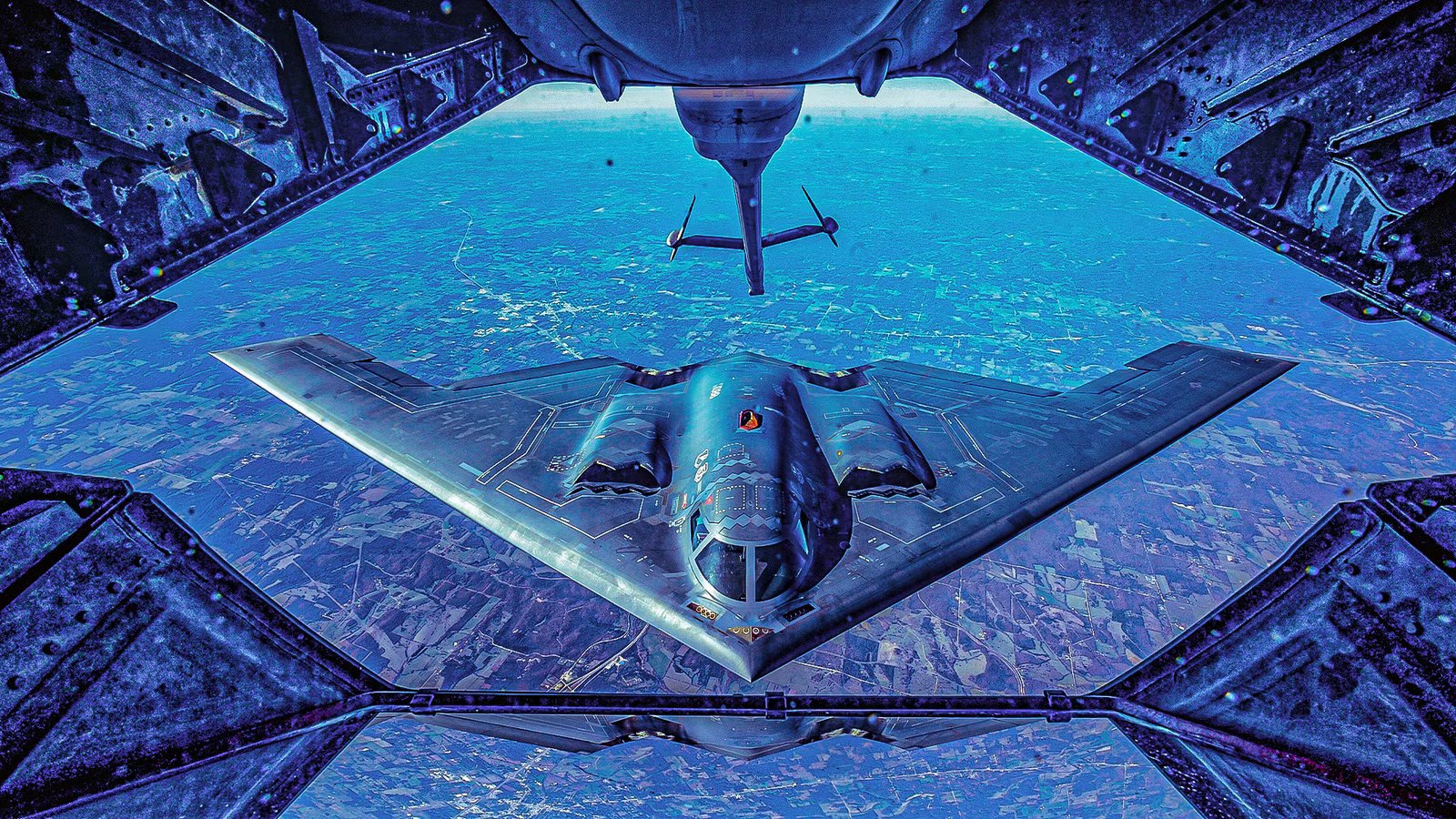
The United States military is the world leader in air power, and has been for several decades since before the US Air Force was even formally established as a service branch. Since the early days of the Army Air Corps and the dawn of carrier aviation in the US Navy, the US military has jumped, leaped, and bounded, and invented a long list of aerospace technologies. These began as weapon systems but have even gone on to be instrumental in developing spacecraft and improving commercial flying.
In 2026, the US military is well underway with what was once the largest defense industrial program in history. The Joint Strike Fighter, or Lockheed Martin F-35 Lightning II, has been a revolution in tactical aircraft technology for both the US and 19 partner nations that also fly one of the three variants of the jet. The total lifetime program cost at nearly 100 years long is estimated to cost around $2 trillion dollars with a fleet of between 2,500 and 3,000 planes.
At the same time that this program is reaching its mature stages, several other major modernization efforts to improve US air power are also kicking off. First and foremost, the Northrop Grumman B-21 stealth bomber is nearing full-rate production to replace almost all American strategic bombers with new sixth-generation stealth flying wings. Boeing was awarded the contract for the Next Generation Air Dominance to develop the sixth-generation F-47 stealth fighter.
5
Boeing F-15EX Eagle II
$30+ Billion

At the low end of the top five is the latest and greatest model of the McDonnell Douglas F-15 Eagle fighter jet family. Built by Boeing since the merger of the two aerospace giants, the newest iteration of this Cold War super fighter has advanced to become even faster than it was, despite already being the fastest fighter jet in the US inventory. It incorporates a host of modern weapons technology.
The F-15EX was purchased as a fast, cost-effective way to replace aging F-15C/D models that were literally wearing out from structural fatigue. The Air Force’s finalized procurement target is settled at a baseline of 104 aircraft. It is very different from every other aircraft on this list because it is an already proven platform.
The jet has been digitized and refined for the 21st-century battlefield as the ultimate ‘missile truck’ supporting next-gen fighter jets, which will be behind enemy lines to paint targets while the F-15 pilot lobs standoff missiles from a safe zone. Because the production line in St. Louis was already active and running, the program achieved immediate stability.
A single F-15EX carries a reliable per-unit flyaway cost of approximately $90 million to $93 million. Multiplying that across the 104-aircraft fleet brings the manufacturing bill to roughly $9.6 billion. When you look at the total long-term infrastructure and lifecycle costs, the F-15EX program shines compared to stealth jets. Over a 30-year operational timeline, the total program cost for the 104-fighter fleet sits at a very manageable $30 billion to $35 billion.
The Striking Differences Between Russia’s 2-Seat Su-57D & Every Western Stealth Fighter
Why is every US 5th-gen a single-seater?
4
Boeing F-47 Next Generation Air Dominance
$50+ Billion

Wikimedia Commons, Simple Flying
The NGAD is aiming to be the first sixth-generation fighter jet to enter full-rate production despite the fact that China flew prototypes in 2025 and the US does not expect to do so for some years. The Pentagon aims to have initial examples in the late stages of testing by the early 2030s. This aircraft will introduce a number of never-before-seen technologies, including variable cycle engines that can transition from extremely fuel-efficient to supersonic high-power bypass ratios at the flip of a switch.
The aircraft will also be part of a massive ecosystem that extends far beyond the fifth-generation air warfare being refined by the F-35 fleet around the world, as noted by Defense News. The ‘systems of systems’ will go beyond the data network ‘killweb’ that has been significantly advanced by the supercomputer processing power in the F-35, as the National Interest wrote.
Variable cycle engines will produce massive amounts of electrical power to allow these planes to run bleeding-edge sensor suites, control swarms of drones, and even employ directed energy weapons, or lasers. The newly designated Boeing F-47 sixth-generation fighter mimics the hyper-disciplined approach of the B-21 Raider. Rather than mimicking the F-35’s multi-service compromises.
Because it is packed with bleeding-edge technology, a combat radius exceeding 1,000 miles, and custom next-generation adaptive engines, the initial flyaway cost is staggering. A single F-47 is expected to cost approximately $300 million per unit at baseline production. Multiplying this across the target fleet of 185 jets yields a raw production bill of roughly $55.5 billion.
Catch what other flight trackers miss
Emergency squawks, holds, NOTAMs — live signals, no signup.
Open tracker
Catch what other flight trackers miss
Emergency squawks, holds, NOTAMs — live signals, no signup.
Open tracker
3
Boeing KC-46 Pegasus
$50+ Billion

The  Boeing KC-46 has been plagued by issues since it first entered service to begin replacing the venerable KC-135 Stratotanker that has served as the workhorse of the USAF tanker fleet since the 1950s. The plane introduces several major technological upgrades to the mission set, including a camera-based 3D fuel boom station for aircrew. Unfortunately, the plane has been deemed category 1 deficient by Congress and the Pentagon.
The Boeing KC-46 Pegasus aerial tanker program is a financial anomaly because it is a fixed-price contract. When the Air Force signed the deal with Boeing for a target fleet of 179 tankers, the contract capped the government’s research and development liability at $4.9 billion. Any cost overrun past that ceiling must be paid directly by Boeing out of its own pocket.
Deliveries have been significantly slowed, and Boeing is working on a retrofit program to salvage the existing fleet that is already in service and resume the schedule for production as the US Air Force and lawmakers clamp down. Consequently, while the Air Force’s expected procurement program cost is locked at roughly $52 billion, the plane has become an absolute financial disaster for the manufacturer, with Boeing racking up over $7.5 billion in pre-tax losses.
The Remote Vision system is still fundamentally broken. Another critical issue driving up the long-term support infrastructure cost is a defect in the refueling boom itself. If the Air Force expands the program beyond its original target fleet of 179 tankers, the cost math gets even more complicated with no clear resolution in sight yet.
France And Germany Axe Europe’s €100 Billion FCAS Joint Fighter Jet Program
The NATO allies go separate ways.
2
Northrop Grumman B-21 Raider
$200+ Billion

Wikimedia Commons, Simple Flying
The B-21 Raider program has been one of the smoothest defense developments in many years, as it incorporated lessons learned from the B-2 Spirit, which was notorious for being the most expensive airframe ever made when it entered service. The B-2 Spirit pioneered a number of technologies that dramatically raised the research and development costs before the Pentagon slashed the order from over 100 down to just 21 planes, bloating the flyaway cost to over 2 billion dollars per bomber.
Its successor will be much cheaper for planes, but far more are expected to be delivered. A single B-21 Raider currently carries an average procurement unit cost of about $700 million to $750 million. When you add research and development, plus 30 years of operational costs, the total lifecycle price tag for a 100-bomber fleet sits at $200 billion. While that sounds immense, it is remarkably efficient compared to the older B-2 Spirit fleet, which costs an inflation-adjusted $2 billion per plane.
The B-21 uses a next-generation resilient stealth coating that can survive standard, non-air-conditioned military hangars, heavily undercutting legacy maintenance hours. If the Pentagon increases its order to 185 or 225 bombers, the per-unit price tag changes drastically.
Expanding the fleet to 185 aircraft shifts the assembly line into sustained, high-rate production. At 225 aircraft, maximum manufacturing efficiencies are unlocked. The unit price for the final production lots could bottom out near $550 million per aircraft. The total manufacturing cost to build all 225 bombers would settle at roughly $145 billion. A 225-bomber fleet would cause the total program cost to skyrocket to over $400 billion.
Why The F-22 Raptor Was Never Exported & Why That Decision Still Haunts The US
The politically stunted potential of the world’s best fighter jet.
1
Lockheed Martin F-35 Lightning II
$2+ Trillion

The Joint Strike Fighter is a controversial jet. This aircraft is the true successor to the McDonnell Douglas F-4 Phantom II and General Dynamics F-16 Fighting Falcon that came before it as universal platforms for both the US military and its allies. At the same time, it has not had the smoothest introduction with numerous technological problems degrading fleet readiness levels, compounded by significant infrastructure requirements to sustain the ‘exquisite’ stealth fighter fleet.
The conventional Air Force model, the F-35A, has a basic flyaway cost of about $82.5 million. Once you add the mandatory initial ground support and spare parts packages, the actual entry price tags along at $110.3 million per jet. The Marine Corps variant, the F-35B, features a complex lifting fan for vertical landings, which pushes its baseline flyaway price to $109 million. The Navy’s carrier-based model, the F-35C, requires heavy-duty landing gear and folding wings, resulting in a flyaway cost of $102.1 million.
Right now, the Technology Refresh 3 upgrades are actively compounding these financial problems and pushing costs even higher. The primary reason the military is experiencing severe budget strain is that operating the F-35 is drastically more expensive than flying the older aircraft it replaces. The staggering long-term expenses stem from the support infrastructure required behind the scenes.
Maintenance requires highly specific ground support equipment, automated logistics servers, and climate-controlled facilities. To see this gap in practice, you can look at the hourly cost to keep these planes in the air. A legacy Air Force F-16 costs roughly $8,000 to $10,000 per hour to fly, depending on the specific model. An F-35A costs between $34,000 and $42,000 for that same single hour in the air.