dailynewsnblog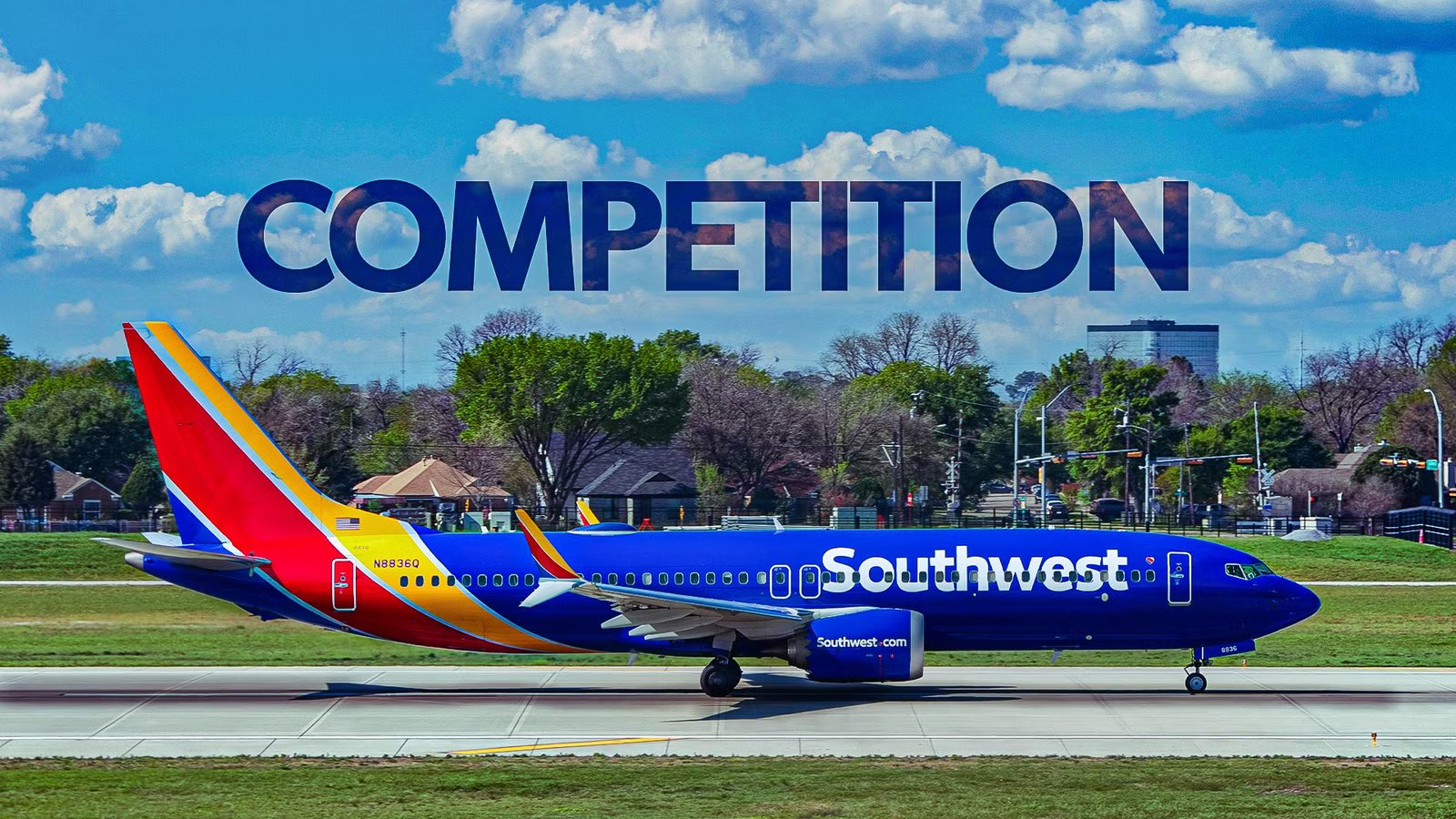
For much of its history,  Southwest Airlines succeeded by avoiding the competitive battlegrounds that defined the US airline industry. Rather than confronting legacy carriers in their largest hub markets, Southwest built a network around underserved city pairs, secondary airports, and routes where direct competition was limited or nonexistent.
That strategy created a powerful structural advantage. Research examining Southwest’s market positioning has consistently shown that the airline benefited disproportionately on routes where it faced little head-to-head competition, allowing it to stimulate demand, maintain pricing flexibility, and avoid the fare wars that often eroded profitability elsewhere in the industry.
The results were substantial. Southwest grew from a regional Texas operator into the nation’s largest domestic airline by passengers carried, generating a record $28.1 billion in revenue during 2025. Unlike many competitors, the carrier achieved that growth while preserving a distinctive identity built around free checked bags, open seating, and a simplified fare structure. Those features became central to Southwest’s brand and helped protect its customer base even when rivals matched fares or expanded capacity.
That model is now undergoing its most dramatic transformation since the airline’s founding in 1971. Under pressure from activist investor Elliott Investment Management, Southwest has embraced assigned seating, premium seating products, checked bag fees, and basic economy fares. At the same time, low-cost challengers are moving into markets that Southwest once dominated with limited interference. The significance of these developments extends beyond individual policy changes. Southwest’s long-standing route monopoly advantage remains substantial, but the factors that once reinforced that advantage are weakening. As the airline abandons key elements of its historic identity, competitors see an opportunity to attack markets that were previously difficult to penetrate.
Southwest’s Route Monopoly Advantage Created A Unique Competitive Position

The foundation of Southwest’s success has always been its network strategy. While legacy airlines concentrated operations around major hubs such as Atlanta, Dallas-Fort Worth, Chicago O’Hare, and Newark, Southwest frequently entered markets that received limited attention from larger rivals. This approach allowed the carrier to establish strong positions on routes where passengers had few alternative nonstop options. Industry analysis estimates that Southwest operates without direct competition on approximately 60% of its routes. That figure represents an extraordinary strategic advantage in an industry where most carriers compete intensely for the same passengers. On routes with limited competition, airlines generally possess greater pricing flexibility because consumers cannot easily substitute another nonstop service.
Southwest amplified this advantage through network density. Rather than relying on a traditional hub-and-spoke structure, the airline developed extensive point-to-point operations that connected secondary and midsize markets efficiently. This network design reduced dependence on heavily contested hubs while creating numerous city pairs that competitors considered too small or specialized to pursue aggressively. The strategy also reduced exposure to destructive fare competition. Legacy airlines often engaged in battles over market share at major hubs, adding capacity and discounting fares to attract passengers. Southwest largely avoided these confrontations by focusing on markets where its presence generated new demand rather than simply redistributing existing travelers.
As a result, the carrier developed a business model that combined relatively strong margins with consistent growth. The absence of direct competitors on many routes did not guarantee profitability, but it significantly improved Southwest’s ability to manage pricing and capacity compared with airlines operating in more crowded markets.
The Brand Was Just As Important As The Network

Route dominance alone does not explain Southwest’s historical success. The airline reinforced its network advantage through a collection of customer-friendly policies that became deeply associated with the brand. For decades, “Bags Fly Free” served as one of the airline’s most recognizable marketing messages. While competitors increasingly relied on ancillary fees to generate revenue, Southwest maintained free checked baggage allowances that differentiated the carrier from virtually every major US airline. Customers understood the benefit immediately because it represented a tangible cost saving.
Open seating created another distinctive element. Although some travelers disliked the boarding process, many passengers appreciated the flexibility and simplicity it offered. The absence of assigned seats reinforced Southwest’s reputation for doing things differently from traditional airlines. The airline’s fare structure also remained relatively straightforward. Customers often perceived Southwest as transparent compared with competitors that segmented products into increasingly complex categories. Even when fares were not the lowest available, travelers frequently viewed the total value proposition as superior because fewer additional fees appeared during the booking process.
Catch what other flight trackers miss
Emergency squawks, holds, NOTAMs — live signals, no signup.
Open tracker
Catch what other flight trackers miss
Emergency squawks, holds, NOTAMs — live signals, no signup.
Open tracker
These policies created a powerful defensive moat. Competitors could match a ticket price, but they often struggled to replicate the overall experience. A traveler comparing fares between Southwest and a legacy airline frequently recognized that baggage charges, seat selection fees, and other ancillary costs could alter the true price of the trip. This differentiation mattered especially on routes where Southwest already enjoyed limited competition. The airline was not merely offering transportation between two cities. It was offering a recognizable product that encouraged customer loyalty and reduced sensitivity to modest fare differences. Consequently, Southwest’s network and brand functioned together. One provided market access while the other reinforced customer preference.
Why Southwest Airlines’ New Assigned Seating System Created Problems It Didn’t Anticipate
The airline recently changed its long-standing boarding process.
Historic Strategic Overhaul

RECARO | Simple Flying
The pressure for change intensified as Southwest’s financial performance increasingly lagged investor expectations. Although the airline remained profitable, critics argued that management had become overly committed to preserving traditions that no longer maximized shareholder returns. That debate accelerated when Elliott Investment Management acquired a significant stake in the company and pushed aggressively for operational and commercial reforms. The activist investor argued that Southwest needed to modernize its business model and unlock revenue opportunities that competitors had exploited successfully for years.
The resulting transformation has been unprecedented in scope. Southwest announced plans to introduce assigned seating, premium seating products, checked bag fees, and basic economy fares. These changes dismantled several policies that had survived for decades and were widely viewed as untouchable components of the airline’s identity. The financial rationale behind the overhaul is clear. Premium seating allows airlines to generate higher yields from passengers willing to pay for additional comfort or convenience. Checked bag fees produce substantial ancillary revenue. Basic economy products enable carriers to compete more effectively against ultra-low-cost airlines on advertised fares while preserving upsell opportunities.
Early financial indicators suggest that investors approve of the strategy. Southwest shares significantly outperformed many airline peers during early 2026, while analysts upgraded expectations for future earnings. The carrier has projected adjusted earnings per share of at least $4.00 for 2026, compared with approximately $0.93 in 2025. Operational data also indicates improving commercial performance. Southwest Airlines Pilots Association’s analysis of first-quarter 2026 results reported an 11.2% year-over-year increase in unit revenue, supported by stronger upsell rates and revenue initiatives. From a financial perspective, the transformation appears promising. From a competitive perspective, however, it introduces new challenges.
Competitors Eye An Opening

The irony of Southwest’s strategic shift is that many of the changes designed to improve profitability simultaneously reduce differentiation. When Southwest charged no checked bag fees, competitors struggled to match the airline’s value proposition without sacrificing ancillary revenue. Once Southwest adopted bag fees, that distinction largely disappeared. Standard passengers now face charges of approximately $35 for a first checked bag and $45 for a second checked bag under the new structure.
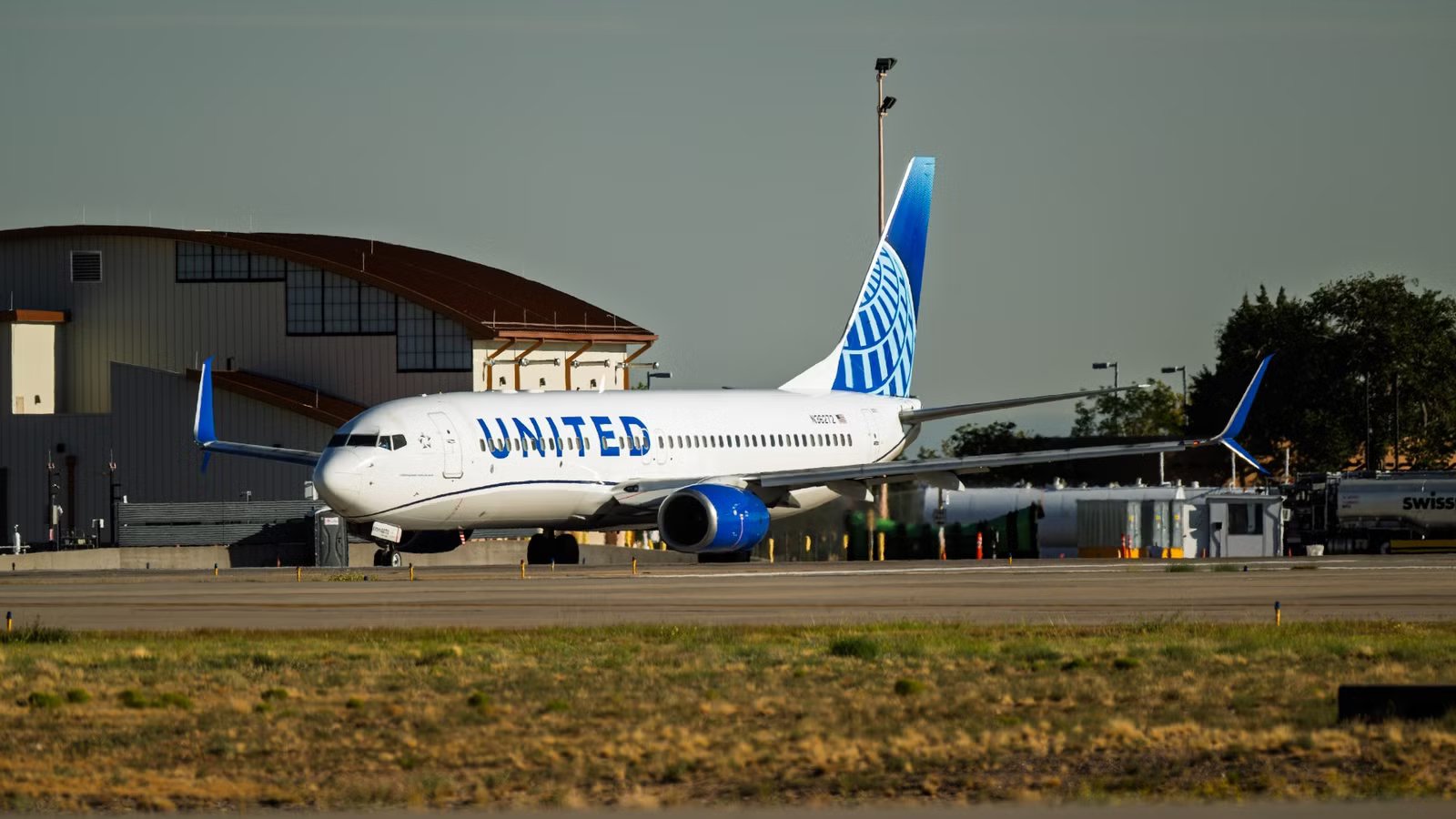
Assigned seating produces a similar effect. While the change may improve customer satisfaction among some travelers, it also makes Southwest look more like every other major carrier. The same dynamic applies to premium seating and basic economy offerings. As these distinctions fade, competitors increasingly view Southwest customers as contestable. Industry observers noted comments from executives at  Delta Air Lines and
  United Airlines suggesting that Southwest’s traditional customer base is now more vulnerable to competitive targeting.
This development matters because airlines rarely compete on a single variable. When product differentiation declines, schedule quality, loyalty programs, airport facilities, and international connectivity become more important factors in consumer decision-making. Legacy carriers possess considerable advantages in those areas. Delta, United, and American Airlines operate extensive global networks, premium lounges, and sophisticated loyalty ecosystems. Historically, Southwest counterbalanced those strengths with simplicity and customer-friendly policies. The gap narrows when those policies disappear. For competitors, the opportunity is straightforward. If Southwest becomes increasingly similar to other airlines, customers may begin evaluating alternatives more aggressively. The resulting shift could weaken the loyalty that historically protected Southwest in many of its strongest markets.
Breeze And Low-Cost Expansion Are Threatening Protected Markets

While legacy airlines pursue Southwest’s customers from above, ultra-low-cost carriers are attacking from below. Breeze Airways, in particular, has emerged as a growing competitive threat in several markets that resemble the routes Southwest historically targeted. Rather than focusing exclusively on major hubs, Breeze has expanded into underserved city pairs where demand exists, but competition remains limited.
Southwest’s recent network announcements illustrate how seriously management views this challenge. Of nine newly announced routes, four reportedly overlap with markets currently served only by Breeze Airways. Such overlap suggests that Southwest is increasingly willing to engage competitors directly rather than relying solely on historical network advantages. This represents an important strategic shift. For decades, Southwest frequently benefited from entering markets before rivals recognized their potential. Today, newer airlines are identifying similar opportunities and expanding into routes that once might have remained uncontested.
The challenge extends beyond Breeze. Ultra-low-cost carriers continue refining their ability to stimulate demand through extremely low advertised fares. Although Southwest’s cost structure differs significantly from that of carriers such as Frontier, consumers increasingly compare options across multiple business models. At the same time, Southwest is intentionally prioritizing margin over volume. The airline has exited underperforming markets and focused more heavily on routes capable of generating stronger returns. That discipline may improve profitability, but it can also create opportunities for competitors to establish footholds in markets Southwest previously served.
The combination of network encroachment and reduced differentiation creates a more complex competitive environment than Southwest has faced in decades. The airline still possesses enormous advantages, including scale, brand recognition, and a vast domestic network. Nevertheless, the conditions that once insulated many routes from meaningful competition are changing.
Evolving Strategies

Southwest Airlines is entering one of the most consequential periods in its history. The airline still benefits from an extraordinary structural advantage, operating without direct competition on roughly 60% of its routes. That position helped build a business capable of generating record revenue and sustaining decades of growth. Yet the environment that supported that success is evolving rapidly. Competitive barriers are weakening as low-cost operators enter markets that once appeared protected. Simultaneously, Southwest is abandoning many of the policies that differentiated its product from rivals.
Investors have largely welcomed the transformation because the early financial results appear encouraging. Revenue metrics are improving, earnings expectations are rising, and the stock market has responded positively. Those outcomes suggest the strategy may deliver substantial shareholder value. The longer-term question concerns competitive positioning. Southwest’s historic moat was never based solely on route monopolies; it depended on the combination of network advantages and a distinctive customer proposition. As the airline reshapes that proposition, competitors see an opportunity to challenge a carrier that once seemed uniquely insulated from direct rivalry.
The story of 2026 is therefore not simply that Southwest is changing. It is the structural conditions that made the old Southwest model so powerful that are changing simultaneously. Whether the airline can maintain its dominance while redefining its identity will be one of the most important strategic questions in the US airline industry over the next several years.