dailynewsnblog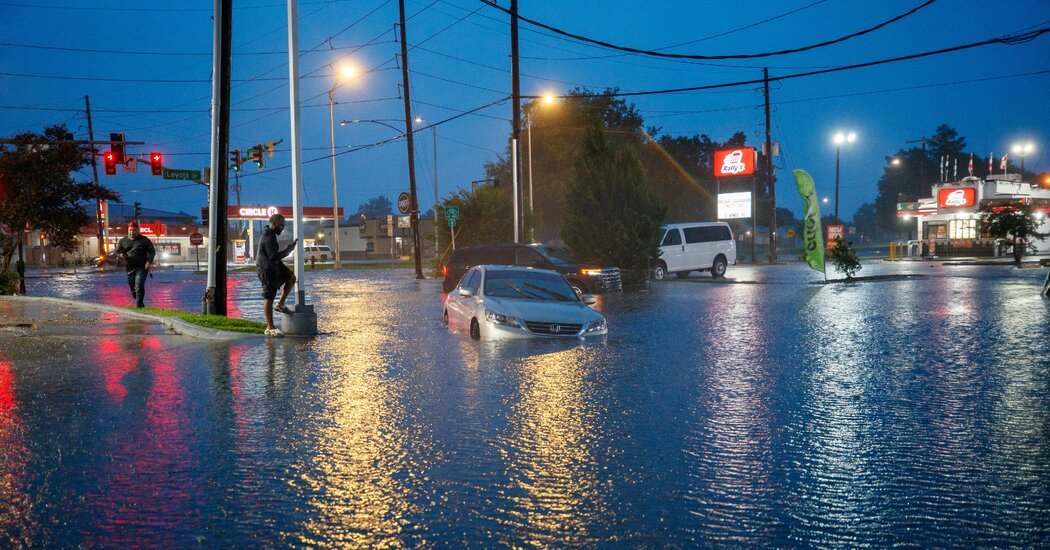
The Atlantic hurricane season usually doesn’t pick up until late in the summer. But not this year.
This week, swaths of the Southeast, from Texas to the Carolinas, have been reeling from Tropical Storm Arthur, the first named storm of the season, with some places inundated by more than 12 inches of rain in 24 hours. At least three people have died.
Forecasters at the Weather Prediction Center had issued a very rare high risk warning for portions of Louisiana, Mississippi, Alabama and Florida. By week’s end, emergency officials in Mississippi were warning that heavy rains were likely to continue, and that wind gusts could also cause damage.
Oh, and it’s brutally hot as well. Louisiana forecasters are warning that the heat index will break triple digits in many places.
Here’s what we know about the storm:
Louisiana and Mississippi were hit hard.
The storm came ashore in Texas on Wednesday, about an hour and a half south of Houston. It quickly weakened into a post-tropical cyclone, with the system moving northeast out of eastern Texas and into the Southeast.
In Texas, a 53-year-old woman died after her car was swept off the road by rushing waters near San Antonio, while a 15-year-old boy drowned in a flooded retention pond in Montgomery County, north of Houston. In Mississippi, a man who was helping to clean up storm debris as part of a road cleanup crew in Franklin County, southwest of Jackson, was also killed.
Some of the highest rainfall totals were reported in Avoyelles Parish in central Louisiana, between New Orleans and Shreveport, where Cottonport received 29 inches and Plaucheville received 22.5 inches, according to the National Weather Service.
On social media, residents shared videos of intense flooding in southern Mississippi, palm trees twisting on the beach in Biloxi, Miss., and a cemetery being upended in Avondale, La. There were also widespread reports of trees and power lines being down in the Carolinas.
Isn’t June early for a powerful storm?
Well, by historical standards, yes. After all, some of the more notable first storms of the season — like Hurricane Andrew in 1992 — occurred in August.
But officially, the Atlantic hurricane season started on June 1 and runs through Nov. 30. Peter Mullinax, a meteorologist with the Weather Prediction Center, said it’s not unusual for tropical systems to form in the Gulf and reach land in June.
“The longevity of seeing these repeated rounds of rainfall is unusual,” Mr. Mullinax said. “The unusual part of this storm is how long it has been sitting in the South.”
Stronger hurricanes usually arrive later in the season with peak activity occurring mid-August through October. The National Oceanic and Atmospheric Administration, however, predicted last month that it could be quieter compared to recent years.
The chance for heavy rain continued on Friday.
A moist tropical air mass was still draped across the Gulf states on Friday and remnant moisture from Arthur lingered, bringing a continued chance for thunderstorms, strong winds and downpours. The threat of flash flooding existed everywhere from East Texas to Florida, with the highest risk in southern Alabama and Mississippi.
“There’s still a lot of moisture that you would more typically see in the dead of summer,” Mr. Mullinax said.
The ground in this area is already saturated, so any additional rain will likely turn into runoff that pours into already swollen rivers, streams and creeks.
Flood watches were in effect across much of the area, but forecasters said residents should keep an eye out for flash flood warnings. A watch is a heads-up that conditions are favorable for flooding, while a warning is a call for immediate action because flooding is occurring or imminent.
The risk of flash flooding was expected to continue into Saturday, but the rains weren’t expected to be as heavy as they were on Thursday and Friday.
“Given how much rain those areas have had though, it’s not going to take much to lead to flooding,” Mr. Mullinax said.
Emma Schartz contributed reporting