dailynewsnblog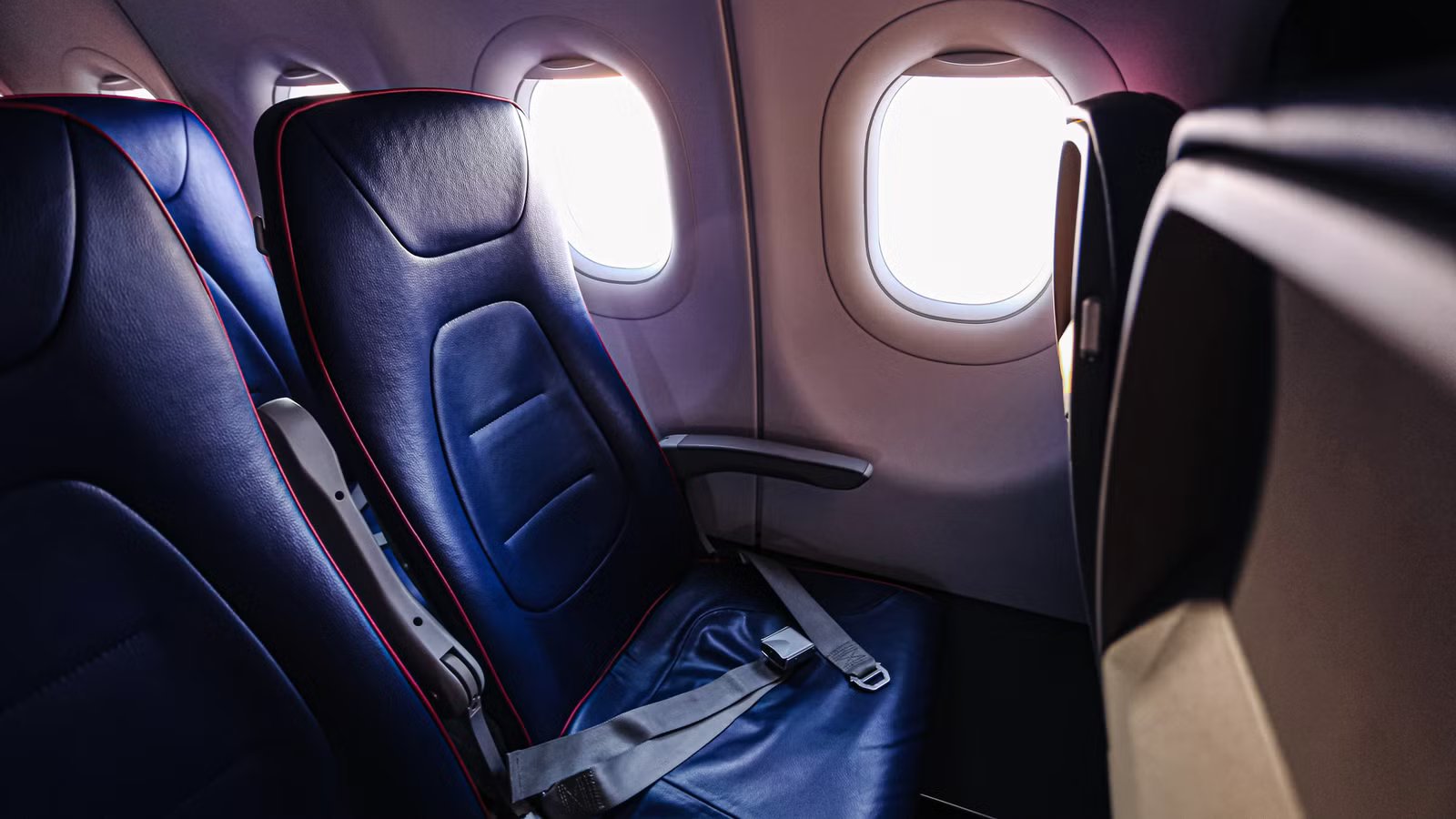
Most economy aisle seats have a small release mechanism on the underside of the outermost armrest that allows it to be lifted flush with the seatback. The feature makes getting in and out of the row easier, clears space for reaching overhead bins, and has been widely written about as a travel tip. What most of those articles leave out is why the mechanism is there in the first place, and why the armrest has to go back down before the aircraft moves.
The movable armrest is a federally mandated accessibility feature with a specific legal basis in US aviation regulations, not a design perk. It is one of several economy seat features and cabin rules that have practical safety or regulatory origins that passengers rarely hear about.
The Button Most Passengers Never Find

Most aisle seats in economy class have a small tab or button on the underside of the outermost armrest, near the hinge where the armrest connects to the seat frame. Pressing or sliding it releases the armrest so it can be lifted flush with the seatback rather than staying fixed in the down position. The mechanism is not visible from above, and there is no marking or label indicating it exists, which is why most passengers never find it, even after years of flying.
The practical uses are straightforward. Lifting the aisle armrest out of the way makes it easier to slide in and out of the row without the awkward half-stand that a fixed armrest forces. It clears space when standing to reach the overhead bin. It gives a slightly wider effective seating area for passengers who find the standard economy seat width restrictive.
The mechanism varies slightly by seat manufacturer. On some aircraft, it is a small plastic tab that slides forward. On others, it is a recessed button that requires a firm press. The location is always on the underside of the armrest near the hinge rather than on the top or side. The easiest way to find it is to slide a hand underneath the armrest near where it meets the seat frame and feel for a small movable component.
The Federal Accessibility Rule That Put It There

The movable aisle armrest is not a design convenience. It is a federally mandated accessibility feature. Under the Air Carrier Access Act, the US Department Of Transportation requires that aircraft with 30 or more passenger seats must have movable aisle armrests on at least half of the aisle seats in rows where passengers with mobility impairments are permitted to sit. The specific regulation is 14 CFR 382.61, and it applies to aircraft ordered after a specified date or delivered after April 1992.
The purpose is to allow passengers who use boarding wheelchairs to transfer into their seat without being lifted over a fixed armrest. Airport wheelchairs are too wide for aircraft aisles, so passengers with mobility impairments transfer to a narrow onboard aisle chair that fits between the seat rows. When they reach their assigned row, the aisle armrest lifts out of the way so they can slide horizontally from the aisle chair into the seat. A fixed armrest would require the passenger to be physically lifted over it, which is more difficult, less dignified, and creates an injury risk for both the passenger and the crew member assisting.
Airlines are required to train cabin crew on the location and operation of the movable armrests and to make the seats clearly identifiable within their booking and assignment systems. In practice, the feature is present on far more seats than most passengers realize because the regulation covers at least half of all aisle seats on qualifying aircraft. The fact that it doubles as a useful trick for any passenger getting in and out of a row is a secondary benefit of a feature that was designed and mandated for an entirely different purpose.
The Key Differences Between Economy, Premium Economy, Business & First Class
Walk the aisle with a seat designer to decode the real differences between economy, premium, business, and first class. Is the upgrade worth it?
Why The Armrest Has To Be Down For Takeoff And Landing

The armrest must be in the down position during taxi, takeoff, and landing. The primary reason is the brace position. Passengers are instructed to brace against the seat ahead of them in an emergency, and the armrests on each side provide a defined boundary that keeps the body contained within the seat space during impact. A raised armrest allows the passenger’s body to shift laterally during a sudden deceleration or hard landing, increasing the risk of injury. The armrest also prevents passengers from sliding into the aisle during impact, where they could block the egress path for the rest of the row. A raised armrest that is unsecured could also swing or fall during a violent stop, creating an additional hazard in the seat area.
During cruise, the rule is not enforced, but there is a practical reason to keep the aisle armrest down when not actively getting in or out of the seat. With the armrest raised, the aisle passenger’s body naturally drifts further into the aisle. Elbows, knees, and feet extend beyond where they would sit with the armrest acting as a physical boundary. Cabin crew pushing meal and beverage carts through a narrow economy aisle are already working with minimal clearance on each side, and a passenger sitting slightly further into the aisle increases the likelihood of getting clipped by the cart. Flight attendants have noted this as a recurring source of minor injuries and disrupted service on full flights.
The general principle behind all of these cabin preparation rules is the same. Every element of the seat and cabin that could interfere with a 90-second evacuation is secured or stowed before the phases of flight where an emergency is most likely to occur. The armrest is one component of that system.
Other Seat Features Most Passengers Don’t Know About

The movable armrest is the most commonly overlooked seat feature in economy class, but it is not the only one. Many economy headrests have flexible wings on each side that fold inward to cradle the passenger’s head during sleep. The wings are covered in the same fabric as the rest of the headrest and sit flat against the seat when not in use, which is why most passengers assume the headrest is a fixed single-piece unit. Folding them forward creates a support surface on each side of the head that reduces the sideways slumping that makes sleeping upright in economy difficult.
A small hook for hanging a jacket or headphones is built into many seat frames, typically located on the side of the seatback facing the aisle or just below the tray table hinge. On some aircraft, a second hook or clip sits inside the seat pocket area. These features are not highlighted in safety briefings or seat guides, and most passengers discover them by accident if they discover them at all.
The tray table on some seat models can be extended forward or slid closer to the passenger by adjusting a secondary latch or rail underneath the table surface. This is more common on newer seat designs and allows shorter passengers to bring the table closer rather than leaning forward to reach food and drinks. On bulkhead seats, where the tray table folds out from the armrest rather than the seatback ahead, the mechanism is different, but the adjustment is often still available. None of these features are complicated or hidden behind any kind of access restriction. They are simply not labeled, not explained, and not visible unless a passenger looks for them.
5 Things Passengers Don’t Know About How Airlines Assign Business Class Upgrades
Here’s the reason why most people will never receive a free business class upgrade.
Window Shade Rules And Other Cabin Requirements Passengers Assume Are Optional

The window shade rule is one of the most commonly cited cabin requirements that passengers assume applies everywhere. In practice, the FAA does not mandate window shade position during takeoff and landing on US carriers. Airlines operating under EASA in Europe, CASA in Australia, and regulators across Asia do require shades to be open during taxi, takeoff, and landing, and most non-US carriers enforce it as standard procedure. The reasoning is that open shades allow crew and passengers to see outside conditions during the phases of flight where an emergency is most likely, including fire, engine damage, or obstacles on the ground that would affect which exits to use during an evacuation. Open shades also help passengers’ eyes adjust to ambient light conditions outside, which matters if an evacuation occurs during daylight after a cabin has been dark.
Cabin lighting follows related logic. On night takeoffs and landings, many carriers dim the cabin lights to preserve passengers’ night vision. If an evacuation occurs after dark, passengers exiting through emergency doors or onto unlit terrain need their eyes already adjusted to low light rather than transitioning from a brightly lit cabin to darkness. The adjustment takes several minutes, and dimming the lights before the critical phases of the flight is a simple way to ensure passengers can see immediately upon exiting.
The shoes-on expectation during takeoff and landing is less commonly enforced but follows the same principle. An evacuation may require walking across debris, hot tarmac, or the surface of an evacuation slide that generates friction and heat. Passengers wearing shoes can move faster and with less injury risk than passengers in socks or barefoot. Like the armrest, the window shade, and the cabin lights, it is a small preparation that exists because the margin between a survivable evacuation and a preventable injury is built from details.