dailynewsnblog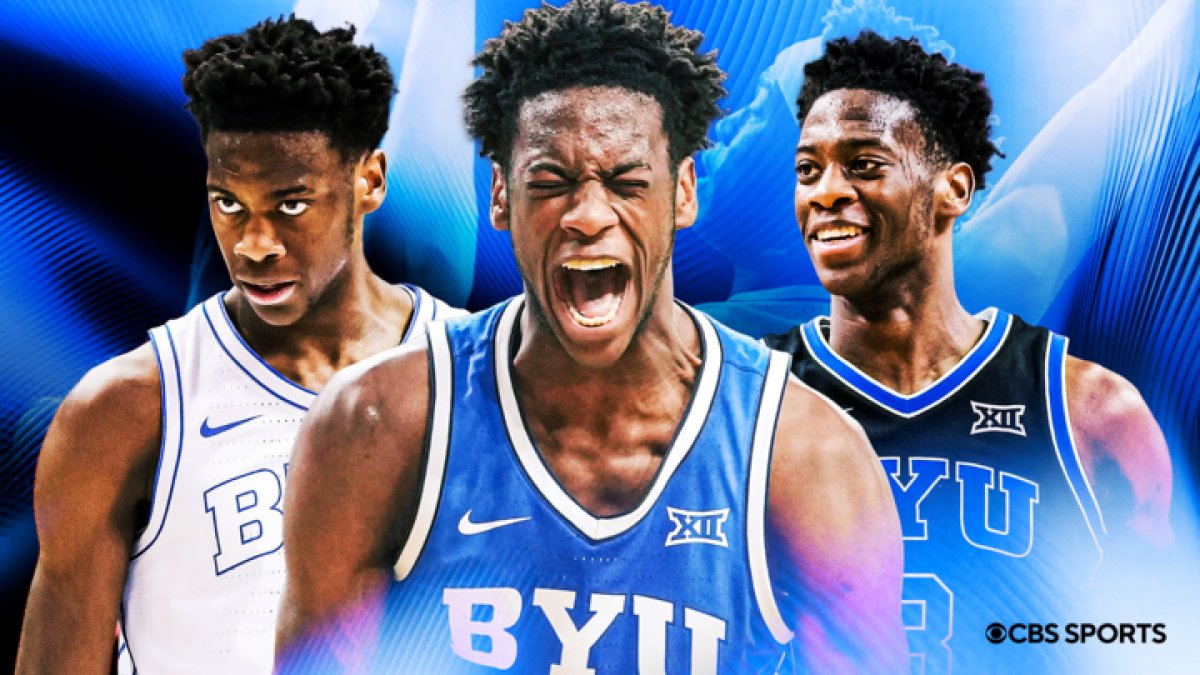
Consider the audacity of AJ Dybantsa. The 19-year-old from Brockton, Massachusetts, is days away from concluding the final phase in the first act of what could be a Hall of Fame career. These closing hours of pre-NBA life are the culmination of a zealous plan — something he and his family have essentially willed into existence, without abate— across the past four years.
It’s no guarantee Dybantsa goes No. 1 to the Washington Wizards on Tuesday night, but that is, indubitably, the expectation from a lot of NBA executives and, of course, Dybantsa. Earlier this week, just a few days removed from meeting with Wizards leadership in Los Angeles on June 11 and 12, I asked him if he believed all of the presumptions and many of the mock drafts would be right. Is he about to be the No. 1 pick over Darryn Peterson and Cameron Boozer?
“Yes,” he told CBS Sports.
Dybantsa delivered his answer in that blunt, confident tone he’s grown into as he’s become a more self-assured and more famous young man. When it comes to basketball, Dybantsa usually gets what he expects. Imagine planning year after year of your life around one moment. That’s what next Tuesday is all about; Dybantsa doesn’t shrug off or downplay how much draft night means to him and the symbolism tied to the top pick. For him, it’s an evidential link connecting what he’s done and who he is with what he believes he’ll do and who he will become over the next 15 years (or more).
“I have one piece of advice: Don’t overthink this,” BYU coach Kevin Young, who was an NBA assistant from 2016-2024, told CBS Sports. “This is no knock on the other guys. I think those guys are great players. But if you’re just talking straight NBA, I say this with all due respect to the writers and the bloggers and the rankers. I’ve lived the NBA life. I’ve been in the war rooms. I’ve been to the Finals. He’s the kind of guy everyone’s trying to get. The 6-9, can-do-everything who, by the way, is a freak athlete. Who, by the way, checks all the boxes from a human being standpoint. Like, those are so rare that it’s, just, do not overthink this.”
2026 NBA Mock Draft: Cameron Boozer goes to Jazz at No. 2, Clippers like Mikel Brown for fifth pick
Matt Norlander

Projected No. 1 picks are sometimes equal parts prideful and bashful about being in that spot. A lot of pressure comes with a 1 attached to your name. Some athletes don’t like to focus on it. That’s not Dybantsa. He has hunted this for more than four years and wants to tell you about it. He wants to be the first pick, even though the franchise that knows him best, the Utah Jazz, is sitting there at No. 2. Dybantsa believes he’s the best player in maybe the best high school class of the 21st century. Going No. 1 would bring validation, which is ironic because, in getting to know him and his family over the past few years, Dybantsa doesn’t appear to seek validation in most other parts of his life.
“He’s a generationally good player, certainly for me, and I was lucky enough to be around Wemby,” BYU associate head coach Will Voigt, who coached the Spurs’ G League franchise during Victory Wembanyama’s rookie year, told CBS Sports. “There’s a lot of the same stuff. These kinds of guys are different, and you can see it like that (snaps fingers). And AJ is like that.”
Ed Zurga via Getty Images
The Dybantsas have dictated every step of the journey
After steadily rising to national fame in the past four years, if Dybantsa becomes the face-of-a-franchise player (something a lot of league executives believe will happen) then this period will be looked back on by future high-end prospects and their families for how the Dybantsas navigated a years-long gangway to the NBA. They’ll see how Dybantsa deftly, but somewhat controversially, handled moving through the high school ranks (by going to three private schools in three states) and then to college while getting paid millions upon millions upon millions of dollars and becoming generationally wealthy before ever signing an NBA contract.
It’s a trek a lot of players and their families want before ever understanding just how difficult it is to handle. There are plenty of pitfalls and potential traps and distractions or detours or injuries that could negatively affect a teenager while trying to not just make the NBA, but be a top draft pick at that.
Dybantsa has not only done it, he’s essentially gotten to this point unscathed.
“I’ve kind of been dealing with it since I was like 13 years old,” Dybantsa said. “I’m used to it now, how this is.”
His voyage to Tuesday night has been as widely tracked and covered as probably any prospect since LeBron James (yes, Cooper Flagg included). He was a buzzed-about prospect by the time he started high school. By 16, he was a household name for the average invested American basketball fan. His reputation bloomed not just because of his obvious ability, but because of the marketing and commercial power of social media.
There was a folk lore element to him as well: the malicious gossip and assumptions about why he left Massachusetts to move across the country to play in California. He turned heads again after bolting California to finish high school at a peculiar prep school in, of all places, Utah. That laid the foundation for his unorthodox college choice: Dybantsa was far and away the best recruit to ever choose to play at BYU (and was paid millions for doing so). Though the Cougars fell well short of expectations (23-12, a 6-seed and no NCAA Tournament wins), Dybantsa nonetheless delivered in his one and only college season, as his talents always suggested he would. He scored the third most points by a freshman in NCAA history (894) and was a unanimous First Team All-American. From the day he stepped on campus last summer in Provo until the end of BYU’s season, Dybantsa never missed a practice.
Ezra Shaw / Getty Images
“He’s the most mature 18-year-old I’ve been around,” BYU assistant Brandon Dunson said. “It’s refreshing to see, because I’ve been around a lot of people in his position and there’s so much BS around them.”
Those who don’t know Dybantsa or his father, Ace, or mother, Chelsea, have assumed the BS has been part of the package dating back to, at least, his sophomore year of high school. That’s a misguided notion, though it’s true that at every juncture of this journey the family has been insistent on doing it their way. That meant saying no to a lot of people who wanted a piece of AJ, even if well-intentioned.
“He makes my job easier,” Dybantsa said of his dad. “Doesn’t really let me get too high on myself, so I just stay in the lab.”
The Dybantsas have kept a close circle. They have dictated the terms of just about everything AJ has been involved in, which isn’t a novel approach, but the way they’ve been perceived by some vs. the reality of how they’ve maneuvered this world privately are two different stories.
Among the most scrutinized decisions: Dybantsa is the rare prospect who will enter the NBA without an agent. Dad has played that role for AJ from the beginning. You want to talk to Dybantsa, you need to go through Ace. While the family has a business advisor in former agent Leonard Armato (who represented Shaquille O’Neal during his playing days), almost every basketball decision Dybantsa has made since he was in middle school has happened with his parents’ blessing or at their orders.
And to this point, pretty much all of it has worked out.
“We’ve been staying true to ourselves and not just following the [usual] path,” Dybantsa said. “We are trying to pave our own way and do it in our way, and thank god it has worked out so far.”
Can you control your NBA destiny? Players, parents and agents have tried the gambit for decades. Few have gotten to this point by doing it entirely on their terms and, for the most part, succeeding like the Dybantsas.
“All of it has felt surprisingly normal, because when you take a step back and talk about it, it seems pretty insane,” Voigt said.
The story of why Dybantsa won’t hire an agent
For the past few years, there has been an aggressive nationwide chase happening that no one has been able to win. No matter the pitch, no matter the concessions, no matter the reputation, no matter the list of clients or the connections across the sports and marketing world, nobody has remotely come close to being able to convince Ace Dybantsa why his son should be represented by anyone but Ace Dybantsa.
“A lot of them are pissed at me, but too bad,” he told CBS Sports earlier this week.
For the first time, for this story, Ace revealed the reasons behind one of the lingering mysteries in basketball: Why won’t Dybantsa hire an agent like almost everybody else? Not only has it not happened, Ace said it was never close to happening and will not be happening in the future. The origin starts in AJ’s early teens when he played for Expressions Elite, a prominent Massachusetts-based grassroots program that’s sponsored by Nike.
“I had no idea that first year how these things were,” Ace said about the start of the journey. “I had no idea what AAU was. To me, we’re just playing basketball.”
When Expressions again recruited Dybantsa as a pre-teen, Ace got his first true insights into the inner workings of grassroots basketball and the agency world. This was just coming out of COVID, so the family was still getting its bearings on the full operation.
“They told me what they had to do. They promised some stuff,” Ace said. “I still had no clue what was going on. This is when he was entering eighth grade. Then, the second year, that’s when I was like, whoa.”
According to Ace, by the time AJ was 14, the family was being pushed toward picking an agent. (Yes, at 14.)
“The main guy [with Expressions] comes to me, he goes, ‘AJ’s gonna make half a billion dollars in his career. Only three agents can represent him.’ He never named them,” Ace said. “He said, ‘When the time comes, I will bring them to you. You can pick any of the three.’ I’m like, OK. I go home and tell my wife. My wife says, ‘Ace.’ I say, ‘I know. He thinks I’m stupid.’ You’re gonna bring the three that you mentioned, which of them I’m gonna pick, you’re going to have a point or two.”
By that he means the program director would get a kickback for steering his son to a certain agent.
“So, I play the game,” Ace said. “And then the other thing they’re trying to do, they’re trying to control me: ‘You can’t let AJ talk to anybody.’ … I thought AJ was my son.”
Ace played along initially out of curiosity more than anything else. He wanted to see who was telling the truth and how agents worked with middlemen to try and lure future NBA lottery picks as young as 13 or 14. It all felt off. Certain agents were given immediate meetings, while others were purportedly told it would be months before they could meet the family. Ace also said there was a trainer at that time working with the program who they felt wasn’t looking out for the best interest of AJ.
In what way?
“He was looking for money,” Ace said.
AJ’s parents have had access to his social media since the start. They’ve seen dozens of agents and go-betweeners in his DMs, offering him money, cars and other perks. Many of them were cut off right away.
“I tell you not to bother me. If you don’t respect my wish, you know the thing I like about cell phones, iPhone, just block it,” he said. “I blocked so many people.”
Dybantsa eventually left Expressions, and then left Massachusetts after starting his high school years playing for Saint Sebastian’s prep school.
“They’re trying to threaten me. I said, ‘I’m from Africa. Good luck,'” Ace said. “If you get an agent, come on, they’re getting a piece. Last time I checked, I’m the one that changed the diapers for AJ, not y’all. You come to me [and say] ‘Ace, we’re going to help your son, we’re going to do this and get you to another level. Can you help our program?’ That’s fair. But trying to use my son? Now that, oh, no, no, no, that won’t work. I have nothing against agents. AJ is No. 1. You know how much he’s going to make. It’s there. Google it. Why do I have to hire an agent to tell me what I already know what’s fair?”
James Roh via Getty Images
NBA agents take 4% of a player’s salary, but more and more that number is earned on negotiating the second, third and fourth contracts — not the first. Some agents representing lottery-level players have been pulling in a percentage on NIL deals in college, then taking nothing on the first contract in an effort to get the big payoff when the rookie deal expires.
Plus … there is a chance that Dybantsa’s dad is ahead of the curve here. CBS Sports reached out to a handful of NBA front office executives and NBA agents and asked them if the Dybantsa decision to not hire representation was justifiable. All of them said you can make the case it is.
“It’s good to have some advocacy or representation outside of yourself, but everything’s evolved so much that I don’t think it matters as much,” one Western Conference GM told CBS Sports.
Said another Western Conference general manager: “The first contract, especially with him, he’s going to go 1 or 2, it’s not even negotiating. The team’s going to give him 120% of the rookie scale, he’s going to get all of that. I can see on the basketball side very little need in the short-term for an agent. Where it gets complicated is how much will it affect his endorsements, how much will he get if they don’t get maximum dollars. If his career ends up being a not-max guy, that’ll be the question.”
Dybantsa has always been a “max guy” at the high school and college level and obviously has no plans of dropping down. (Let’s check in come 2030 and see how that’s going.) When he’s selected next week, be it first or second, Dybantsa will be slotted into a deal worth north of $10 million every year of the contract, with the price going up each of the first four years.
This hasn’t stopped agents from trying. Dozens have made their pitches through all sorts of tactics and approaches. There was one more who circled back earlier this month, only to be shot down.
“There’s always one that thinks they are smarter than the other ones,” Ace said.
“I think his dad does a great job of shielding him from a lot of stuff,” Armato told CBS Sports. “His dad is tough on him. He’s disciplined. They’re very close. He’s pretty old school in the way he parents, but at the same time he shields him from a lot of things he’d be otherwise exposed to. He’s really put AJ in a position where he can concentrate on basketball.”‘
2026 NBA Draft Roundtable: Who goes No. 1 overall? Experts favor AJ Dybantsa over Darryn Peterson
Cameron Salerno

This approach has made Ace a pariah to some. He’s been accused of always having his hand out, looking for the highest bidder to get the most money and get rich off of his son. But Ace, who never talks specific money figures to anyone not in the family’s tight circle, said all of what got AJ to this point was based on education and being a step ahead of the people who were going to be chasing them and their money.
“They always blame Black parents. They’re not in their family. They’re not in their kid’s life, you see the single mom over there,” Ace said. “Here, you have a Black father who’s still in his kid’s life, and they’re still bitching. Who the f— do you want? You can’t win. I’m gonna do what’s best for my son. I’m gonna protect my son better than you. He is my son. Trust, I know they’re rooting for me to fail.”
And as for AJ?
“AJ’s opinion is my opinion,” he said. “My son and I, we talked. And when I explained that to him, his words: ‘Let’s keep it in the family.'”
It’s a tight circle: Ace, Chelsea, AJ and his two sisters, Samarra and Jasmyn. Armato is the business advisor. They have a lawyer, a financial advisor, a manager and one person in charge of AJ’s social media posting. That’s it, at least for now.
Ace has always prided himself on his negotiating skills. Born in the Republic of the Congo, he moved to France at 13, then came to the United States in 1989, vowing to learn English and get a college degree before returning to France. Within weeks of arriving in Massachusetts, he applied for a job at McDonald’s and, barely speaking any English, claims he immediately negotiated his first pay rate from $5.25 to $6 per hour.
He never left.
“Some people, the haters, say, ‘Look at him. He changed. He did this. He did that,'” Ace said. “I didn’t change. My lifestyle changed. Your lifestyle would’ve changed too in my shoes. I’m still the same asshole.”
He lived in Boston, worked in Braintree, went to school in Brockton (at Massasoit Community College), and relied on public transportation. He eventually met his future wife, Chelsea, while going to the same gym. He asked her out and was turned down multiple times before she said yes. Ace would go on to be a police officer at Boston University, specifically choosing that job over other opportunities at different precincts because he planned on all of his children going to BU for a significantly reduced tuition rate.
Chelsea and Ace make for a dynamic duo, as they are two very different personalities. Ace sat down for more than an hour for this story and is always available for a chat. Chelsea, a charming but quiet woman who grew up in Jamaica, respectfully turned down interview requests; she’s content to let her husband take the spotlight in the press. And still: Ace let it be known his wife is the boss and nobody in their house challenges that.
‘God, education come first’
The real origin of AJ’s journey to Tuesday night in Brooklyn starts somewhere around 3,000 days ago. When AJ was in the sixth grade, he told his parents he wanted to be an NBA player. Ace didn’t even let him dream big at that point, telling his boy the harsh math: About 450 players are chosen to play in the NBA. The odds were overwhelmingly against it.
AJ wouldn’t let it go, so dad used education to motivate. If he got A’s and B’s, he’d let him play as much basketball as he wanted, both recreationally and on organized teams, year-round.
Not so long after that conversation, AJ came home with a C on his report card. Ace called AJ’s travel coach to find out when the next game was; there was a tournament upcoming in Pennsylvania, a 12-hour round trip from their home in Brockton. Ace told the coach he was driving his son all the way to the tournament and that he was strictly not allowed to play him.
“You’re going to drive six hours just to prove a point?” the coach asked.
He was, and he did. AJ went and wasn’t let off the bench. He cried in the car on the way back.
“He realized then that I wasn’t messing around, and he has been on the honor roll ever since,” Ace said. “God, education come first.”
Dybantsa’s freshman year at BYU concluded with a 3.6 GPA. He told me he’ll regularly be taking coursework in the years to come; part of the deal with agreeing to declare for the NBA Draft after one season was a promise to his mother that he will work every year to earn his college degree in his 20s and not wait until after his NBA career was over to do it. Dybantsa has a great deadpan to his personality, but on this, it’s serious. He will not disobey his mother’s wish. Ace and Chelsea have carried a mantra of sorts: Education is the key to everything because they cannot take it away from you.
“That guy doesn’t screw around with academics,” Young said. “I have nothing but great things to say about the family.”
Dybantsa picked BYU not just because of the monetary upside, but because of Young and his NBA experience and connections. Even the way they wound up in Utah is an untold story to an extent. AJ didn’t click in California. It wasn’t his vibe.
“At Prolific, there were guys doing all types of stuff, and he didn’t like it,” Dunson said. “He didn’t like the people he was around. Some guys were out drinking, doing all this stuff. That’s not him.”
So, the family moved again for Dybantsa’s senior year, placing him at Utah Prep. It was unorthodox, to say the least, as it wasn’t an entrenched school or a common destination for upper-echelon basketball talent. It also telegraphed an eventual commitment to BYU. AJ took no shortage of flak throughout this process due to his father running point on everything. College coaches weren’t allowed to talk to AJ for most of his recruitment, and those who were boxed out frequently spoke negatively about Ace. One reason for that: coaches have seen bad outcomes many times when a parent tries to dictate every angle of a situation. (Emoni Bates is one recent example.)
In reality, the Dybantsas were working the system while trying to plot every move to the best possible outcome for their son. They didn’t take a single vacation for six years. AJ would do workouts three times per day on most non-school days throughout his high school career. Most of that was never caught on video. Most of that is why he’s probably going No. 1.
“People think he was born for it. No, no, he worked at it,” Ace said. “You have to be in a gym. You have to be in love with the gym.”
Kevin Young was hired in March of 2024 to be BYU’s coach. In a stunning admission that provides insight into just how buried he was in his job as an assistant with the Suns, Young told me he didn’t even know who Dybantsa was shortly before getting the job. His initial impressions, from the outside in, were not the reality. At first glance, he saw a top-ranked recruit with USA Basketball obligations, Nike funding, a Red Bull sponsorship, a huge NIL deal with Fanatics and appearances in different countries — and a frisky father at the center of everything.
“I’m like, I can’t deal with this,” Young said of his very first impression. “But what I respect about Ace was, the second it was time to go and turn up for the season, it was like, ‘Hey, man, we’re done with all that.’ And I even told him at one point, ‘Hey, man, like, I’m totally cool with all this, but we’re gonna get to a point where — and he said, I totally understand.”
And there was never a hiccup the entire way. “No funny business,” as Young described it.
Aaron Baker via Getty Images
Dunson put it this way: “I’ve coached seven, eight, nine five-star guys and their families and stuff. They’ve honestly been the easiest group I’ve ever dealt with.”
BYU was the pick because of the isolated location with a strict code of conduct (i.e., minimal distractions), Young’s NBA connections (he coached Kevin Durant, who is Dybantsa’s basketball idol) and the NBA-ification of the program. Ace and AJ did their diligence and inquired about Young to Durant, Devin Booker and Chris Paul before committing. All enthusiastically vouched for him.
Then Young brought in Voigt, who had NBA ties and also coached a variety of African national teams. The team’s nutritionist came from the Suns. BYU’s strength coach came from the Milwaukee Bucks. Assistant John Linehan worked with Anthony Edwards in college to what end? Being the No. 1 pick.
During his time in Provo, coaches and teammates told me Dybantsa was almost exclusively at one of five places at all times: his apartment, the athletic facilities, in class, at his parents’ house, at his sister’s volleyball games or commuting between one of those locations.
“Credit to Chelsea and Ace, credit to AJ,” Voigt said. “The way he’s handled all of it, it’s been pretty spectacular.”
Said Ace: “When I met [Young], before we moved to BYU, I said, ‘He’s yours. I’m only Daddy. I’m not one of those parents where you gotta play him this much. No. As a matter of fact, let me give you the answer to the test. He doesn’t like to be benched. If he does something you don’t like, just bench his ass.'”
The list of basketball parents who would encourage, if not borderline dare, a college coach to bench their future lottery pick of a son is … extremely small.
Dybantsa’s most underrated asset as a pro is his inherent desire to share. He can score 30 with relative ease but hates not getting every one of his teammates involved. His reputation here is exceptional, which is connected to his high basketball intelligence. He’s smart, and he will challenge you, but do so in a way to make sure everyone is trying to get the most out of the basketball experience.
“Toughness, durability, intelligence, work ethic, check, check, check,” Voigt said.
He’s been this way since he started watching film of himself at a young age. Even before that, he played with and against older players — adapting quickly and planting the seed for his NBA dreams.
“I would have to learn the speed of the game when I was a little kid and learn how to play fast, learn on the fly,” Dybantsa said. “The ability to play up and watch a lot of film allowed me to read the game the way I do.”
That desire to learn is still in its burgeoning stages. We got a fun look at Dybantsa’s penchant for trying new things when he opted into being a correspondent in the past couple of weeks, shadowing the Knicks and Spurs in the NBA Finals. He threw himself into the experience.
“I wanted to pick a couple of the guys’ brains, see what their answers are like,” he said, before adding the obvious, “And it was a good way to watch the Finals.”
With the Finals over and a Knicks title run for the ages now written, a young man’s journey 3,000-plus days in the making approaches its zenith. Day after day, week after week, month after month, year after year, almost everything has gone to plan for AJ Dybantsa. Now there’s just one more piece, the biggest of them all, that is tantalizingly out of his control in these closing hours. It’s 15 words, the final two of which will bridge Dybantsa’s first act with a second — and may well swing one of the biggest basketball stories of the next decade.
With the first pick in the 2026 NBA Draft, the Washington Wizards select …