dailynewsnblog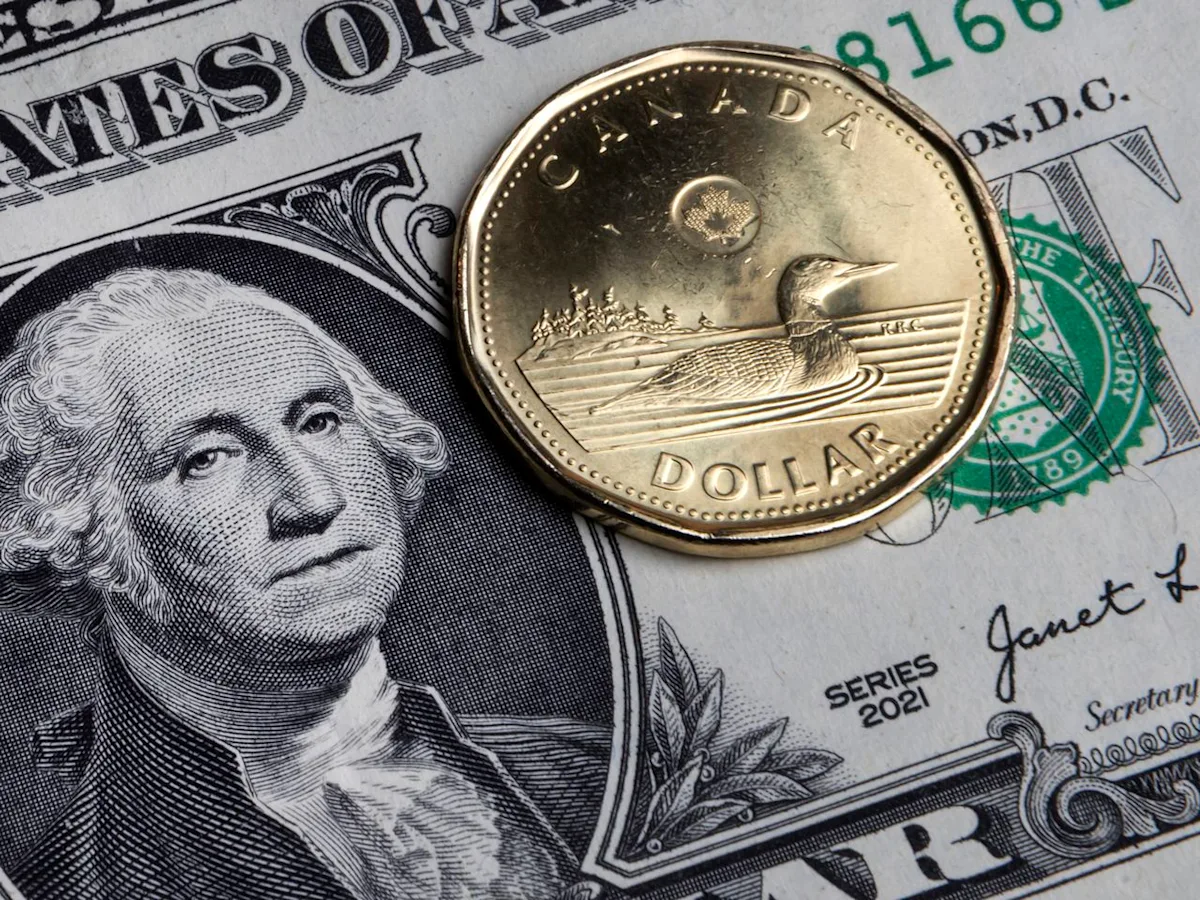

The Canadian dollar is at risk of dropping below 70 cents U.S. because the greenback is surging due to expectations that the United States Federal Reserve will hike rates instead of cut them.
The loonie on Friday fell to 70.56 cents U.S. in mid-morning trading, well off its year-to-date high of 74.1 cents U.S. in late January and now sits at its lowest point in about a year.
“The Canadian dollar selloff this week has been particularly brutal,” Shaun Osborne, Bank of Nova Scotia’s chief currency strategist, said in a note, citing a 1.2 per cent gain for the greenback, the “sharpest” since the loonie slumped badly in the spring.
In the short term, he said the U.S. dollar rally could mean the Canadian dollar falls as low as 68.9 cents U.S.
“The U.S. dollar is strengthening into the end of the second quarter and its gains are being driven by fundamentals as markets have moved to re-price a considerable amount of Fed tightening in the aftermath of the June (Federal Open Market Committee) meeting,” he said.
The U.S. dollar index — which measures the greenback against a basket of other major currencies including the Canadian dollar — rose 1.3 per cent from Wednesday to Friday on expectations that the Fed will hike interest rates from their current level of 3.5 per cent to 3.75 per cent sooner than had been expected.
Prior to the Fed meeting on Wednesday, markets were fully pricing in a rate hike no sooner than March 2027, but markets are now betting on a rate hike of 25 basis points as soon as the Oct. 28 Fed meeting, with an 88 per cent chance of a hike coming in September.
All that has spelled bad news for the Canadian dollar as the interest rate differential between the loonie and the greenback appears set to widen. The Bank of Canada on June 10 held interest rates at their current level of 2.25 per cent for the fifth straight time and most economists expect policymakers to continue holding rates for the remainder of the year.
As a result, the higher rates on offer in the U.S. are more attractive to investors, pulling them away from the loonie. The U.S. dollar has also benefited from its haven status.
“The Canadian dollar has suffered through the latter half of the second quarter, weakening to fresh 2026 lows on the back of a material widening in U.S.-Canada yield spreads,” Osborne said. “The Bank of Canada’s cautious hawkishness has offered a minor headwind, especially when contrasted with the material shift in the Fed’s outlook.”
But interest rates aren’t all that is hitting the loonie, Sarah Ying, head of currency strategy at CIBC Capital Markets fixed income, commodity and currency unit, said in a note on June 19, since current risks favour the U.S. dollar.