dailynewsnblog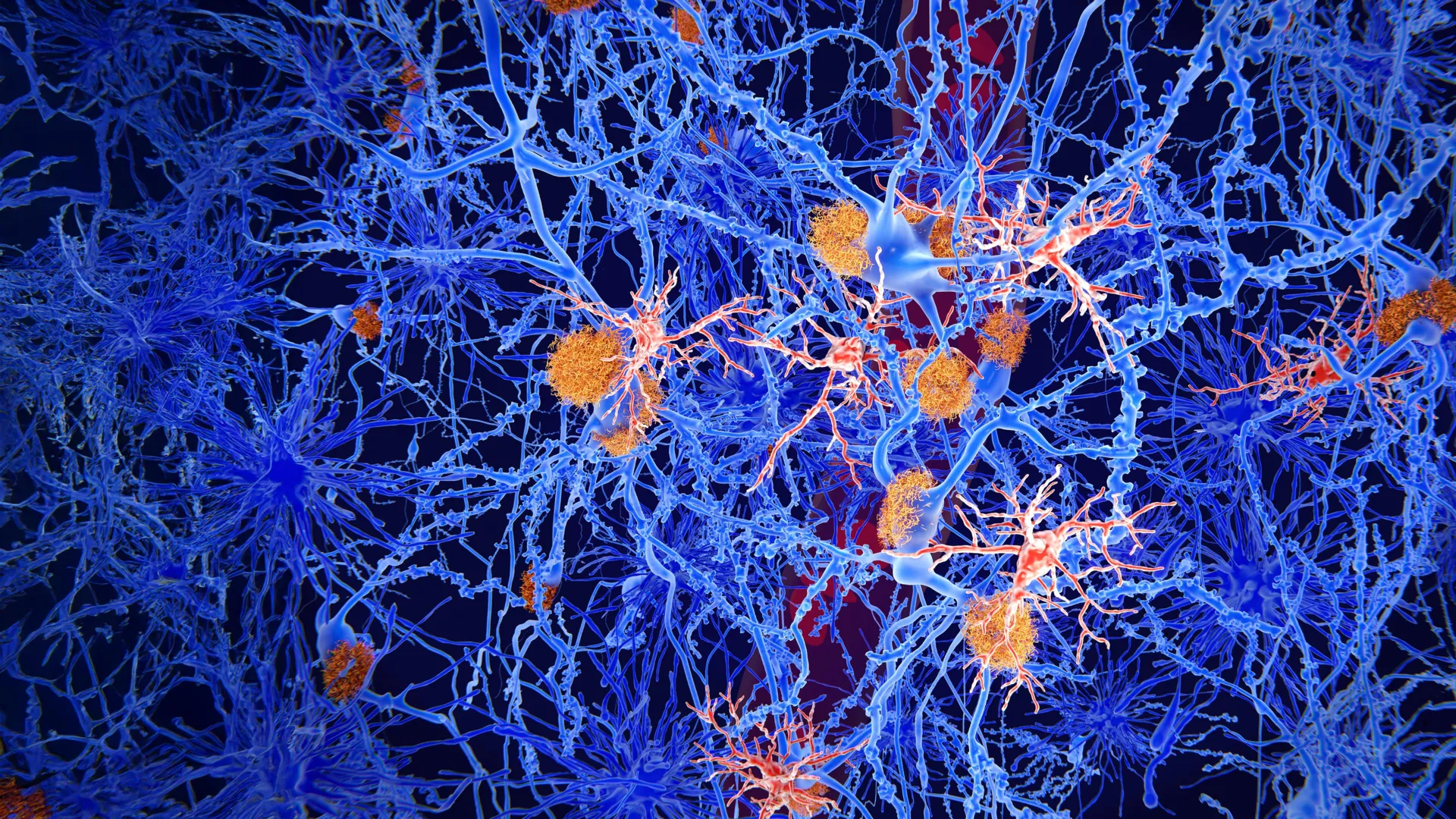
Researchers in Spain and Switzerland have identified an experimental molecule that may help restore the brain’s natural defenses against Alzheimer’s disease. The compound, known as OLE, appears to “reprogram” microglia, the brain’s immune cells, allowing them to regain some of their protective abilities.
The research was led by José Vicente Sánchez Mut of the Institute for Neurosciences (IN), a joint center of the Spanish National Research Council (CSIC) and Miguel Hernández University of Elche (UMH), together with Johannes Gräff of the École Polytechnique Fédérale de Lausanne (EPFL). Their findings were published in the journal Cell Death and Disease.
According to the study, OLE helps microglia surround and contain beta-amyloid plaques, reducing both their size and their harmful effects. In animal studies, the treatment also led to better performance on memory tests.
How OLE Targets Alzheimer’s Disease
One of the hallmarks of Alzheimer’s disease is the buildup of beta-amyloid plaques in the brain. At the same time, microglia, which normally help remove these toxic deposits, gradually become less effective. As their protective functions decline, they can contribute to damage in brain cells.
The researchers found that OLE, a molecule derived from the PM20D1 gene, can shift microglia back into a more protective state. After treatment, the cells moved toward beta-amyloid plaques and surrounded them, creating a barrier that limited contact between the plaques and nearby neurons. This reduced the plaques’ toxic impact on brain tissue.
“One of the most significant findings is that we have identified a molecule capable of restoring microglia’s protective function,” explains Sánchez Mut. “In Alzheimer’s disease, these cells become progressively impaired. Our results suggest that this process can be reversed, pointing to new therapeutic and research avenues to counteract the disease,” adds the researcher, who leads the Functional Epi-Genomics of Aging and Alzheimer’s Disease laboratory at the IN CSIC-UMH.
Testing OLE in Worms and Mice
To evaluate the effects of OLE, the researchers used several experimental models.
The first involved genetically modified worms (C. elegans) that produce beta-amyloid. Because these worms develop disease-related damage quickly, they provide a useful way to study toxicity. Treatment with OLE reduced the buildup of protein aggregates and improved the animals’ movement, indicating a protective effect.
The team then tested the compound in mouse models of Alzheimer’s disease. Mice received OLE for three months, after which researchers examined both memory and brain changes. The treated animals performed better on memory tests and showed fewer beta-amyloid plaques than untreated mice.
Microglia Show the Strongest Response
To better understand how OLE works, the researchers examined the activity of thousands of individual cells in the brain. Their analysis revealed that microglia were the cells most strongly affected by the treatment.
Following exposure to OLE, microglia activated pathways involved in clearing beta-amyloid and regained their ability to move toward plaques and contain them.
“Single-cell analysis allowed us to determine that microglia were the cells that responded most strongly to the treatment,” says Victoria Pozzi, first author of the study. “From there, we observed that the compound helped these cells move toward beta-amyloid plaques and better contain the damage associated with the disease,” adds the researcher.
Additional experiments in cell cultures produced similar results. Microglia treated with OLE were more effective at moving toward beta-amyloid deposits and helping remove them. In separate neuronal cultures exposed to conditions resembling those seen in Alzheimer’s disease, OLE improved cell survival, suggesting the compound may also directly protect neurons.
Potential for Future Alzheimer’s Therapies
The findings are covered by two European patents, including one owned by the CSIC. The researchers say this strengthens the translational potential of the work and supports future efforts to develop therapeutic applications based on the discovery.
The study received funding from the Dementia Research Switzerland — Synapsis Foundation (Switzerland), the Pasqual Maragall Researchers Programme (PMRP) of the Pasqual Maragall Foundation, the Spanish Ministry of Science, Innovation and Universities, the Severo Ochoa Centres of Excellence programme of the State Research Agency (AEI), the Prometeo program of the Generalitat Valenciana, the European Regional Development Fund (ERDF), and the CSIC Interdisciplinary Thematic Platform PTI+ NEURO-AGING. Additional support came from the Swiss National Science Foundation, the École Polytechnique Fédérale de Lausanne (EPFL), the European Research Council (ERC), the National Research Foundation of Korea (NRF), and the European Social Fund (ESF+).