dailynewsnblog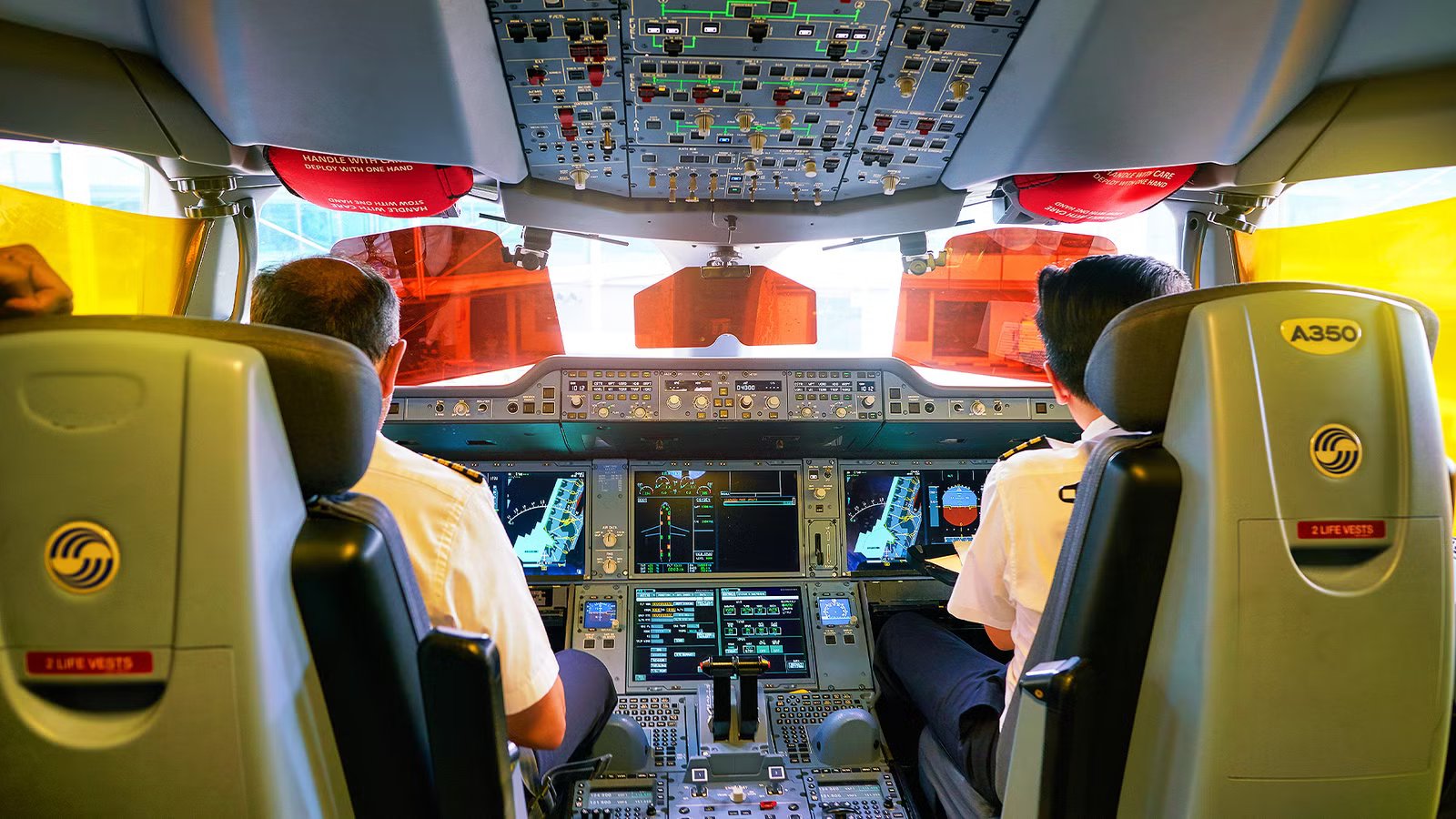
Even in the 21st century, flying an ultra-long-haul commercial jetliner halfway around the globe cannot be completed by one or even two pilots. Despite how far technology has come with the advent of fly-by-wire and advanced autopilot, there are still four pilots required to fly the longest 17-or 18-hour ULH missions. This comes down to the Code of Federal Regulations that limits pilots to flying no more than eight to nine hours in a single duty day under Part 117 and dictates that missions over 17 hours require four pilots aboard.
Takeoff is one of the most important and work-intensive phases of a flight for any airplane. So, while not all four pilots will be on duty for the duration of a ULH mission, the two relief pilots taking the second shift will still be in the jump seats to provide an extra pair of eyes as backup during this critical stage in the journey. The backup crew can contribute by reading checklists and scanning instruments during takeoff, and should an unexpected issue pop up or a legitimate emergency occur, they are already on the flight deck to help out.
ULH widebody airliners are enormous and weigh hundreds of thousands of pounds, requiring constant and meticulous monitoring despite the layers of safety tech and automation. Because of the restrictions on aircrew, widebody jets made for long-haul flying have crew rest areas with two or three bunks just for the pilots to sleep. Some aircraft only require three pilots to complete the journeys across oceans and continents if they can reach their destination in less than 16 hours. Yet, for the longest missions, there will be two captains and two first officers to ensure a jet crossing the globe arrives at its destination safely and smoothly.
Handle With Care: Why Flying The Giants Of the Sky Requires A Soft Touch

The colossal aircraft that fly around the world in a single flight weigh hundreds of tons and are loaded with hundreds of thousands of pounds of jet fuel. These planes are giant fuel depots careening through the sky at just under the speed of sound. The margin for error is razor thin, even in the best of cases. If one should be mishandled by a fatigued crew, it introduces catastrophic risks that threaten not only the plane and everyone on board, but also the general public on the ground, as well as the airline and commercial flying industry.
There are a myriad of concerns for aircrews that train to fly these massive and complex machines. They must consider how, in an emergency shortly after takeoff, an ultra-long-haul plane is too heavy to land safely because of its massive fuel load. Widebody aircraft have immense physical inertia. The pilot takes into account that such a large aircraft does not respond instantly to control inputs. Modern automation can maintain an altitude, but it cannot think. Fatigue acts like a chemical intoxicant, progressively shutting down the higher-order brain functions.
In a serious emergency, the two resting pilots are woken up immediately. This gives the aircraft four highly trained minds to manage the situation. With four pilots split into distinct teams, the two active pilots on duty keep each other sharp through strict cross-checking protocols. While technology and automation handle routine flying tasks, they cannot replace human judgment during a crisis. As Lessons From The Flight Deck wrote, this is exactly why four pilots must be present for takeoff on ULH flights like Qantas’ upcoming ‘Project Sunrise’ route.
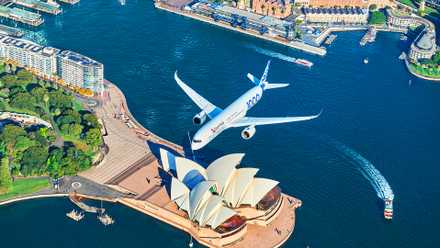
Why The Airbus A350-1000 Is The Only Jet That Can Fly Sydney To London Nonstop
At 10,573 miles (17,015 km), the journey is no mean feat.
Crew Resource Management On The Longest Of Long Hauls

Crew Resource Management on an exceptionally long itinerary is very different from the kind of ‘tactical’ mindset that pilots flying short to mid-range hops between busy hubs have when they are at the controls. ULH is an endurance mission that requires constant vigilance, discipline, and professionalism to ensure every flight goes off without a hitch. Because a four-pilot crew will spend many hours together, the CRM process begins long before the engines start. The planning process is significantly longer than that of many other commercial flights, reflecting the intensity of the task for every aircrew that embarks on a long-range jetliner.
Paradoxically, one of the greatest hazards in modern ULH flying is not high stress, but extreme boredom during the 14-hour mid-flight cruise phase over oceans. There are a number of productive measures used by crews to actively engage in cognitive tasks to keep their brains stimulated. Some examples include periodic fuel-burn verifications, cross-checking alternative flight paths, and conducting technical ‘what-if’ scenario discussions about diversions or emergency procedures. Sometimes pilots will take a nap in the cockpit seat for 20 to 30 minutes as well if they are truly exhausted before beginning the scheduled rest time.
Crews are explicitly trained to openly admit to their colleagues when they are experiencing cognitive fog, slow reaction times, or a wave of fatigue. However, because fatigue impairs a person’s ability to recognize their own decline, CRM strategies require pilots to actively monitor each other for signs of fatigue. If a junior first officer notices a highly experienced captain making minor errors during a late-flight approach, the CRM culture empowers the junior pilot to step in, question the action, or take the controls without fear of professional backlash.
The Real Reason Pilots Sometimes Fly A Longer Route On Purpose
The actual flight path an aircraft flies is determined by several factors ranging from efficiency to flight safety and even geopolitics.
Case Study: Qantas’ Project Sunrise

Today, Qantas is pursuing a historic goal of establishing the world’s longest commercial itinerary. Australia’s top airline aims to begin service next year from Sydney International (SYD) on the East Coast of Australia, directly to New York JFK Airport (JFK) and London Heathrow (LHR). Airbus is building a special A350-1000ULR variant, which is a scaled-up version of the A350-900ULR that has successfully been flying for Singapore Airlines on what is currently the longest scheduled flight on the planet. The Qantas jet will fly two to four hours longer on its mission and require four pilots total.
Project Sunrise is expected to take 20 to 22 hours, depending on whether the destination is New York or London, and which direction it is flying, to or from Australia. The itinerary flown by Singapore Airlines from JFK to Changi International (SIN) tops out at around 18.5 hours currently. The Qantas route will be roughly 1,000 miles (1,609 km) longer and take nearly a full day cycle to complete from takeoff to touchdown. Because of how much this mission exceeds the world’s longest revenue flight already, many special provisions are being made.
Catch what other flight trackers miss
Emergency squawks, holds, NOTAMs — live signals, no signup.
Open tracker
Catch what other flight trackers miss
Emergency squawks, holds, NOTAMs — live signals, no signup.
Open tracker
A standard A350-1000 holds between 350 and 410 passengers. Qantas has aggressively slashed this to just 238 seats. The flight crew rest compartment will be located in the upper crown of the jet’s roof and physically separated from the already stripped-down cabin to make it the quietest and most restful place possible. It is expected to be equipped with two fully flat full-length berthing bunks. The RCRC will be outfitted with tailor-made ergonomics and warm-toned lights to encourage sleep, as well as blue-wavelength light to help the pilots wake up.

The Aircraft Set To Replace The Largest Quadjet In The World
The A380 is no longer a viable aircraft in many airline’s fleets.
No Compromise Flying: Quantity And Quality

Qantas will staff the A350-1000ULR jets with highly experienced aircrew to ensure that Project Sunrise is both safe and smooth every time the bespoke widebody takes flight. Instead of using junior second officers as relief pilots, the four-pilot “heavy crew” structure will rely heavily on two fully qualified captains and two experienced first officers. The roster will split the 22-hour time block into operational blocks of a few hours. The crew will rotate so that no individual pilot is at the active controls, so that every pilot receives two distinct opportunities to sleep in the bunk.
The sheer endurance required of the pilots has been a major factor in the development of Project Sunrise. Qantas has worked with the Australian and International Pilots Association to establish a unique op-tempo. The planning phase mandates a clear window of 48 to 72 hours of local time zone rest before a pilot can step onto a Sunrise flight. After they touch down, the pilots will be instructed to take a similar amount of time off in the local area before they can return for duty and fly another ultramarathon mission around the globe.
Implementing a data-driven fatigue risk management system is critical for Project Sunrise because a single catastrophic error on a historic, high-profile mission would permanently damage the airline’s reputation. As has happened in the past with examples like the Concorde, one tragic mishap can devastate public trust in air travel and also influence the airspace permissions granted for future routes. The FRMS protects the pilots’ executive functioning skills to ensure that the human in the loop is there to guarantee that the jet and every soul aboard is safe at all times.
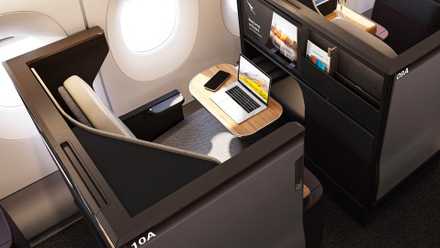
Only 238 Seats: What Qantas Sacrificed To Make 22-Hour Nonstop Flights Possible
Project Sunrise flights are coming soon.
Numbers Game: Four Pilots Are Better Than Two

On top of being required for compliance with ULH regulations to ensure the safety of flight, four pilots make the plane more efficient than trying to push a skeleton crew to the limit of what is legally allowed. With four pilots, the crew splits into two independent, two-pilot teams. Rescheduled rest time matches normal human sleep architecture, ensuring everyone gets deep, restorative sleep. Whereas in a three-pilot operation, the pilot rotation is a rolling cycle.
On a 20-hour flight with three pilots, only one pilot can sleep at any given time to maintain a two-pilot cockpit. If you divide the cruise time evenly, each pilot gets roughly 6.5 hours of bunk time. However, this must be split into multiple short breaks, leaving pilots with fragmented, low-quality sleep that fails to provide restorative REM cycles. A four-pilot crew eliminates this hazard through a clean break in shifts. Plus, if an emergency occurs 18 hours into the flight, like an engine failure or a severe medical crisis, a four-pilot crew can bring all hands on deck.
Midway through a Project Sunrise flight, Team A steps into the cockpit to relieve Team B. A well-rested two-pilot team has the mental energy to actively optimize their flight path, coordinate with air traffic control, and adjust speeds to save fuel. Unlike a fatigued crew, which is more likely to default to passive, rigid flight paths just to minimize their workload. Saving fuel on a 22-hour flight requires constantly analyzing shifting global jet streams and adjusting altitudes, which demands critical thinking and decision-making that considers a long list of variables.
Then there is also the benefit that because the crew gets better sleep on board, pilots recover much faster once they land. This protects their long-term health and allows the airline to build a more predictable, reliable, and sustainable long-haul roster. Otherwise, the physical toll of ultra-long-haul flying can cause chronic sleep deprivation, immune suppression, and early career burnout, which would only serve to hurt the airline, considering the global pilot shortage.