dailynewsnblog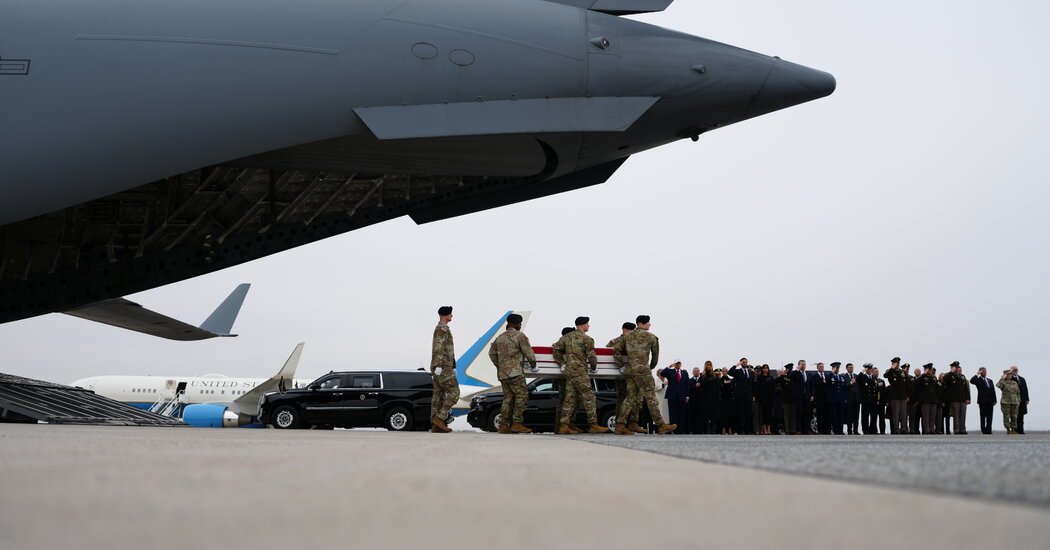
The war against Iran lasted just over 15 weeks before a preliminary U.S.-Iranian peace deal was reached this week. But the human and economic toll mounted rapidly, with consequences far beyond the region.
Facing pressure at home and abroad, President Trump announced on Monday that he and Vice President JD Vance had electronically signed a document with the Iranians formally ending the war, which began on Feb. 28 when the United States and Israel attacked Iran.
On Wednesday, the president signed the agreement again in France at the Palace of Versailles, where an ill-fated treaty was signed to end World War I more than a century ago.
The costs of the war are still being tallied as a 60-day period for further negotiations begins. Here is what we know.
More than 3,000 Iranians were reported to have been killed in the conflict. Israel says 26 Israelis have been killed. Thousands of people in both countries have been injured.
The U.S. military says 13 of its members have been killed.
Israel renewed attacks on Lebanon on March 18 as part of the wider war, and about 3,700 people have been killed there, according to Lebanon’s health ministry.
Strikes, mainly by Iran, have also killed people across the Middle East, including workers from South Asian countries in the Persian Gulf.
The U.S. military killed three Indian civilian sailors in a strike on a commercial ship near Oman, raising tensions between the United States and India.
In the deadliest known civilian casualty incident, a U.S. missile strike demolished an Iranian school, killing at least 175 people on the first day of the war, according to Iranian officials.
Financial Costs
Iran’s economy was already deeply troubled before the war. But now it is in free fall. Prices for food and other basic goods have skyrocketed, and daily life is a struggle.
The scale of devastation has been great, with hundreds of schools and health care facilities damaged or destroyed in the war, according to the Iranian Red Crescent Society, the country’s primary humanitarian relief organization.
For U.S. taxpayers and consumers, the cost of the war is at least $132 billion, according to an estimate by Moody’s Analytics. That factors in military spending, rising energy and commodity prices and interest rates, said Mark Zandi, the company’s chief economist.
A top Pentagon official told Congress last month that the cost had risen to around $29 billion for the military. That estimate did not include the price of repairing more than a dozen U.S. bases in the region damaged by Iranian attacks.
The costs of repair and maintenance, as well as keeping carrier strike groups at sea, also need to be factored in. “It costs a lot of money to just keep everyone and all this apparatus deployed there,” said Linda Bilmes, a public finance expert and senior lecturer at the Harvard Kennedy School.
Iran also severely damaged other U.S. assets in the region, including a valuable military radar jet on a tarmac in Saudi Arabia and the U.S. Embassy compound in Riyadh.
Energy Prices
Americans have paid roughly $60 billion more for gasoline and diesel since the conflict began as a result of higher prices, according to an Iran War Energy Cost Tracker from Brown University. That’s about an extra $460 per household.
When the United States and Israel started the war with Iran, Americans were paying, on average, $2.98 a gallon at the pump, according to AAA, the motor club.
Since then, gas prices have seen large spikes and are now around $4 a gallon.
Oil prices surged when the Iranian military attacked some commercial ships in the Strait of Hormuz, a vital passageway for shipping. That disrupted the global flow of petroleum. Crude oil is the main ingredient for gas.
The global benchmark for crude oil has dropped since a peace agreement framework was announced days ago. It is currently near $80 a barrel. At one point in March, prices climbed to around $120 a barrel.
Those high fuel prices have trickled down the chain and inflated many other costs tied to fuel, like airline fares and the transportation of commodities and manufactured goods.
Disruptions to global trade from the closure of the Strait of Hormuz have squeezed prices of commodities such as sulfur, a key ingredient of certain fertilizers.
A Council on Foreign Relations report earlier this month by Máximo Torero Cullen, the chief economist of the Food and Agriculture Organization, said the disruptions in the strait would have consequences that “extend well beyond agriculture, threatening higher food prices, higher food inflation, reduced economic growth and increased hunger worldwide.”
Farnaz Fassihi contributed reporting.