dailynewsnblog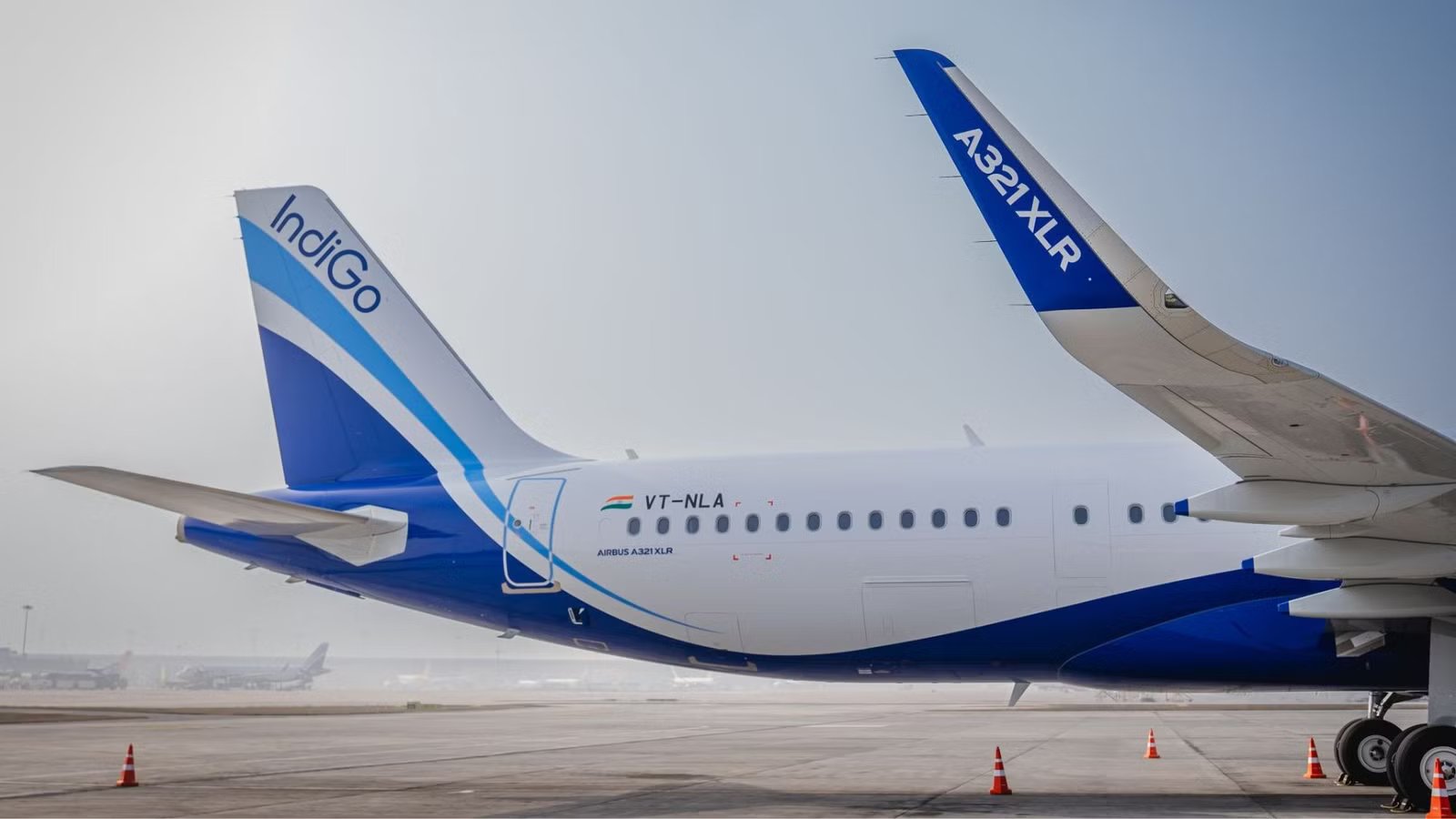
 IndiGo is preparing to launch two new nonstop routes to Bali, marking another important step in the airline’s international evolution. The carrier will begin operating direct services from
  Delhi Indira Gandhi International Airport (DEL) and
  Mumbai Airport (BOM) to Ngurah Rai International Airport (DPS) using the Airbus A321XLR, replacing current one-stop operations served by A320neo aircraft. The routes, reported by AeroRoutes, are expected to record block times of up to seven hours and 55 minutes on westbound sectors back to India, placing them among the airline’s longest narrowbody flights.
The announcement reflects a broader transition underway at India’s largest airline. The airline states it currently operates 2,200 daily flights, connecting 141 destinations and controls the largest share of India’s domestic aviation market. Historically built around high-frequency short-haul flying, the airline is now using long-range narrowbody aircraft to enter markets that previously required widebody economics. At the center of this strategy sits the A321XLR, a single-aisle aircraft capable of flying up to approximately 8,700 km (4,700 nautical miles).
Bali Nonstop Represents What The A321XLR Was Built For

The Delhi–Denpasar and Mumbai–Denpasar routes fit perfectly into the market category Airbus envisioned for the A321XLR. These are sectors with strong demand but not necessarily enough year-round traffic to support larger aircraft such as the Boeing 787 or Airbus A330. Instead of deploying a widebody with several hundred seats, airlines can use a lower-capacity aircraft while still maintaining nonstop connectivity.
Economics has also become more attractive. IndiGo’s A321XLR features a 195-seat dual-class configuration with 12 Stretch premium seats and 183 economy seats. By comparison, several of the airline’s standard A321 aircraft operate with 220–232 seats in all-economy layouts. The lower seat count creates additional space for fuel and improved passenger comfort while enabling long-range operations.
The current one-stop services operated on the airline’s A320neo allowed IndiGo to maintain a network presence, but they also increased total travel time and introduced an additional operational layer. Moving to a direct service significantly changes the passenger proposition. Travelers generally value shorter travel times and reduced transit inconvenience, especially on journeys approaching eight hours. In the original route launch press release, Mr. Vinay Malhotra, Head of Sales, said:
“At IndiGo, our endeavour is to make travel more accessible, seamless, and affordable, while continuing to strengthen our footprint. We are certain that customers will appreciate having these increased options to fly, with India’s preferred carrier, to Bali.”
Europe Routes Reveal the Challenges Behind Long Narrowbody Flying

While Bali represents one of IndiGo’s longest planned sectors, it is not expected to become the carrier’s longest A321XLR mission. That award belongs to the airlines’ XLR launch routes, Delhi–Istanbul Airport (IST) and Delhi–Athens International Airport (ATH), where block times can approach approximately 8 hours and 45 minutes due to current diversions around Pakistan and Iran airspace.
Route distance only tells part of the story. Aircraft performance calculations are increasingly affected by real-world operating constraints. Airspace closures and geopolitical tensions across parts of West Asia and surrounding regions have forced airlines to operate indirect routings on some flights. Rather than flying close to the shortest great-circle path, aircraft often need to take longer routes that increase flight times and fuel burn.
Catch what other flight trackers miss
Emergency squawks, holds, NOTAMs — live signals, no signup.
Open tracker
Catch what other flight trackers miss
Emergency squawks, holds, NOTAMs — live signals, no signup.
Open tracker
This creates an important operational challenge. Longer flight durations increase fuel requirements, affect payload flexibility, and place greater pressure on aircraft utilization. A route that may appear comfortably within range on paper can become more complex when weather conditions, winds, and route restrictions are added. The Bali routes, by contrast, benefit from comparatively straightforward routing through Southeast Asian airspace, potentially making them easier for missions despite their duration.
IndiGo Confirms Details Of First Airbus A321XLR Routes
India’s largest airline will fly three times weekly to Athens from both Mumbai and New Delhi.
The A321XLR Is Becoming IndiGo’s Long-Haul Experiment Platform

IndiGo’s broader fleet plans suggest that the A321XLR is intended to become far more than simply a niche aircraft type. The airline has placed firm orders for 40 A321XLR aircraft, with nine deliveries expected during 2026 alone. The aircraft are expected to support expansion towards Europe and East Asia as the network develops.
The XLR gives IndiGo something airlines increasingly value: the ability to test markets at lower risk. A carrier no longer needs to commit a 300-seat widebody aircraft to determine whether a route can succeed. Instead, destinations can be introduced gradually and scaled later if demand grows. That flexibility is especially valuable in emerging international markets where demand patterns continue to evolve.
Loading map…
Drag to explore
The long-term implications could be significant. IndiGo has indicated that international routes could account for approximately 40% of its network by 2030, compared with a business that historically relied heavily on domestic traffic. If routes such as Athens, Istanbul, and Bali perform strongly, the A321XLR may become the bridge that allows the airline to transition from a regional giant into a truly global network carrier.