dailynewsnblog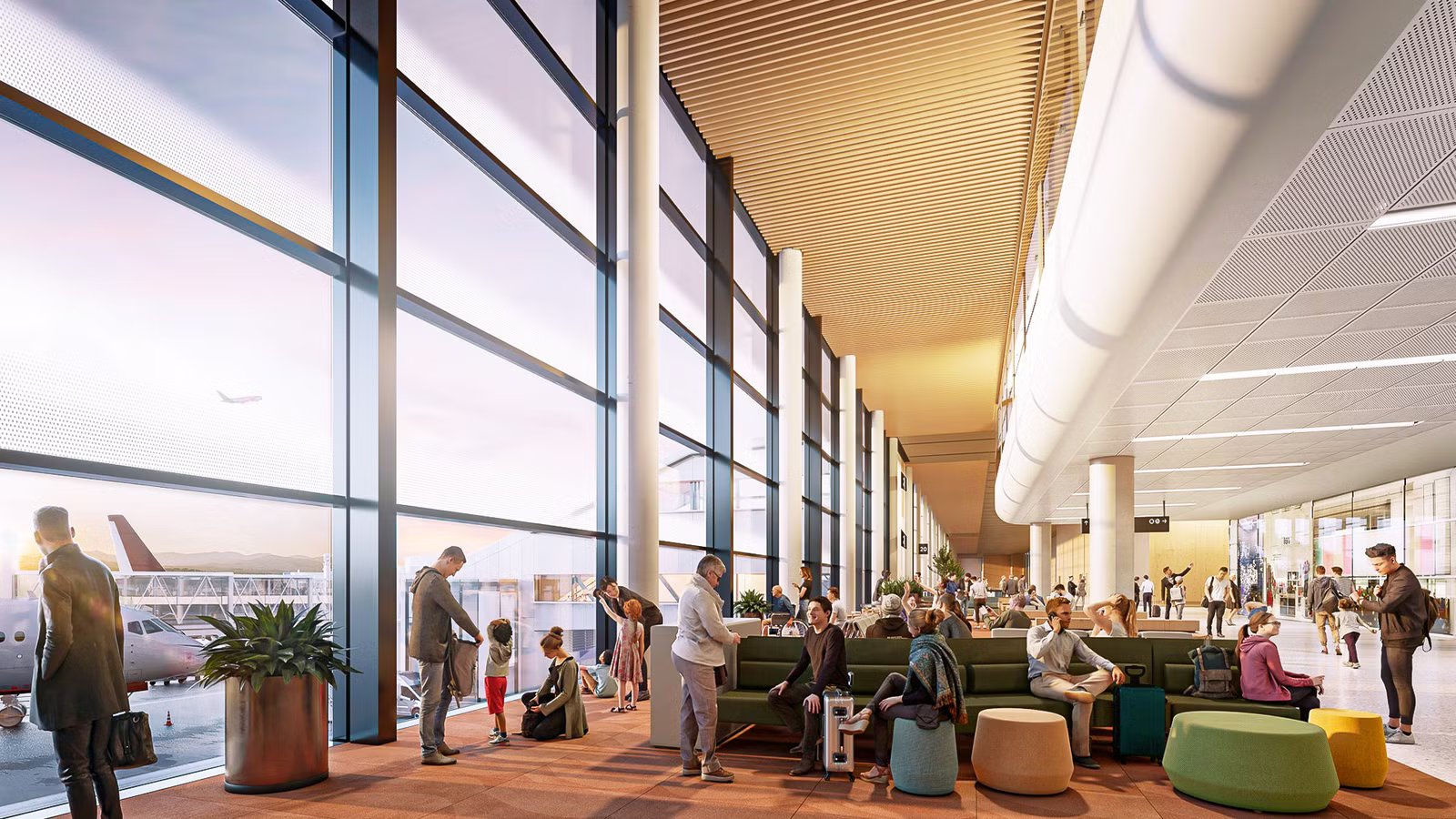
Western Sydney Airport (WSI) will be Australia’s first major greenfield airport in more than half a century when it opens later this year. Besides  Sydney Kingsford Smith Airport (SYD), the new site promises to drastically increase capacity around one of Australia’s most populous cities. Most importantly, the airport will operate without curfews, meaning flights at all hours of the day, unlike its established counterpart.
Current commitments are for just 15 aircraft to be based at the brand-spanking-new hub, all of which will come from Qantas Group. These will all be narrowbody jets serving domestic routes, with ten flying under Jetstar Airways colors and the remaining five coming from its parent Qantas. With just a handful of aircraft actually set to call the new airport home, and all of these in the hands of one ultimate parent company, Western Sydney is in many ways being purpose-built under Qantas’ own watchful eye.
Qantas’ Early Involvement In Western Sydney

Back in 2019, Western Sydney entered into a memorandum of understanding with both Qantas, and Virgin Australia Group that would “see the airlines provide insights into designing and planning.” At the time, the airport said there would also be discussions about future Qantas, Jetstar, Virgin Australia, and TigerAir services from the hub. Fast-forward to today, and Qantas is the only one of the two to have set a deal in stone for aircraft to be housed at the airport.
Both appeared set to reap the rewards of getting involved early, though. Virgin Australia boss Paul Scurrah hailed the “chance to collaborate early in the planning phase” upon putting pen to paper with Western Sydney. In the meantime, Qantas chief executive Alan Joyce commented: “It is not often you get to help design an airport from scratch, so we’re really pleased to be part of it.”
How much Qantas has actually influenced the airport’s development is tough to quantify. But Joyce joining Prime Minister Anthony Albanese and Western Sydney chief executive on a tour to mark the airport’s 50% completion mark in 2023 would imply this has not been insubstantial. It was at this point that Qantas announced it would station the 15 aircraft fleet there. Late the following year, another deal saw Qantas Freight become the first courier signed up to serve the airport, in a move Western Sydney said “strengthened” the duo’s “strategic partnership.”
“Build It, And They Will Come”

So there is little doubt that Qantas has frequently popped up in one way or another throughout the construction of the airport, with ground broken in 2018. In practice, this means Western Sydney has not been developed with the classic “build it, and they will come” mentality that has historically governed greenfield airport design. Instead, Western Sydney has, to some extent at least, been purpose-built to cater for Qantas’ ambitions.
Indeed, under the memorandum of understanding with Qantas and Virgin, Western Sydney laid out a range of features where the airlines would have a say. These included: the passenger terminal and boarding facilities; technology and innovation, “particularly around” baggage handling, security and customer service; airport access, like train stations, parking, and ride-share facilities; air freight and cargo facilities; and finally, sustainability elements, such as resource reuse and recycling. Upon his tour with Albanese, Joyce later referenced Western Sydney’s “big strategic advantages,” including its lack of curfew, but also “technology that allows aircraft to be turned around quickly and a next-generation baggage system” – features specifically said to have had the airlines’ input.
This close collaboration between airports and carriers at the point of development is not something that Western Sydney has pioneered on its own. Where such planning has proven successful elsewhere is  Munich Airport (MUC). Here, Terminal 2 Satellite was built through a joint venture between the airport and
  Lufthansa to specifically serve the flag carrier and its Star Alliance partners. Combined, the two invested approximately €900 million ($1.04 billion), according to Munich. About 93 million passengers had used the facility through around 672,000 flight movements as of its ten-year anniversary in April, equating to roughly 36% and 30%, respectively, of Terminal 2’s total over the period. Such was its success that Skytrax has since granted a top five-star rating for the satellite terminal.
Here’s Why Australia’s New 24/7 Airport Is Reshaping Airline Schedules Before It Even Opens
The airport will encourage more dynamic flight operations.
Singapore And Air New Zealand Also Signed Up

Qantas and Western Sydney will therefore be hoping for similar results to those seen in Munich. But Qantas should not be the only airline to benefit if so. As mentioned already, Virgin signed a memorandum with Western Sydney, alongside Qantas, following a previous commitment to fly from the airport.
Western Sydney has also attracted international carriers Air New Zealand and  Singapore Airlines. The former plans to operate three return services a week from October, when the airport is due to open, with these originating from
  Auckland Airport (AKL). Singapore, meanwhile, will run daily flights to and from Singapore Changi Airport (SIN) come November, to complement the four that already land at Kingsford Smith.
Both have already begun selling tickets for the connections and should soon join Qantas and Jetstar in utilizing Western Sydney after its official opening. Obviously, neither will base aircraft on site, though, and given Joyce and Qantas’ seemingly close ties to the project and to Albanese, there is an argument to be made that the Australian carrier has held far more clout than its peers in terms of development at the site.
Western Sydney International Airport Itself

Western Sydney has positioned itself to ultimately become a mega hub for global aviation and even Australia’s largest airport. Thanks to its greenfield location at Badgerys Creek, around 27.3 miles (44 km) west of Sydney’s central business district, ample space has been left for future expansion. But it will take time for the airport to reach its planned maximum capacity, and the hub we will see from October is likely to be far from the finished product.
Initially, capacity at the airport will be limited to up to ten million passengers annually. This will equate to less than a quarter of the 42.54 million that passed through its counterpart, Kingsford Smith, in 2025, for context, so the airport will have a way to go before claiming the title as Australia’s largest.
Under this first phase, Western Sydney will be served by one 2.3-mile (3.7-km) runway and have one terminal for handling both domestic and international flights. Major construction work on both of these, along with airside facilities and supporting infrastructure, has already been completed, according to the airport. The likes of cargo and business precincts, as well as a fire station, are also said to be in the works during initial development.

How To Navigate Sydney Kingsford Smith: The Busiest Airport In Australia
How you can ensure your journey through Australia’s busiest hub is stress-free and easy.
Ambitious Plans For Expansion

At 4,398.5 acres (1,780 hectares), the site on which the airport sits has been picked to allow room to build further over the decades ahead. Under its master plan, Western Sydney has said that expansion will take place in stages as demand increases.
The single-runway layout is set to remain in place over the medium term, through around 2045 as a result. Notably, the terminal is expected to be extended to fill the airport’s “midfield” during this time, as demand for capacity grows. This will eventually leave “a single building with four interconnected passenger processors,” capable of handling 37 million passengers and 226,000 air traffic movements a year.
In the longer term, a second parallel runway is anticipated to cope with demand. Western Sydney notes that the need for this will arise around the 2050s. Further expansion of the terminal, alongside cargo and business areas, is also planned. These, in turn, should push capacity to approximately 82 million passengers and around 370,000 total air traffic movements come 2063.
Qantas Key In Western Sydney’s First Years

Why Western Sydney appears to have, in part, been purpose-built for Qantas Group’s seemingly small fleet is, realistically, simple when the numbers are considered. Of the ten million passengers the airport will be able to handle annually at first, around four million will be served by the 15 Qantas and Jetstar aircraft based on site. These will collectively make over 25,000 flights each year, facilitating some 700 operational jobs.
This means Western Sydney and its owner, the Australian Government, have been able to guarantee a hefty chunk of that initial capacity will be accounted for through a single deal. Add in the potential Virgin aircraft, and the airport may not have to look much further for carriers at first. On Qantas’ part, the commitment has effectively meant first dibs and input on a site that should expand massively over the coming years. So the benefits go both ways.
For its first flights, Jetstar will kick off operations in October, before Qantas-branded aircraft move into Western Sydney early next year. Two daily services to Melbourne, as well as four flights to the Gold Coast and three to Brisbane each week, will make up some of the inaugural services from Western Sydney. Whether more will be added over time, we will see, but as Joyce put it: “Jetstar has a long history of stimulating demand when it starts flying to new destinations through low fares.”