dailynewsnblog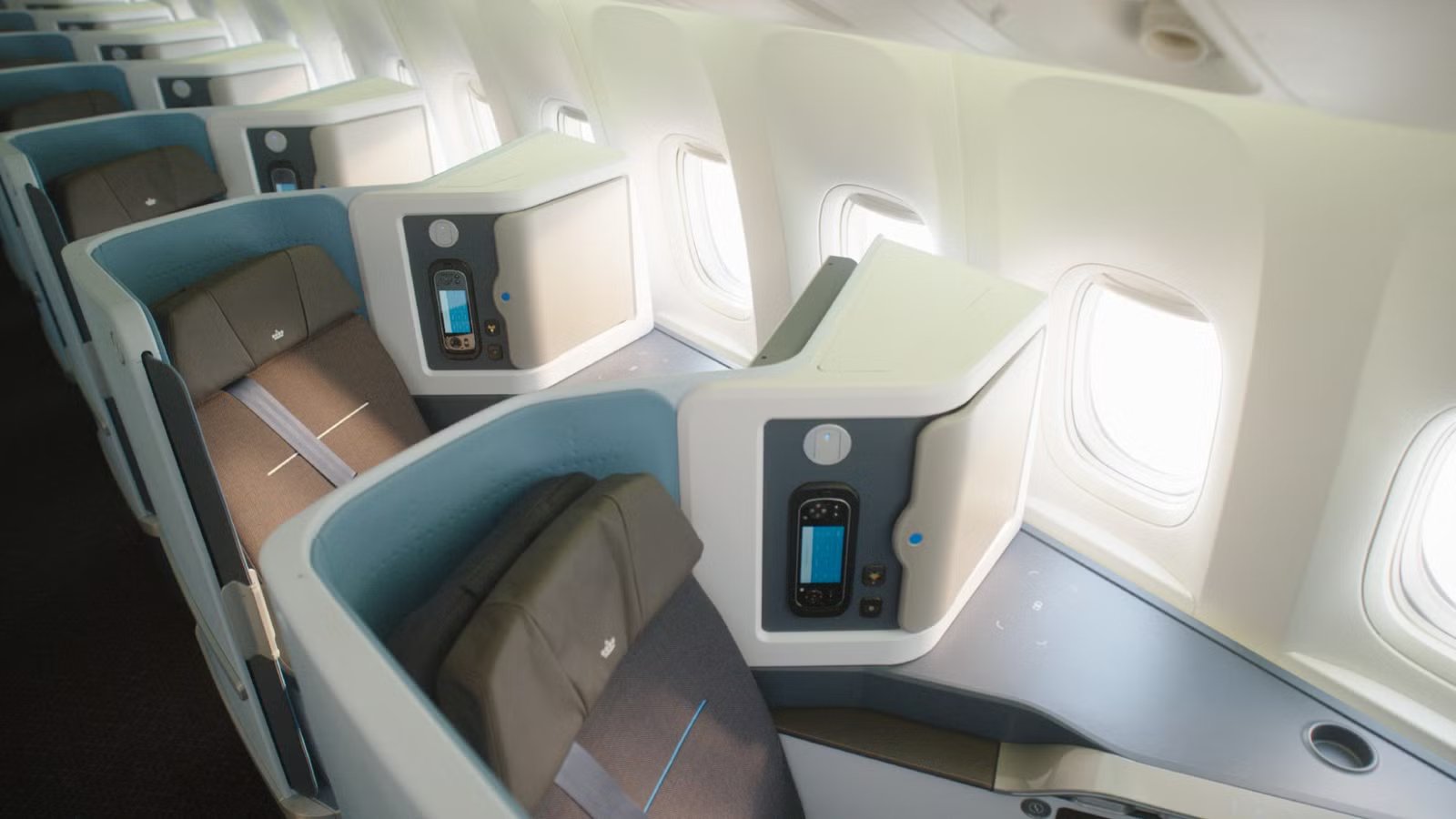
The flag carrier of the Netherlands, KLM, is facing some headwinds as it works to roll out its new Airbus A350 next generation widebody jets that will replace the legacy A330 and Boeing 777 twin-aisle jets. Some hiccups with the regulatory provisions for the 34 seats in World Business Class mean that they will not be immediately available after the first A350 begins service.
The aircraft is highly anticipated and marks a new era in the airline’s tradition, bearing the name of the famous Rembrandt painting ‘The Night Watch,’ as will the others in future deliveries be named after other famous Dutch artworks. The aircraft’s inaugural flight is destined for Toronto Pearson International Airport (YYZ) in Canada, but it isn’t clear when the WBC section will be unsealed.
The Xtra Wide Body KLM Roll Out

KLM announced that at least the first two airplanes would both have the business class cabin sealed due to the revision of regulatory requirement interpretations by aviation authorities. The airline said that the seat manufacturer is working hard to complete recertifications as quickly as possible to make the WBC seats available to customers in the shortest time it can. In lieu of the business class, the first flights will offer premium comfort seats with more leg room, comfort features, and an elevated dining experience.
The initial A350 delivery represents the first installment in a €7 billion fleet renewal plan. The first destinations for the new A350 Xtra Wide Body jets follow the historical trend of previous KLM airframe rollouts, targeting popular destinations in North America before expanding to the wider international network. Alongside these large long-haul airliners will be A350F cargo variants as well as the latest Airbus A321 Neo aircraft and Embraer 195 E2 for KLM Cityhopper.
KLM gave this statement in its press release preceding the debut of the new jet:
“Due to a revised interpretation of regulatory requirements by the aviation authorities, certification of the World Business Class seats has not yet been completed. As a result, these seats will unfortunately not be available when the first two aircraft enter service.”
Catch what other flight trackers miss
Emergency squawks, holds, NOTAMs — live signals, no signup.
Open tracker
Catch what other flight trackers miss
Emergency squawks, holds, NOTAMs — live signals, no signup.
Open tracker
Other Major Carriers Afflicted By Slow Certification

The delay behind the opening of the WBC cabin in the new KLM A350s is not a unique issue; in fact,  Delta Air Lines has also experienced a similar issue with its A321 Neo ‘premium heavy’ single-aisle airliners. The new planes also suffer from a certification issue due to differing interpretations of safety and structural regulatory requirements among aviation authorities. Just like the KLM A350 widebodies, the A321 Neo narrowbodies have not been able to get the lie-flat business suites fully approved.
The two airlines are taking a different approach to solving the problem, as KLM is simply blocking out the entire cabin, thereby taking a significant revenue loss on each flight. Delta chose to swap out the unapproved seats for 44 first class recliners already certified as a temporary measure. Looking back to Europe, however,  Lufthansa has also had to block out many seats on its new Boeing 787 Dreamliners.
In October 2025, SF reported that over a dozen new 787-9 Next Gen widebodies were grounded at the Boeing factory in South Carolina due to certification issues over the new Allegris business class suites. The airline decided to continue and take delivery despite the fact that it can only sell the front row of business class seats under the current regulatory limitation. Notably, the first example of the new Allegris-equipped airframes also debuted on a route bound for Toronto.

Premium Hold-Up: Why Airlines’ Luxury Seats & Suites Are Failing FAA Safety Tests
Airlines are being called upon to involve regulators earlier in the design process to provide sufficient recommendations.
The 2026 Airline ‘Premiumization’ Arms Race

There is a race among airlines all over the world to ‘premiumize’ in the wake of the COVID-19 travel lockdown, which has seen a powerful resurgence in flyers since restrictions ended. One of the most notable trends in the post-pandemic air travel market is the increasing preference for luxury flying experiences. This has prompted operators all around the world to begin cabin refresh campaigns and introduce a host of new features that modernize inflight entertainment, seat spaces, and privacy, as well as amenities to make the journey more enjoyable.
The Federal Aviation Administration and the European Union Aviation Safety Agency must approve all of these aircraft cabin designs to perform revenue service. Regulators struggle to keep pace with the introduction of increasingly complex seat designs that feature a long list of integrated technology alongside novel designs with multiple sliding partitions and increasingly lightweight materials. To ensure the aircraft is safe in an emergency situation, all of these designs are supposed to withstand crash testing forces up to 16 G’s.