dailynewsnblog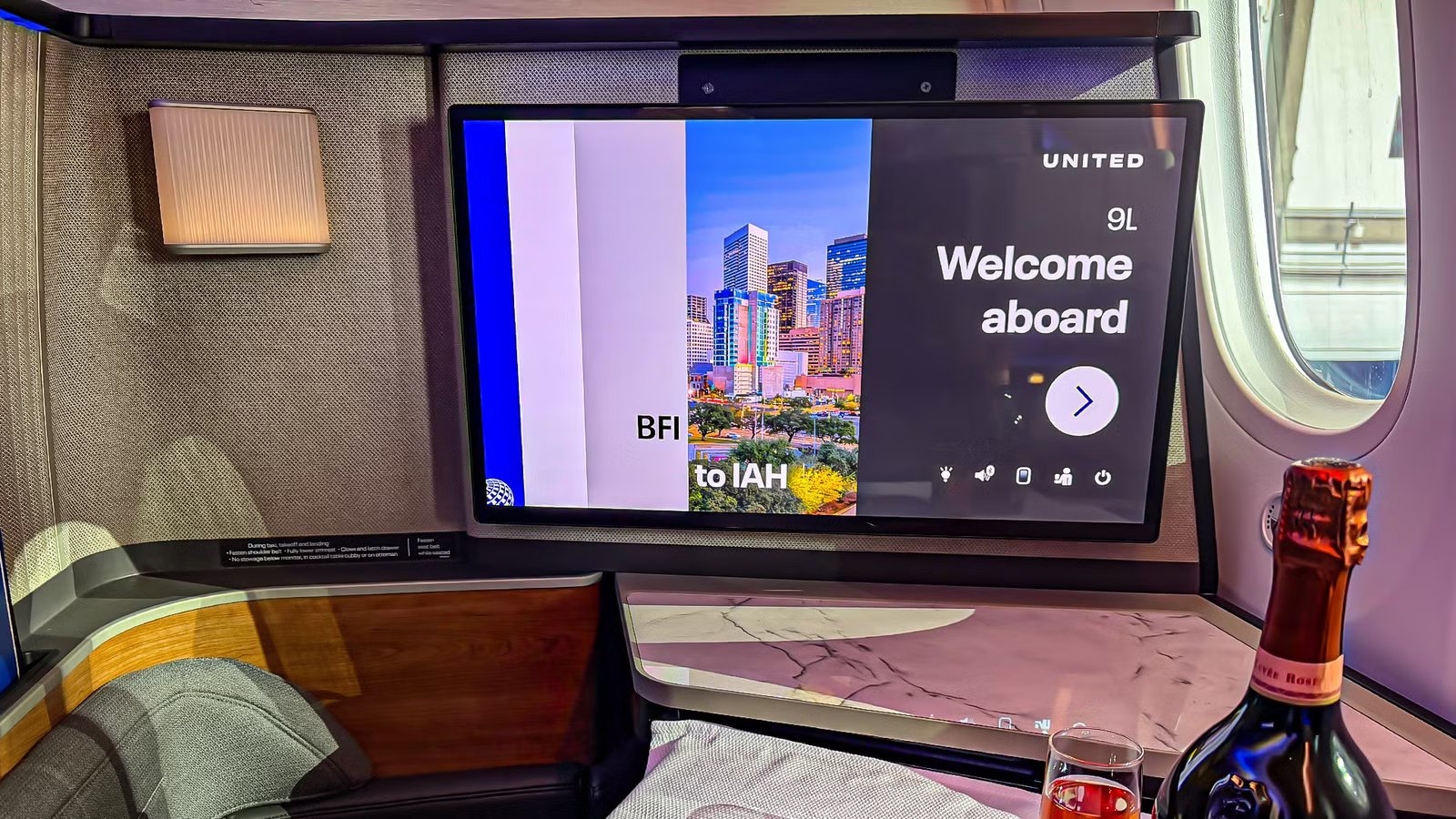
 United Airlines has spent years refining its Polaris business class product in an effort to remain competitive in the increasingly crowded premium long-haul market. The carrier regularly highlights its Saks Fifth Avenue bedding, upgraded amenity kits, elevated dining, and lounge facilities as key differentiators, while marketing materials emphasize the comfort and exclusivity that passengers receive when traveling in the cabin
What United Airlines does not disclose, however, is how much all of these amenities actually cost on a per-passenger basis. That absence of hard data is important because there is no official United Airlines figure that breaks down Polaris amenity spending for each traveler. Neither company filings nor public announcements reveal the unit economics behind the experience.
As a result, any estimate must be assembled from publicly available information about the products offered onboard, secondary-market pricing, and industry assumptions regarding reusable and consumable items. While no exact figure can be verified, the available evidence provides a useful picture of where United’s Polaris amenity spending is likely concentrated.
United Does Not Publish A Per-Passenger Polaris Amenity Cost

United Airlines, Simple Flying
The starting point for any discussion about Polaris amenity spending is acknowledging that the real number is not public. United Airlines has extensively documented what passengers receive in business class, announcing partnerships with brands such as Saks Fifth Avenue, Therabody, Sunday Riley, and, more recently, Perricone MD. The airline also promotes upgraded bedding, premium dining, and lounge access as part of the overall Polaris experience.
What remains absent from every announcement is any indication of what those amenities cost the  Star Alliance carrier on a per-passenger basis. This is hardly unusual within the airline industry, where carriers rarely disclose detailed catering or onboard service costs.
Instead, airlines typically focus on the customer-facing value of amenities rather than the procurement and operational expenses behind them. Because of this, any attempt to calculate Polaris amenity spending does not produce a definitive figure, but it does create a framework for understanding where United Airlines’ spending is concentrated and why some amenities matter far more than others from a cost perspective.
What United Airlines’ Relax Row Economy Beds Actually Cost Vs Premium Economy On Long-Haul Flights
The sky bed offers economy passengers a cheaper sleep-focused alternative to Premium Plus on long-haul international flights.
The Polaris Seat Comes With A Surprisingly Extensive Collection Of Amenities

One reason travelers often assume Polaris amenities are expensive is the sheer volume of products available during a flight. Beyond the seat itself, the carrier’s business class passengers receive a collection of comfort-focused items that compare favorably with many international competitors. Current Polaris passengers are offered Saks Fifth Avenue bedding that includes a duvet, a large pillow, and an additional cooling gel pillow.
United Airlines repeatedly highlights the fact that it is the only US airline providing two pillows in business class – not even its rivals  American Airlines and
  Delta Air Lines offer the same. Travelers can also receive mattress pads on request, while slippers are generally available throughout the long-haul network, and on flights exceeding 14 hours, pajamas may also be provided upon request.
The amenity kit itself has undergone several redesigns over the years, and the latest version is supplied in partnership with Therabody and comes packaged in a reusable cross-body bag. Inside are travel essentials including earplugs, an eye mask, tissues, a pen, toothbrush and toothpaste, socks, facial wipes, lip balm, hand cream, facial spray, and premium skincare products. Viewed collectively, this appears to represent a substantial investment.
However, appearances can be misleading because many of the most visible amenities are not single-use items. The pillows, blankets, and much of the bedding remain airline assets that are collected, cleaned, and returned to service after each flight, and as a result, their true per-passenger cost is significantly lower than their retail value might suggest. Among all Polaris amenities, the amenity kit offers the most useful clue regarding spending because it is one of the few items passengers take home with them.
Once an item leaves the aircraft permanently, estimating its value becomes considerably easier. Sealed Polaris amenity kits frequently appear on secondary marketplaces where they generally sell for approximately $12 to $14. While resale prices do not reveal what United Airlines pays suppliers, they establish a useful reference point. Large-volume airline purchasing contracts almost certainly result in lower costs than those seen on consumer resale platforms, meaning the carrier’s actual procurement cost is likely below those figures.
Nevertheless, the resale market suggests that the complete kit is not a particularly expensive component of the overall United Polaris experience. Even after accounting for premium skincare products, branded packaging, and logistics costs, the amenity kit is unlikely to represent a major portion of United’s business class spending. This matters because the amenity kit is one of the few genuinely consumable elements of the onboard experience.
Catch what other flight trackers miss
Emergency squawks, holds, NOTAMs — live signals, no signup.
Open tracker
Catch what other flight trackers miss
Emergency squawks, holds, NOTAMs — live signals, no signup.
Open tracker
The Biggest Mistake Is Treating Bedding As A Per-Passenger Expense

Channing Reid
Any serious attempt to estimate Polaris amenity spending must distinguish between reusable and consumable products. This distinction is arguably the most important factor in understanding the economics of premium airline service. A Saks Fifth Avenue blanket may carry substantial retail value, and the pillows supplied in Polaris are undeniably more premium than those found in economy class cabins. However, United Airlines does not replace these items after every flight.
Instead, they are collected, laundered, inspected, and returned to service repeatedly across many trips. As a result, the true per-passenger cost consists primarily of laundering, handling, transportation, and gradual depreciation over the item’s useful lifespan. Even if a pillow or blanket costs dozens of dollars to acquire initially, that expense is spread across hundreds of passenger journeys before replacement becomes necessary, and the same principle applies to mattress pads and certain other comfort items.
While they contribute significantly to the perceived quality of the Polaris experience, they are not major consumable expenses, and their value lies more in product differentiation and customer satisfaction than in ongoing per-passenger spending. By contrast, slippers, skincare products, amenity kit contents, and catering represent costs that are incurred every time a passenger flies. These recurring expenses are ultimately far more important when estimating what United Airlines spends on each traveler.
United Airlines’ New Premium Plus Vs. The World’s Most Superior Premium Economy Cabins In 2026
The airline has ramped up its premium economy offering, but is it better than the rest?
Food & Beverage Spending Likely Represents The Largest Variable Cost

While amenity kits and bedding attract considerable attention, catering is almost certainly the largest consumable component of the Polaris experience. It is also the most difficult to quantify because menus vary by route, departure station, flight duration, and product tier. Traditional Polaris service already includes multi-course meals, premium wines, spirits, Champagne, snacks, desserts, and pre-arrival dining, while the newer Polaris 2.0 product raises the bar even further on select routes.
Passengers traveling in the new Polaris Studio suites receive an Ossetra caviar amuse-bouche paired with Laurent-Perrier Cuvée Rosé Champagne, alongside enhanced amenities and premium skincare offerings. Those additions are significant because luxury food and beverage items can dramatically alter onboard service costs. Caviar service alone represents a materially different expense profile compared with standard business class dining. Premium Champagne selections carry higher acquisition costs.
This means there is no single Polaris catering figure that applies across the network, and a passenger flying a standard Polaris seat on one route may consume substantially less in food and beverage value than a traveler occupying a Polaris Studio suite on another. Any estimate that ignores those differences risks oversimplifying a highly variable cost category that likely accounts for a considerable share of United Airlines’ per-passenger amenity spending.
Bundle Pricing Reveals How United Values The Experience

Although United Airlines does not disclose costs, it occasionally reveals something almost as interesting: how it values various components of the premium experience when selling them separately. One example comes from the introduction of Base Polaris fares, which remove access to Polaris Lounges, creating a meaningful difference between fare types.
Polaris lounges are located at many of the carrier’s major hubs, including  Newark Liberty International Airport (EWR) and
  San Francisco International Airport (SFO). The value gap implied by the bundled lounge experience has been estimated at roughly $150 to $300, reflecting access to amenities such as restaurant-style dining, shower suites, and daybeds.
Another useful indicator comes from Polaris Studio pricing. For example, on United Airlines’ route from Singapore Changi Airport (SIN) to San Francisco International Airport (SFO), operated by the Boeing 787-9, the upgraded suite has been offered for approximately $499 more than a standard Polaris seat. That surcharge includes enhanced onboard amenities, greater privacy, and a more exclusive experience.
Importantly, these figures should not be interpreted as costs, as they are willingness-to-pay signals that reflect how much additional revenue United Airlines believes customers may be willing to spend for incremental improvements. Still, they offer rare insight into the economic value that the airline assigns to premium services, making them among the closest public indicators available.
The Striking Differences Between Delta Premium Select & United Premium Plus
Despite enormous similarities, there are striking differences between the premium economy products on these two American giants.
United Airlines Is Actively Examining Amenity Usage Patterns

One of the most revealing developments surrounding Polaris amenities has little to do with the products themselves and more to do with how they are distributed. United Airlines has recently been testing alternative methods of offering amenity kits to Polaris passengers. For instance, rather than automatically placing a kit at every seat before boarding, some flights have featured kits presented on a tray, allowing passengers to accept or decline them.
The experiment appears designed to measure actual demand and determine how many travelers genuinely want the product. From a cost-management perspective, the rationale is straightforward, as every unused amenity kit that remains sealed represents a potential saving if distribution can be reduced without harming customer satisfaction. For an airline operating thousands of long-haul flights annually, even modest reductions in kit uptake could translate into substantial savings over time.
The test also highlights an important reality: United is closely scrutinizing amenity costs. While the carrier continues investing heavily in Polaris and rolling the product out on new routes and aircraft, it is simultaneously evaluating which products create meaningful value for passengers and which may be delivered more efficiently. That ongoing assessment suggests the question of what Polaris amenities cost is not merely of interest to aviation enthusiasts and analysts, it is a question the airline is actively exploring as well.