dailynewsnblog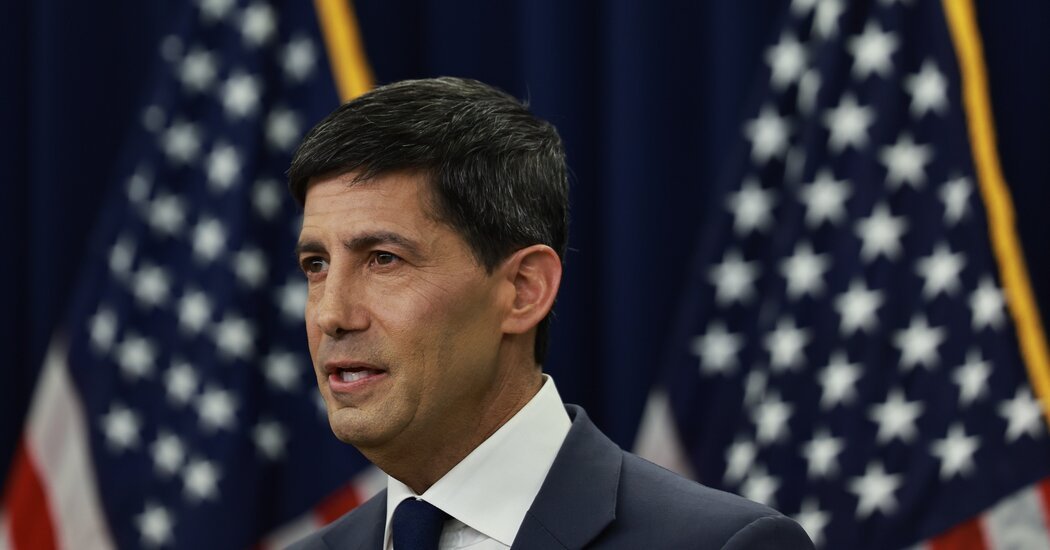
Americans would probably get more relief from lower gas and grocery prices than any modest decline in interest rates — but they aren’t likely to benefit from either for the moment.
With the Federal Reserve expected to hold interest rates steady on Wednesday, the cost of many consumer loans will also largely remain unchanged, the state of play since December.
“As has been the case in recent months, consumer credit behavior is likely to remain influenced more by persistent affordability pressures than by modest movements in borrowing costs,” said Michele Raneri, vice president and head of U.S. research at TransUnion, one of the three big credit reporting companies. “Elevated essential expenses, particularly those tied to energy, continue to strain household budgets and contribute to ongoing financial uncertainty.”
While many higher income Americans have seen their finances improve, people in less favorable positions are turning to credit to cover any shortfalls. For consumers with below-average credit scores, monthly debt payments represent 14.1 percent of their gross monthly income at the end of March, up from 12.8 percent at the end of 2019, according to a data analysis from TransUnion. (That includes debt like credit cards, auto loans, personal loans and student loans, but excludes mortgages.)
For Americans with better but not quite prime scores, debt payments consume 16.2 percent of their income, up from 14.7 percent over the same time period. Both consumer groups generally pay higher interest rates than those with more pristine credit scores.
Many of those rates are pegged to the Fed’s actions. The latest meeting is the first with Kevin M. Warsh as the central bank’s chairman — and many people will be looking for signals about the Fed’s potential direction with him at the helm.
The economic outlook is still murky. Oil prices surged in February in the wake of the U.S.-Israeli-led war with Iran, reigniting inflation, which the Fed had already been struggling to bring back to its 2 percent target. The job market had been softening, but strengthened recently. The conflicting signals have complicated the Fed’s job, which is to keep prices relatively stable and unemployment low.
After a series of rate reductions last year, the Fed paused its cuts and is expected to keep rates at a range of 3.5 to 3.75 percent.
Here’s where various consumer rates stand now:
Mortgage Rates
Rates on 30-year fixed mortgages don’t move in tandem with the Fed’s benchmark rates; instead, they generally track with the yield on 10-year Treasury bonds, which is influenced by factors, including the Fed’s actions, expectations about inflation and investor sentiment.
Mortgage rates have been volatile. In late February, they fell below 6 percent for the first time in more than three years, but they reversed course after the U.S.-Israeli attacks on Iran, given the likelihood of higher inflation. That sent yields on the 10-year bond higher, which, in turn, pushed up mortgage rates.
In recent weeks, mortgage rates have been trending higher again: The average rate on a 30-year fixed mortgage was 6.52 percent as of June 11, according to Freddie Mac, up from 6.48 percent the week before, but lower than 6.84 percent a year ago.
Other home loans are more closely tethered to the central bank’s decisions. Home-equity lines of credit and adjustable-rate mortgages, which carry variable interest rates, generally adjust within two billing cycles after a change in the Fed’s rates.
Credit Cards
Cardholders carrying balances have seen the rates they pay on their debt decline ever so slightly over the past several months, but not enough to meaningfully affect their monthly budgets. (When the Fed cuts rates, card issuers are generally slower to act, and changes could take a couple of billing cycles.)
Last week, the average interest rate on credit cards was 19.56 percent, according to Bankrate, which tracks more than 100 popular new card offerings by the largest 50 banks. That’s down from 20.79 percent in August 2024, the highest rate since 1985.
Auto Loans
Higher car prices, combined with elevated loan rates, continue to strain affordability for many Americans, while many lower-income households are struggling to make payments on the auto loans they already hold.
Many car loans tend to track the yield on the five-year Treasury note, which is influenced by the Fed’s rate moves. But other factors determine how much borrowers actually pay, including credit history, the type of vehicle, the loan term and the down payment. Lenders also consider the levels of borrowers becoming delinquent on auto loans. As those move higher, so do rates, which makes qualifying for a loan more difficult, particularly for people with lower credit scores.
The average rate on new car loans was 6.9 percent in May, according to Edmunds, an auto research and shopping website, up from 6.5 percent at the end of last year but down from 7.3 percent in May 2025.
Rates for used cars were higher: The average loan carried a 10.4 percent rate in May, marginally lower than 10.5 percent at the end of the year but down from 11.0 percent in May 2025.
Savings Accounts
Everything from online savings accounts and certificates of deposit to money market funds tend to generally move in line with the Fed’s policy changes. High-yield savings accounts have fallen a bit from their most recent highs roughly two years ago, but they still pay far more than rates for traditional savings accounts, which remain anemic.
The national average savings account rate was recently 0.61 percent, according to Bankrate, while the best high-yielding savings accounts pay around 4 percent.
The average yield on the Crane 100 Money Fund Index, which tracks the largest money-market funds, was 3.45 percent as of June 15, down from 3.73 percent on Dec. 9 and 5.13 percent at the end of last June.
Student Loans
There are two main types of student loans: federal and private.
Most people turn to federal loans first. Their interest rates are fixed for the life of the loan, they’re easier for teenagers to get and the repayment terms are more generous. These rates reset on July 1 each year and follow a formula based on the 10-year Treasury bond auction in May.
And they just moved higher (for money borrowed from July 1 through June 30, 2027): Undergraduate loans now carry a rate of 6.52 percent, down from 6.39 a year earlier. Rates on loans for graduate and professional students rose to 8.07 percent from 7.94 percent, while rates on PLUS loans — extra financing available to graduate students and to parents of undergraduates — increased to 9.07 percent from 8.94 percent.
Private student loans are more of a wild card. Undergraduates often need a co-signer, rates can be fixed or variable, and much depends on your credit score.