dailynewsnblog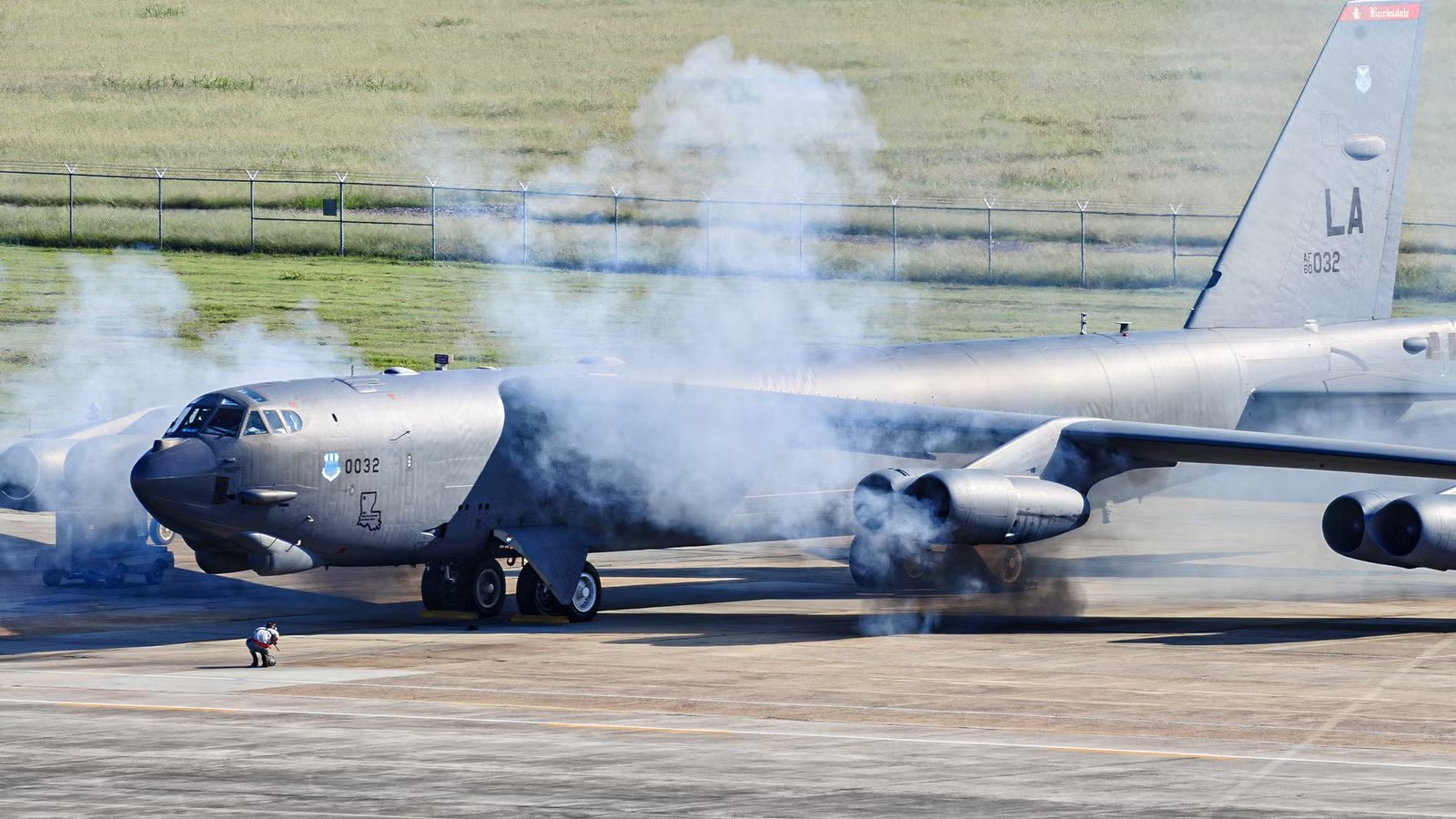
While the deployment of atomic bombs over Hiroshima and Nagasaki remains the subject of intense historical debate, one aspect of these devastating attacks is not disputed: their use changed the course of world history. The dropping of the two bombs demonstrated to all observers—particularly the Soviet Union (USSR)—that atomic weapons possessed the capacity not only to alter the course of a war, but potentially to end one entirely.
Yet the attacks on Japan would not mark the end of warfare or geopolitical competition between nations. Instead, they served as a prelude to the far more dangerous and enduring Cold War. During this period, the production and deployment of nuclear weapons took center stage, alongside deterrence strategies designed to convince adversaries that any nuclear first strike would be met with a massively destructive second strike in return.
Fitting into America’s deterrence policy during the height of the Cold War was Operation Chrome Dome. The operation was designed to ensure that the USSR understood that if it launched a nuclear strike against American military or civilian targets, it would face immediate retaliation from nuclear-armed  Boeing B-52 Stratofortress bombers already on station near Soviet airspace.
A World Of Nuclear Peril

Following the strikes on Hiroshima and Nagasaki, the Soviet leadership, particularly Joseph Stalin, viewed the United States’ monopoly on atomic weapons as a major strategic threat. And while the USSR already had a nuclear program before 1945, the bombing of Japan with the “Little Boy” and “Fat Man” bombs dramatically increased the priority of producing and deploying these frightening weapons.
The Soviets’ desire to attain nuclear capability was on full display on August 29, 1949, at the Semipalatinsk Test Site in Kazakhstan. It was at this site that the USSR conducted its first nuclear test, detonating the RDS-1 atomic bomb. This one test cemented the arms race into Cold War reality as both the USSR and the US sought to massively increase their arsenals. As the adage went, “the nuclear genie was out of the bottle.”
The table below, as compiled from the Bulletin of the Atomic Scientists, displays the drastic increase in nuclear weapons during the peak years of the Cold War (prior to the Strategic Arms Limitation Talks I, in 1972):
Year | United States | Soviet Union | United Kingdom | France | China | Total |
|---|---|---|---|---|---|---|
1957 | 5,828 | 650 | 20 | 6,498 | ||
1958 | 7,402 | 900 | 20 | 8,322 | ||
1959 | 12,305 | 1,050 | 25 | 13,380 | ||
1960 | 18,700 | 1,700 | 30 | 20,430 | ||
1961 | 23,200 | 2,450 | 50 | 25,700 | ||
1962 | 27,100 | 3,100 | 205 | 30,405 | ||
1963 | 29,800 | 4,000 | 280 | 34,080 | ||
1964 | 31,600 | 5,100 | 310 | 4 | 1 | 37,015 |
1965 | 32,400 | 6,300 | 310 | 35 | 5 | 39,050 |
1966 | 32,450 | 7,550 | 270 | 40 | 20 | 40,330 |
1967 | 32,500 | 8,850 | 270 | 40 | 25 | 41,685 |
1968 | 30,700 | 10,000 | 280 | 40 | 35 | 41,055 |
In order to maintain a lead in the ability to deploy nuclear weapons if the need arose for a retaliatory strike, the commander of Strategic Air Command (SAC), General Curtis LeMay, began rapidly building the command’s bomber force beginning in 1947. By 1955, SAC had a fleet of more than 2,000 Boeing B-47s and nearly 750 Boeing B-52s (the latter first deployed in 1955). In terms of personnel, the organization grew from 262,609 in 1959 to 282,723 by 1962.
Yet, as the USSR began to demonstrate significant progress in developing strategic bombers (such as the Myasishchev M-4 “Bison” and Tupolev Tu-95 “Bear”) and nuclear missiles, the immediate perception was that civilian centers and the SAC airfields would be vulnerable to attacks from incoming missiles. In response, in 1958, President Eisenhower directed SAC to begin dispersing its bombers to other non-SAC bases within the continental US. This repositioning was designed to further enhance the flexible response strategy and add another level of complication to Soviet attack timing and targeting operations.
In addition to widely deploying its bomber forces, SAC planners increased the readiness of its bomber crews, particularly those of its B-52s, through the “Ground Alert Program.” According to United States Air Force General Chris Adams, a retired B-52 pilot, “…when the “klaxon horn” sounded; we had to get to our airplanes as rapidly as possible, get into our positions, turn on aircraft power, and prepare to start engines, to taxi, or to take off for war.”
It was this routine and snap preparedness that provided the ability for B-52 bomber crews to engage in round-the-clock operations in the event of war with the USSR. While war fortunately did not occur, US military planners were already prepared for this contingency with one of the riskiest and most audacious deterrence operations ever undertaken.
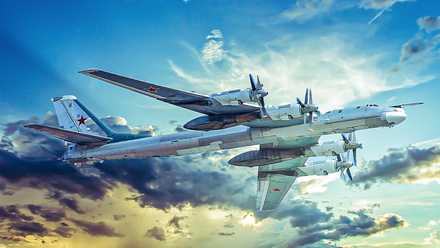
How The Turboprop Powered Tupolev Tu-95 Bomber Has Achieved Such Longevity
Russia uses the Tu-95 as a maritime patrol aircraft and a standoff aircraft to deploy cruise missiles.
Logical Madness: The Deterrent Effect Of Operation Chrome Dome

As depicted by the table above, between 1961 and 1968, the arsenals of the US and the USSR were rapidly filling with nuclear weapons. The most worrisome for the US were nuclear missiles and gravity bombs dropped by Soviet strategic bombers. What kept US military planners up at night was the possibility of a surprise attack on the US via the Arctic route, as it was the shortest route between America and the Soviet Union.
If the USSR could successfully launch a surprise first strike, it could have destroyed a significant portion of SAC bombers on the ground, reducing immediate US retaliatory capability. Additionally, in the early 1960s, sea-launched ballistic missiles were still under development and not yet fully mature. Thus, a great deal of the responsibility for the deterrence policy fell on the strategic bomber force.
During these years of heightened nuclear arms production and deployment (between 1961 and 1968), SAC launched Operation Chrome Dome. The architect of this operation, General Thomas S. Power, publicly announced (a great example of strategic messaging) that some of SAC’s fleet would be in the air at all times. Operationally, this meant that there were 12 nuclear-armed B-52s on a continuous rotation, flying just outside Soviet airspace, ready, awaiting the command to surge in and immediately carry out nuclear strikes.
According to Air and Space Forces Magazine, this round-the-clock mission:
“…made quite an impression on Soviet Premier Nikita Khrushchev during the 1962 Cuban Missile Crisis when SAC surged as many as 75 airborne nuclear flights per day. ‘About 20 percent of all Strategic Air Command planes, carrying atomic and hydrogen bombs, were kept aloft around the clock,’ Khrushchev later wrote with due respect.”
For seven nail-biting years, the B-52 pilots and ground crews of SAC ensured that massively destructive ordnance was always in the air or within additional B-52s on the ground awaiting their rotation. The bombs carried for these missions were the B28 or B41 nuclear gravity bombs or the AMG-28 (Hound Dog) nuclear cruise missile. The most destructive of the aforementioned group was the B41, which had a yield of up to 25 megatons, packing 1,600–1,700 times the explosive energy of the bomb dropped on Hiroshima.
The B41 would have been specifically used to destroy hardened military facilities, large military-industrial areas, strategic military bases (bases housing strategic bombers and missile installations), and sprawling urban-industrial regions. The high yield reflected the lower confidence in bombing accuracy at that time. Thus, the increased destructive power would compensate for navigation errors or not dropping the bomb directly over the intended target (with that destructive power, getting close to the target was good enough).
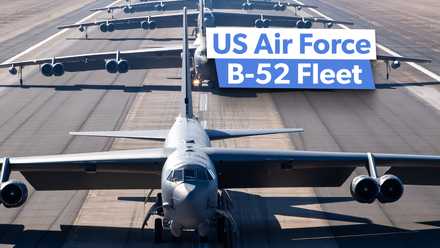
How The US Air Force’s B-52 Fleet Maintains Global Strategic Presence
After six decades of vigilance, the US’s mighty fleet of B-52 Stratofortress’ endure to provide deterrence and ensure global security.
The Incident That Ended Chrome Dome

Given that Chrome Dome was ongoing for seven years, with 12 sorties per day (not counting surges in activity), there would have been, at a minimum, approximately 27,000 nuclear-armed sorties over the duration of the operation. With so many flights, there were bound to be accidents, and remarkably, only five occurred. The final incident took place in late January 1968 and involved a B-52G (serial #58-0188) with the unofficial name “Hobo 28”.
Hobo 28 departed Plattsburgh Air Force Base (AFB) (KPLB), and it flew into airspace above Greenland to patrol above Thule Air Force Base (THU) (now Pituffik Space Base). This was the site of a special radar, and a key component of the Ballistic Missile Early Warning System. This site, along with its command and control link, was also believed to be at the top of the Soviet Union’s target list if war began.
At 2:30 PM (Greenland time), an electrical fire broke out in the cockpit area, most likely caused by the heating system associated with the electrical-mechanical components under the cockpit floor and seat area. The fire spread rapidly, inundating the cockpit with smoke, which made the aircraft impossible to control, resulting in the crew being forced to bail out, as the B-52 hurtled towards the ice and crashed 7.5 miles (12 km) from Thule AFB. Following the crash, Operation Chrome Dome was unceremoniously terminated the following morning.
As stated by Air and Space Forces Magazine:
“The B-52 and its four nuclear weapons dug a long, charred scar into the ice. The four bombs held more than 13 pounds of plutonium. About half spilled onto the blackened streak, which also had tritium contamination and perhaps half a pound of the plutonium lodged in the ice. The remainder saturated the wreckage itself.”
The clean-up began immediately, and it was initiated by SAC under Operation Crested Ice, which ultimately involved 700 people from 70 different agencies. Four months after the crash, the intensive effort removed a total of 237,000 cubic feet (6,711.09 cubic meters) of radioactive snow, ice, water, and aircraft debris. The last 600 containers of contaminated material were loaded aboard a US Navy vessel on September 13, 1968.
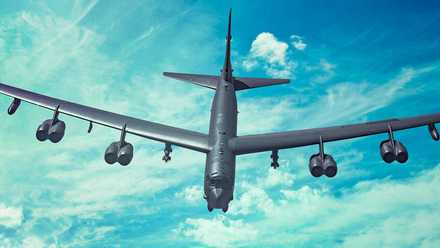
“Broken Arrow”: 6 Alarming Nuclear US Military B-52 Crashes Of The Cold War
B-52 crashes are responsible for many of the most worrisome nuclear accidents during US Air Force Cold War history.
Operation Chrome Dome: A Necessary Element Of Cold War Logic?

At the time when Chrome Dome was launched, the US Navy had not yet fully developed its submarine-launched ballistic missile force into an operationally mature component of what would later become the nuclear triad. Thus, there were effectively only two well-established legs in place. Had the USSR launched a surprise attack, as was feared, they could have theoretically targeted US land-based ballistic missile sites along with the airfields from which the USAF’s long-range bombers operated.
It would have been unconscionable for such a vulnerability in the deterrent posture to persist, and it was well understood that the Soviets possessed the bomber capability to conduct such an attack. Thus, it was decided to keep bombers on continual airborne rotation near Soviet airspace, as well as on ground alert, ready to take off if needed.
As the reaction by Secretary Khrushchev noted above illustrated, this show of force reinforced the perception that US policymakers had an immediate retaliatory option available in the event of a Soviet first strike. Thus, Chrome Dome was viewed as a necessary, albeit risky, move to dissuade the Soviet Union from pursuing any plan to attack the United States. In the end, it strengthened deterrence during a period of heightened tension.