dailynewsnblog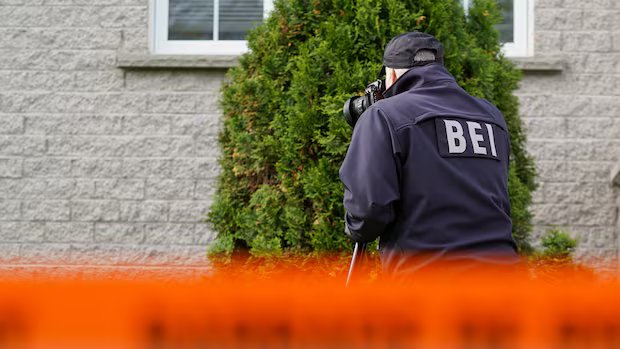
Tracy Wing is not the same person she was eight years ago, before her 17-year-old son was fatally shot by Quebec provincial police.
One of the many things that’s changed is her confidence — or lack thereof — in public institutions and those established to keep them in check.
She doesn’t trust Quebec’s police watchdog. Wing says the Bureau des enquêtes indépendantes (BEI) neither supported nor gave her prompt answers about the shooting after her son died.
No charges were laid against the officer who shot her son Riley Fairholm.
Wing felt kept in the dark — and now she is among those saying the BEI’s final reports should be made public.
“I always believed that there would be some more information that I received,” said Wing, describing the gruelling process of the investigation that ensued.
“I think the public is a lot like I was when my son was killed. They just [don’t] know. It’s like everything. You don’t understand the subject matter until you’re really in it.”

Teen’s death in 2025 puts BEI history under scrutiny
This month marks the ten-year anniversary of Quebec’s police watchdog.
Quebec is the only province in Canada with a watchdog that doesn’t publicly release its final reports following an investigation.
While the BEI is mandated to submit its reports to the prosecutor’s office, the public never sees them, regardless of whether charges are laid.

The equivalent oversight bodies in other provinces — notably in Ontario, British Columbia, Alberta and Manitoba — mandate certain levels of disclosure to the public when an officer isn’t charged.
In March, Ian Lafrenière, Quebec’s Domestic Security Minister, said he was open to making reports by the province’s watchdog public, but said doing so would raise other issues — including how reports would likely be significantly redacted.
His statement came the day after Quebec’s watchdog submitted its report to the prosecutor’s office about the police shooting of 15-year-old Nooran Rezayi last September on Montreal’s South Shore.
The teen’s death sparked public outrage and put the BEI’s track record under scrutiny.

Why the delay in Quebec?
The BEI investigates whenever a civilian is seriously injured or killed during a police intervention.
Since 2016, some 491 independent investigations have been initiated by the BEI in the province. Only three have resulted in charges.
And unless charges are laid, few details are released.
Alexandre Popovic, spokesperson for the Coalition Against Police Repression and Abuse, also known as La CRAP, says families and advocates shouldn’t have to fight for public access.

A decade since Quebec’s police watchdog, the BEI, began its operations, families and advocates are pushing for changes, including greater transparency. Critics are also calling for more accountability of the agency that’s investigated hundreds of police interventions and other incidents that have caused serious injury or death, only a few of which have led to charges.
“It should be common sense that … most information [is] available to the public, especially since, you know, they’ve been branding themselves as being transparent,” he said.
He says if the government “truly, gives a damn about the duty of transparency,” the best way to go is to have a coroner’s inquest each time there is a violent death at the hands of the police.
But an inquest into every death will not happen due to being too resource-intensive, says Ian Scott, the former director of Ontario’s police watchdog, the Special Investigation Unit (SIU) between 2008 and 2013.

He says public discourse is focused on accountability when there are no charges laid following a use of force.
There used to be virtually none in Ontario, he says.
But in 2017, things changed after Justice Michael Tulloch’s 129 recommendations to make police watchdogs more transparent as part of his Report of the Independent Police Oversight Review. That year, Ontario’s attorney general announced the province would move forward with the public release of past and future investigation reports of the SIU, as recommended in the police review.

Providing a public report following an investigation is an evolution for watchdogs, says Scott and shows a “kind of ripening of the agency.”
“It sounds like the time has come,” he said, referring to Quebec’s watchdog.
He said making watchdog reports public can also help public perception of police.
“They’re the only agents in a civil society that we allow to use non-consensual force,” said Scott, who is now a lawyer based in Toronto.
“How are we going to give the public confidence that the force was not excessive?”
Montreal police chief says he’s for transparency
When asked about the possibility of making BEI reports public, Montreal police Chief Fady Dagher said he is in favour of more transparentcy.
“Thirty-five years in the police, I can tell you one thing, it’s a lot about communication, all about transparency. To be honest, even sometimes if it hurts,” he told CBC’s Radio Noon at the end of May.
But he says the move does not guarantee more trust in police.

Once the BEI is involved in a case, by law, police cannot contact the family, he notes.
“God knows I sometimes want to. But I’m not allowed,” he said. “This is really hurting the trust.”
Presence of former police in the BEI
As of April, the BEI employed 45 investigators, 22 of which were former police officers.
They are not allowed to lead investigations on files involving their former employers, but their presence — and potential influence in investigations — is a concern for some families, including Cesur Celik.
“This is justice?” he questioned, wagging his finger.
“We are delusional if we expect justice from such investigations.”

His distrust of the BEI is such that he believes its work is biased, and making its report public would actually do more damage.
His son, Koray Celik died nine years ago after a police intervention. The 28-year-old was in crisis, reportedly having mixed alcohol with medication he was prescribed for dental pain and was intent on getting behind the wheel.
Celik says the family needed help, but says instead, officers — who arrived on scene at the family’s Île-Bizard home off the island of Montreal — used excessive force on their son.
Before making all reports public, the BEI has to investigate the incident in a neutral way, says Celik. For him, that means having more civilian, independent investigators.

“The public doesn’t deserve to know the lies of [the] BEI, the public deserves to know the truth,” he said.
In 2021, the Celik family was awarded $30,000 in damages in a civil suit against the BEI, with a judge saying the agency favoured officers’ version of events in their investigation of Koray’s case.
BEI working for transparency, but is limited, says director
In an emailed statement, the director of the BEI, Brigitte Bishop, said she is very sensitive to the concerns from families and the need for transparency. She noted that once a file is concluded, the BEI meets with families to explain the gathered evidence.
“I understand that our communications intended for the general public may seem restrictive. However, the current state of our constitutive act does not allow us to be more transparent,” she wrote.
She said the organization is currently working with Quebec’s Domestic Security Ministry to “correct the situation through legislative changes designed to increase the transparency of our interventions.”
Back in May, the BEI said it is committed to responding to the public’s wishes while balancing its actions to “preserve impartiality and respect for the various legal obligations,” which include the protection of evidence and third-party personal information.
The office of Domestic Security Minister Ian Lafrenière did not respond to CBC’s request for comment.

Some family members of Quebecers killed or seriously injured during police interventions are banding together, calling for changes to how the province’s police watchdog, the BEI, carries out its investigations.
In March, Celik and Wing were among the families that signed a joint letter requesting an administrative inquiry into what they consider to be systemic problems surrounding BEI investigations.
For them, it comes back to accountability.
“When I say accountability, it doesn’t mean I’m looking to blame somebody,” said Wing.
For a watchdog that’s been running for a decade, she said it ought to be able to get over its “growing pains.”

![British Airways Suspends 7 Routes: See All Major Flight Changes Here [Map & List]](https://dailynewsnblog.com/wp-content/uploads/2026/06/ba-boeing-787-mock-up-1.jpg)