dailynewsnblog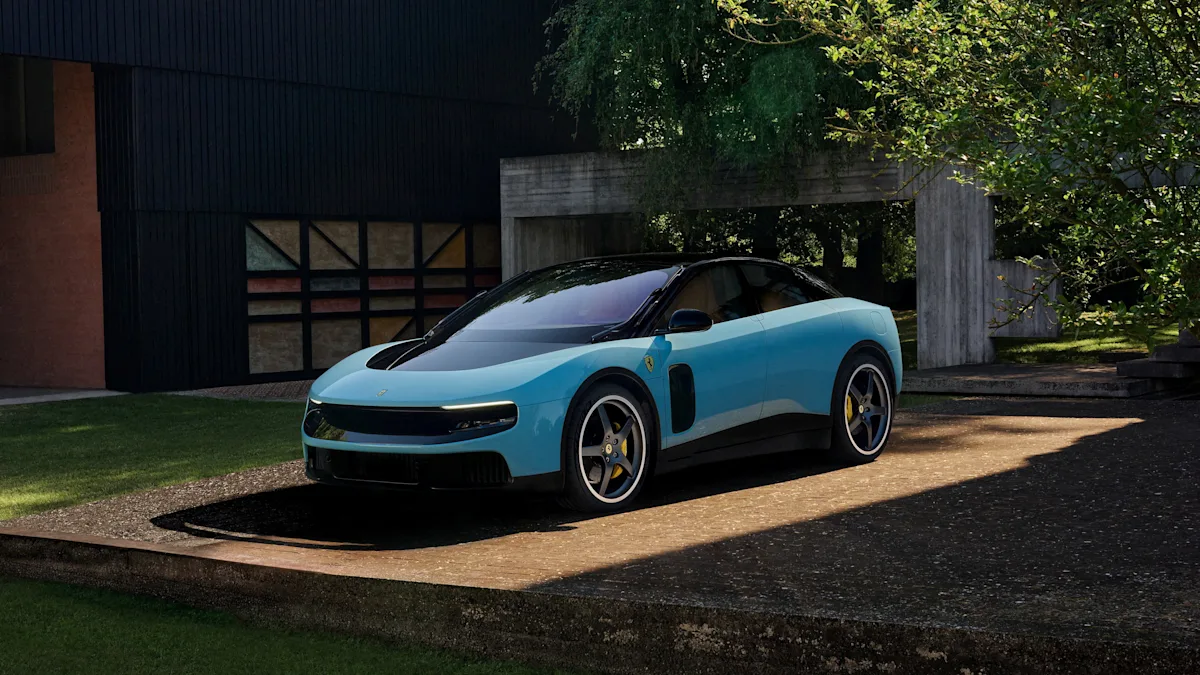
The Luce, Ferrari’s (RACE) new EV revealed at a splashy event in Rome last month, has drawn fierce criticism from fans for its polarizing design.
Some fault Ferrari for creating something without an emotional core, adding that a sexy exterior and scintillating soundtrack from a high-revving gas engine are sine qua non for anything from Maranello.
Investors punished Ferrari stock following the car’s release.
But Morgan Stanley believes Ferrari’s punishment is too severe. Analyst Edouard Aubin lifted Ferrari to Overweight from Equal Weight and raised its price target on the Milan-listed stock to €380 ($441) from €330 ($383), implying about 24% upside.
“The stock has fallen 26% over the past 12 months, while FY26-27 EPS revisions have been limited to 4%, meaning the move has been driven primarily by de-rating rather than earnings capitulation,” Aubin wrote. Ferrari stock rebounded a bit following the call.
Aubin’s central point is that despite the hoopla over the Luce, Ferrari’s earnings haven’t cracked over the past year, with consensus estimates for 2026 and 2027 cut only about 4% over the same stretch.
Read more: How to find the best luxury car insurance
Despite the Luce reaction, Ferrari is still in the business of making money. The company’s profit margins hover near 40%, the industry gold standard. And buzz about new models, like a special-edition 12Cilindri with a manual transmission, has Ferrari buyers tripping over themselves.
Morgan Stanley concedes that Ferrari’s capital markets day growth targets, sliding resale values on hybrid sports car models like the SF90, and the polarizing launch of the $640,000 Luce (designed by former Apple design chief Jony Ive, no less) are real concerns.
But the bank thinks the market overshot on the downside.

“Our latest work suggests the market has moved too far in pricing these issues as terminal brand risk,” Aubin wrote.
Morgan Stanley notes dealer traffic is still strong.
“Our dealer checks in the US and Europe do not point to a damaged Ferrari brand,” the note said, describing a “temporary product-cycle mismatch” rather than any erosion of desirability. Demand, the bank found, remains strongest where it matters most for Ferrari: its special series cars, scarce allocations, Icona and supercar models, and future collectibles.
Morgan Stanley also reframed Ferrari’s decision to slow volume growth. “In luxury, scarcity is not a constraint to work around, it is the mechanism that supports pricing power, allocation discipline, residual values and the perception that access remains unique,” Aubin said.